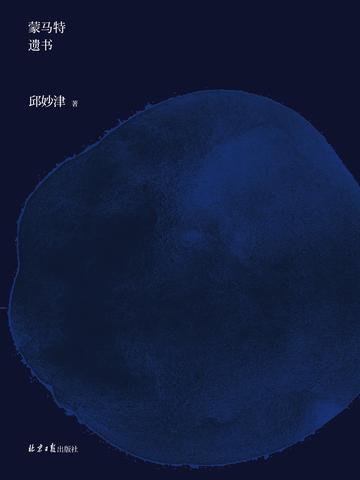
In the summer of 1995, Taiwanese writer Qiu Miaojin committed suicide in Paris at the age of 26. The twenty-one letters in the "Montmartre Suicide Note" are the confession of life she left to the world. The intensity of love, the pain of betrayal, desperate possession and painful self-analysis, these words written by Qiu Miaojin record her courage and pursuit, as well as her confusion, obstacles and despair. She thinks about and reconstructs the law of love and the relationship between love and death, life and art based on her real and painful physical and mental experiences. A large number of Western art films and classic literature mentioned in "Montmartre Posthumous Letter" form a series of deep secret paths, showing the growth pedigree of Qiu Miaojin's spiritual world. It is the spiritual reflection of a generation of young people in Taiwan. Through it, one can also witness the profound scenery of the times.
Reader comments
There is a passage in the book that shocked me the most: "I was thinking on the bus today,
I don't love you all the time, nor do I love you more and more, but
I fall in love with you every day, isn't it strange? "
Forgive me for my short-term understanding. There are many things in front of me that are based on my current three views.
An incomprehensible description, in the words of a book review
"Bumping" is hard to accept. But after reading this passage, all that comes to my mind is
Next thought - How can you blame a couple who are in love?
Xu's reply is the most powerful part. It's only after reading it that it really touches me.
Touching the previously described "love makes both sides suffer", the faded
The scars oozed blood again. I kept thinking about it, how could it become like this?
How about that? It's obviously that kind of love, but it goes to such a desperate end
road.
But how can you blame love.
It is written in the appendix, "Qiu Miaojin will always stay at the age of twenty-six, and
Those of us who survive grow older. The dead are forever young, the living
The reader continues to think... People are thinking about the various questions she raised about love.
Kind of questioning, continue to live. "
"You can die, but never age."
"It is broken where you expected it not to be broken; but there is nothing wrong with the world, it continues to be that world, and it continues to be broken."
There is nothing wrong with the world. What is wrong is the fragility of the soul. We are not immune to the harm of the world, so we will suffer from the disease of the soul for a long time.
This book touched me very much. The author's writing is sincere and brave. I like her thoughts on love and life, and I feel sorry for the pain she went through. The characters in the book are all real. I hate the person who betrayed her, and I hope she can live a better life as she said. Her words made me see a different world and made me cherish the people around me more.
No one reads such a good book?
There is a lot of empathy, but there are also some parts that feel too sublime, mainly focusing on the part where you fantasize about how the other person loves you, but maybe it is only through this kind of fantasizing that you can relieve the pain.
"We walked out of the cafe, holding hands and walking in the light rain. We were surrounded by dense Japanese taverns, busy small businesses closing, short and narrow streets, and it was such a warm night."
May the raindrops continue to linger...
"Montmartre's Suicide Note" is not only a posthumous work, but also a sharp blade piercing the essence of life. With almost cruel sincerity, Qiu Miaojin tears apart the dialectics of love and death for us to see - those fiery monologues are both a trial of lovers and an interrogation of existence. What flows through the pages is not only pain, but also an ultimate emotional philosophy: when love becomes a religion, the self is reshaped in the flames of sacrifice and redemption.
The most shocking thing about this work is its "presence". What we read is not a record of death, but the dynamic process of death being written. Those repeatedly revised dates and constantly self-subverting sentences make the text a bleeding scene of life. This kind of writing itself has become the most tenacious resistance to nothingness.
In terms of language, Qiu Miaojin created a poetics of pain. Those recurring metaphors, suddenly broken sentence patterns, and the oscillation between French and Chinese together constitute the grammar of a weightless soul. This is not an exquisite literary creation, but a language form in which emotions naturally crystallize under high pressure.
"Montmartre's Suicide Note" forces every reader to face a fundamental dilemma: when we peel off all social masks, is the essence of love one of mutual destruction? Or is it through this kind of destruction that we can touch the hardest reality of life? This book is like a black mirror. What we see may not be what we want to see, but it must be a more realistic reflection of our soul.
More than twenty years later, these words are still hot. Because what they record is not the tragedy of an individual, but the common soul code of everyone who has experienced self-collapse and tried to rebuild in love.
Montmartre's suicide note is a suicide note, a "Bible" of extremely sad love. What she tried to seal with death was a "golden oath" and "eternal love", but can she seal her beloved with "death"?
People worship a dead person and gain the power of life from it. For readers, "With such a soul existing, the world is so beautiful, and I can't bear to die."
Nice! ! ! The author's writing style is very delicate, and he writes the struggle in relationships very well.
Why... Why...
I'm halfway through the book, maybe because I don't have enough experience. It makes me uncomfortable and I don't want to read it. I feel that the author's writing style is quite good and his emotional descriptions are also very delicate.
Because I know the ending, I feel like there are foreshadowings everywhere. Good night.
The writing is very good, and it can be interspersed with other works to express its own meaning, which can better help understanding.
This book is a state of affairs. It makes me see that I am not the only one who feels that kind of pain.

There is a passage in the book that shocked me the most: "I was thinking on the bus today, I don't love you all the time, nor do I love you more and more, but I fall in love with you every day, isn't it strange? " Forgive me for my short-term understanding. There are many things in front of me that are based on my current three views. An incomprehensible description, in the words of a book review "Bumping" is hard to accept. But after reading this passage, all that comes to my mind is Next thought - How can you blame a couple who are in love? Xu's reply is the most powerful part. It's only after reading it that it really touches me. Touching the previously described "love makes both sides suffer", the faded The scars oozed blood again. I kept thinking about it, how could it become like this? How about that? It's obviously that kind of love, but it goes to such a desperate end road. But how can you blame love. It is written in the appendix, "Qiu Miaojin will always stay at the age of twenty-six, and Those of us who survive grow older. The dead are forever young, the living The reader continues to think... People are thinking about the various questions she raised about love. Kind of questioning, continue to live. " "You can die, but never age." "It is broken where you expected it not to be broken; but there is nothing wrong with the world, it continues to be that world, and it continues to be broken."
There is nothing wrong with the world. What is wrong is the fragility of the soul. We are not immune to the harm of the world, so we will suffer from the disease of the soul for a long time.
This book touched me very much. The author's writing is sincere and brave. I like her thoughts on love and life, and I feel sorry for the pain she went through. The characters in the book are all real. I hate the person who betrayed her, and I hope she can live a better life as she said. Her words made me see a different world and made me cherish the people around me more.
No one reads such a good book?
There is a lot of empathy, but there are also some parts that feel too sublime, mainly focusing on the part where you fantasize about how the other person loves you, but maybe it is only through this kind of fantasizing that you can relieve the pain.
"We walked out of the cafe, holding hands and walking in the light rain. We were surrounded by dense Japanese taverns, busy small businesses closing, short and narrow streets, and it was such a warm night." May the raindrops continue to linger...
"Montmartre's Suicide Note" is not only a posthumous work, but also a sharp blade piercing the essence of life. With almost cruel sincerity, Qiu Miaojin tears apart the dialectics of love and death for us to see - those fiery monologues are both a trial of lovers and an interrogation of existence. What flows through the pages is not only pain, but also an ultimate emotional philosophy: when love becomes a religion, the self is reshaped in the flames of sacrifice and redemption. The most shocking thing about this work is its "presence". What we read is not a record of death, but the dynamic process of death being written. Those repeatedly revised dates and constantly self-subverting sentences make the text a bleeding scene of life. This kind of writing itself has become the most tenacious resistance to nothingness. In terms of language, Qiu Miaojin created a poetics of pain. Those recurring metaphors, suddenly broken sentence patterns, and the oscillation between French and Chinese together constitute the grammar of a weightless soul. This is not an exquisite literary creation, but a language form in which emotions naturally crystallize under high pressure. "Montmartre's Suicide Note" forces every reader to face a fundamental dilemma: when we peel off all social masks, is the essence of love one of mutual destruction? Or is it through this kind of destruction that we can touch the hardest reality of life? This book is like a black mirror. What we see may not be what we want to see, but it must be a more realistic reflection of our soul. More than twenty years later, these words are still hot. Because what they record is not the tragedy of an individual, but the common soul code of everyone who has experienced self-collapse and tried to rebuild in love.
Montmartre's suicide note is a suicide note, a "Bible" of extremely sad love. What she tried to seal with death was a "golden oath" and "eternal love", but can she seal her beloved with "death"? People worship a dead person and gain the power of life from it. For readers, "With such a soul existing, the world is so beautiful, and I can't bear to die."
Nice! ! ! The author's writing style is very delicate, and he writes the struggle in relationships very well.
Why... Why...
I'm halfway through the book, maybe because I don't have enough experience. It makes me uncomfortable and I don't want to read it. I feel that the author's writing style is quite good and his emotional descriptions are also very delicate.
Because I know the ending, I feel like there are foreshadowings everywhere. Good night.
The writing is very good, and it can be interspersed with other works to express its own meaning, which can better help understanding.
This book is a state of affairs. It makes me see that I am not the only one who feels that kind of pain.