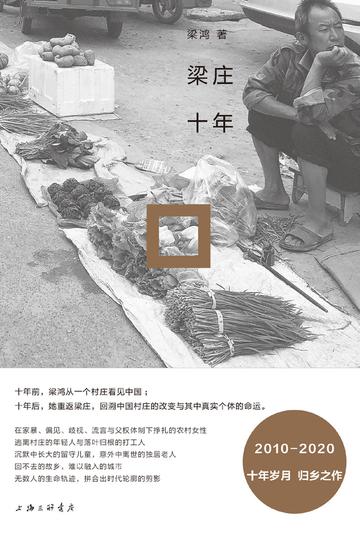
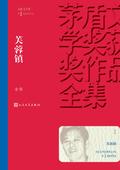
In 2010, "China in Liangzhuang" was published for the first time, showing us the changes in Chinese villages in an era of rapid change. Ten years later, the author Liang Hong returned to his hometown again and revisited the people and events described in the book. In the past ten years, everything has been changing, but it seems that nothing has changed: some people have left here forever, and some wandering people have returned here. The appearance of the village, the river and the land are all different from before. However, despite the changes in personnel, the vitality and vitality revealed by Liangzhuang and Liangzhuang people remain the same as before. During this return, Liang Hong re-examined his hometown from a new perspective. With delicate description and keen insight, he brought the people of Liangzhuang back into our sight. By tracing their lives, he traced the long and powerful lifeline of an ordinary village - this lifeline belongs to both those who were "born here, grew up here, and died here" and also belong to those who are part of the same current of the times.
Reader comments
Dasheng's mother held her eldest sister's hand tightly. She didn't want us to leave. In her eyes, the protagonist clearly sees the shadow of death and her fear. This is what the protagonist has seen in the eyes of many village elders since he was a child. In the village, death is a public education time and time again, making you awe of life, and at the same time, you gradually get used to such impermanence. Dasheng stood next to his mother and watched the protagonist go out. As he approached the door, the protagonist saw a deck of cards placed on the table in the corner of the yard. The cards are divided into several rows, some long and some short, surrounded by four cards, which seems to be fortune-telling. I really want to go over and see what fate comes out of the big win.
The author uses delicate writing to describe the changes in the village against the background of the times, "We are leaving. Dasheng's mother holds the eldest sister's hand tightly, and she does not want us to leave. In her eyes, I clearly see the shadow of death and her fear. This is what I have seen in the eyes of many village elders since I was a child. In the village, death is an open education again and again, making you awe of life, and at the same time, slowly getting used to such impermanence." The detailed description allows readers to deeply understand the emotions of the characters.
Liangzhuang is a village. "China in Liangzhuang" was first published in 2010, which shows us the changes of Chinese villages in an era of rapid change. Ten years later, the author returned to his hometown again, only to find that everything here was changing. In this rapidly changing world, some people have left here forever, and some people have been drifting away forever. The appearance of the village, rivers, and land are no longer the same as before. This step records the real process of change in a village, allowing people to re-examine their hometown.
I think the second chapter of this book about the experiences of women is really excellent. It is a rare good article and worth reading. Many things written about women in the book really impressed me. For example, there is no such person after a woman gets married; there are unspeakable girls in every village; girls are as big as a sesame seed, and they will live wherever they are scattered, etc. This is simply the epitome of rural women in Central Europe. I have always believed that Liang Hong's "Liang Zhuang Shi" is the best non-fiction writing in the country. The value of this book will definitely shine more brightly in the years to come.
There is a sentence in the book that impressed me deeply: "In every village, there are unspeakable girls. Those girls, either because of their beauty, or because of some kind of encounter, or because their behavior is beyond people's understanding, have turned into gray existences. When talking about them, people will look at each other, and that look is very deep. Very deep, as if those girls were buried in that very deep place, left to ferment, rot, and eventually be forgotten. Every mention is a fermentation, and this fermentation pushes the girl deeper into the eyes. "This sentence is written very vividly, reappearing the tacit look when people mention that kind of "taboo" character. I believe that every rural girl reading this will feel tacitly aware of it and have mixed feelings in her heart, sad and sad.
This book is very real. The author Liang Hong describes the changes in Liangzhuang and people's lives in great detail. I hate those people who are prejudiced against girls. They cause those girls to suffer a lot of injustice. I admire the author for being able to focus on these overlooked people. I think this book is not only a record of a village, but also a reflection on society.
Dasheng's mother held her eldest sister's hand tightly. She didn't want us to leave. In her eyes, the protagonist clearly sees the shadow of death and her fear. This is what the protagonist has seen in the eyes of many village elders since he was a child. In the village, death is a public education time and time again, making you awe of life, and at the same time, you gradually get used to such impermanence. Dasheng stood next to his mother and watched the protagonist go out. As he approached the door, the protagonist saw a deck of cards placed on the table in the corner of the yard. The cards are divided into several rows, some long and some short, surrounded by four cards, which seems to be fortune-telling. I really want to go over and see what fate comes out of the big win.
The author uses delicate writing to describe the changes in the village against the background of the times, "We are leaving. Dasheng's mother holds the eldest sister's hand tightly, and she does not want us to leave. In her eyes, I clearly see the shadow of death and her fear. This is what I have seen in the eyes of many village elders since I was a child. In the village, death is an open education again and again, making you awe of life, and at the same time, slowly getting used to such impermanence." The detailed description allows readers to deeply understand the emotions of the characters.
Liangzhuang is a village. "China in Liangzhuang" was first published in 2010, which shows us the changes of Chinese villages in an era of rapid change. Ten years later, the author returned to his hometown again, only to find that everything here was changing. In this rapidly changing world, some people have left here forever, and some people have been drifting away forever. The appearance of the village, rivers, and land are no longer the same as before. This step records the real process of change in a village, allowing people to re-examine their hometown.
I think the second chapter of this book about the experiences of women is really excellent. It is a rare good article and worth reading. Many things written about women in the book really impressed me. For example, there is no such person after a woman gets married; there are unspeakable girls in every village; girls are as big as a sesame seed, and they will live wherever they are scattered, etc. This is simply the epitome of rural women in Central Europe. I have always believed that Liang Hong's "Liang Zhuang Shi" is the best non-fiction writing in the country. The value of this book will definitely shine more brightly in the years to come.
There is a sentence in the book that impressed me deeply: "In every village, there are unspeakable girls. Those girls, either because of their beauty, or because of some kind of encounter, or because their behavior is beyond people's understanding, have turned into gray existences. When talking about them, people will look at each other, and that look is very deep. Very deep, as if those girls were buried in that very deep place, left to ferment, rot, and eventually be forgotten. Every mention is a fermentation, and this fermentation pushes the girl deeper into the eyes. "This sentence is written very vividly, reappearing the tacit look when people mention that kind of "taboo" character. I believe that every rural girl reading this will feel tacitly aware of it and have mixed feelings in her heart, sad and sad.
This book is very real. The author Liang Hong describes the changes in Liangzhuang and people's lives in great detail. I hate those people who are prejudiced against girls. They cause those girls to suffer a lot of injustice. I admire the author for being able to focus on these overlooked people. I think this book is not only a record of a village, but also a reflection on society.