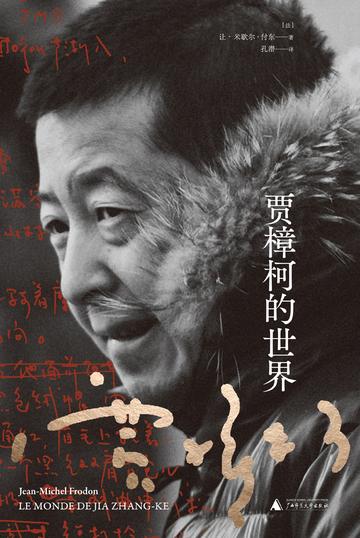
In 1998, Jia Zhangke came to prominence with his debut film "Xiao Wu". His films are distinguished by their modernity, a style derived from the reinvention of the relationship between feature film and documentary, the creative use of new technologies, and the creative interpretation of the relationship between the individual and the collective of 1.4 Billion people.
Jia Zhangke's films keenly bear witness to the tremendous changes affecting China and the world. Films such as "Platform", "The World", "Three Gorges" and "The Good Man" outline a highly coordinated and constantly updated aesthetic route, patiently establishing a central position in Chinese culture, and telling new stories of the 21st century from a unique perspective.
Reader comments
This book provides an in-depth discussion of Jia Zhangke's thoughts and artistic value. In the book, the author not only introduces Jia Zhangke's creative process and ideological changes, but also provides a unique analysis and interpretation of his film works. From Jia Zhangke, as a director, who keenly witnessed the huge changes affecting China and the world, to his attitude and practice towards film art, this book conducts in-depth discussion and analysis. It plays an irreplaceable role in understanding Jia Zhangke's film art and ideological perspectives. The author uses his in-depth research and rich knowledge to present a complete and profound world of Jia Zhangke to readers. If you are a movie lover or want to understand Jia Zhangke's film art and ideological views, this book is a must-read for you.
Although it is from a foreigner's perspective, it is well written. The translation is also good, smooth and easy to understand. Everyone likes to call him Chief Jia. Indeed, many of his realistic themes are very meaningful. I like his works, and my favorite is Destiny, which may be more in line with my personal preferences. In fact, The Good Man in Three Gorges is good but a bit boring to watch, but that is what it was like in the past era. Many memories have mixed flavors, maybe attachment and beauty, sadness and escape. It makes people think, and the overall feeling is a bit gray and "tired", just like we want to lie down but have to face life.
This book is very detailed. The author conducts in-depth research and combing of Jia Zhangke's life, creation and thoughts, and comprehensively presents Jia Zhangke's world. Whether it is Jia Zhangke's personal experience or his film works, this book provides detailed introduction and analysis, allowing readers to better understand and understand the director and his works. The language in this book is fluent and beautiful. The author's writing style is delicate without losing depth, and contains both rational thinking and emotional expression. He cleverly integrated Jia Zhangke's life and art, using vivid language and delicate descriptions to vividly present Jia Zhangke's world.
The author uses a unique perspective to show us new stories in the world in the 21st century, full of realism and rich in experience. He has witnessed the tremendous changes that have taken place in China and the world in the 21st century. As the book says, "the return of democracy has not weakened the necessity and complexity of the existence of film festivals." No matter what the background of the era, the meaning that movies bring to people always exists, in the book the author outlines to us a Jia Zhangke who is both ordinary and unusual.
And his writing style is also very good, describing Jia Zhangke's world very vividly. I particularly liked the analysis of Jia Zhangke's films in the book, which gave me a deeper understanding of his works. However, I kind of hate the character Xiao Wu in the book, and his behavior makes me angry. Overall, this is a book well worth reading!
This book provides an in-depth discussion of Jia Zhangke's thoughts and artistic value. In the book, the author not only introduces Jia Zhangke's creative process and ideological changes, but also provides a unique analysis and interpretation of his film works. From Jia Zhangke, as a director, who keenly witnessed the huge changes affecting China and the world, to his attitude and practice towards film art, this book conducts in-depth discussion and analysis. It plays an irreplaceable role in understanding Jia Zhangke's film art and ideological perspectives. The author uses his in-depth research and rich knowledge to present a complete and profound world of Jia Zhangke to readers. If you are a movie lover or want to understand Jia Zhangke's film art and ideological views, this book is a must-read for you.
Although it is from a foreigner's perspective, it is well written. The translation is also good, smooth and easy to understand. Everyone likes to call him Chief Jia. Indeed, many of his realistic themes are very meaningful. I like his works, and my favorite is Destiny, which may be more in line with my personal preferences. In fact, The Good Man in Three Gorges is good but a bit boring to watch, but that is what it was like in the past era. Many memories have mixed flavors, maybe attachment and beauty, sadness and escape. It makes people think, and the overall feeling is a bit gray and "tired", just like we want to lie down but have to face life.
This book is very detailed. The author conducts in-depth research and combing of Jia Zhangke's life, creation and thoughts, and comprehensively presents Jia Zhangke's world. Whether it is Jia Zhangke's personal experience or his film works, this book provides detailed introduction and analysis, allowing readers to better understand and understand the director and his works. The language in this book is fluent and beautiful. The author's writing style is delicate without losing depth, and contains both rational thinking and emotional expression. He cleverly integrated Jia Zhangke's life and art, using vivid language and delicate descriptions to vividly present Jia Zhangke's world.
The author uses a unique perspective to show us new stories in the world in the 21st century, full of realism and rich in experience. He has witnessed the tremendous changes that have taken place in China and the world in the 21st century. As the book says, "the return of democracy has not weakened the necessity and complexity of the existence of film festivals." No matter what the background of the era, the meaning that movies bring to people always exists, in the book the author outlines to us a Jia Zhangke who is both ordinary and unusual.
And his writing style is also very good, describing Jia Zhangke's world very vividly. I particularly liked the analysis of Jia Zhangke's films in the book, which gave me a deeper understanding of his works. However, I kind of hate the character Xiao Wu in the book, and his behavior makes me angry. Overall, this is a book well worth reading!