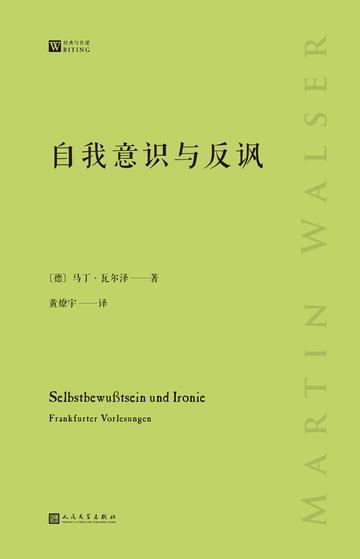
This book is a collection of five lectures given by the contemporary German writer Martin Walser in the "Frankfurt Poetics Lectures". Martin Walser questions the prevailing concept of irony in the 20th century, which originated mainly with Thomas Mann. He carefully teases out a literary origin: from Friedrich Schlegel's definition of bourgeois-romantic irony to the pinnacle of this kind of irony, Thomas Mann's "Tonio Krueger". Martin Walser believes that here, irony is a means of establishing the identity of the protagonist. The theme and anti-theme refute each other, and the protagonist does not take sides, he stands on all opposites. However, such literature can only produce ironic characters, which is completely different from Socratic irony. Hegel said: "Socrates' tragic irony is his subjective reflection activity on existing morality. This kind of irony is not a superior self-awareness, but an unfettered purpose, leading people to the true good and the universal idea."
Reader comments
What is self-awareness? A sense and action expressed towards a thing or state of affairs
This book is very thoughtful, and the author Martin Walser's exploration of irony is very interesting. He believes that irony is not only a literary device, but also a reflection on self-awareness. However, I kind of hated some of the overly theoretical parts of the book. But overall, this book is still worth reading. It will give you a deeper understanding of literature and yourself.

What is self-awareness? A sense and action expressed towards a thing or state of affairs
This book is very thoughtful, and the author Martin Walser's exploration of irony is very interesting. He believes that irony is not only a literary device, but also a reflection on self-awareness. However, I kind of hated some of the overly theoretical parts of the book. But overall, this book is still worth reading. It will give you a deeper understanding of literature and yourself.