The content of the history of education includes both practical and theoretical aspects. The education system, the implementation status of education, the life of educators, etc., Belong to the practical aspects. The government's educational purposes, scholars' educational theories and the educational trends of the times, etc., Belong to the theoretical aspect. But it will only be
A clear description of the actual and theoretical situations cited above, as they are, in chronological order, is not enough to complete the task of studying the history of education. The tasks of those who study the history of education: first, to explain the reasons for the changes in educational systems and doctrines in the past dynasties.
Reader comments
This "History of Chinese Education" is very interesting! It not only tells the story of the changes in China's education system and doctrines, but also explains why. As mentioned in the book, the primitive clan society above the Shang Dynasty did not have an education system, but Han Confucianism invented the ancient education system. This reminds me that we must learn to distinguish between truth and falsehood, and cannot blindly believe in all historical data. However, this book also gave me a deeper understanding of the development of education in China. It turns out that this is how our education system evolved!
The development of China's education history includes two aspects: practical teaching and policy theory. The author uses timeline as the main logic in this book to sort out from ancient education to contemporary education. From this book we can learn more about the history of education. The book introduces in detail the educational background and history of educational development in various eras, including the feudal official school system, which provided higher-level education for the children of aristocrats, and the imperial examination system that emerged in the Tang Dynasty. This book is worth studying and understanding.
Talents are the flowing blood of social development, and the cultivation of talents is of great significance to social progress. This book is divided into two aspects: practical and theoretical. It expounds the practical content of China's education history from practical aspects such as the education system, education implementation status, and educators' lives. It also organizes and interprets theoretical content such as the government's educational purposes, scholars' educational theories, and the educational trends of the times. It plays an important role in understanding the changes in China's education system and doctrines throughout the ages.
"When you are teaching, you must have a real career, and when you retire, you must be a student." As early as the period of King Wuding of Shang Dynasty, the earliest prototype of education in China had been formed. The mainstream education in ancient times was Confucian education, the mainstream education of Confucianism. This book introduces the characteristics, methods, contents, systems, ideas, and theories of education in different historical periods from many aspects. It is very helpful for us to better understand the history and evolution of education in China since ancient times.
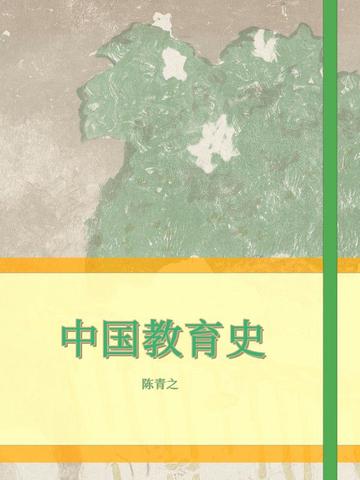

This "History of Chinese Education" is very interesting! It not only tells the story of the changes in China's education system and doctrines, but also explains why. As mentioned in the book, the primitive clan society above the Shang Dynasty did not have an education system, but Han Confucianism invented the ancient education system. This reminds me that we must learn to distinguish between truth and falsehood, and cannot blindly believe in all historical data. However, this book also gave me a deeper understanding of the development of education in China. It turns out that this is how our education system evolved!
The development of China's education history includes two aspects: practical teaching and policy theory. The author uses timeline as the main logic in this book to sort out from ancient education to contemporary education. From this book we can learn more about the history of education. The book introduces in detail the educational background and history of educational development in various eras, including the feudal official school system, which provided higher-level education for the children of aristocrats, and the imperial examination system that emerged in the Tang Dynasty. This book is worth studying and understanding.
Talents are the flowing blood of social development, and the cultivation of talents is of great significance to social progress. This book is divided into two aspects: practical and theoretical. It expounds the practical content of China's education history from practical aspects such as the education system, education implementation status, and educators' lives. It also organizes and interprets theoretical content such as the government's educational purposes, scholars' educational theories, and the educational trends of the times. It plays an important role in understanding the changes in China's education system and doctrines throughout the ages.
"When you are teaching, you must have a real career, and when you retire, you must be a student." As early as the period of King Wuding of Shang Dynasty, the earliest prototype of education in China had been formed. The mainstream education in ancient times was Confucian education, the mainstream education of Confucianism. This book introduces the characteristics, methods, contents, systems, ideas, and theories of education in different historical periods from many aspects. It is very helpful for us to better understand the history and evolution of education in China since ancient times.