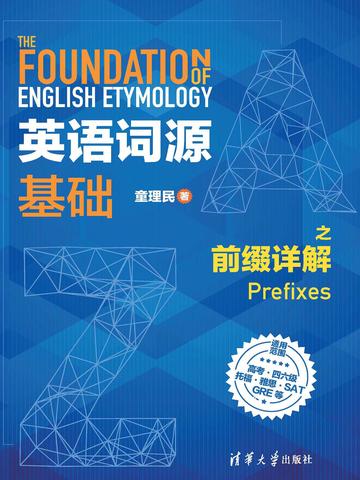
Detailed Explanation of the Basic Prefixes of English Etymology
英语词源基础之前缀详解
- Status
- Completed
- Length
- 161k Words
- Updated
- 3y ago
- Source
- Fanqie
Stats
60Reads
8.5Score
119Chapters
3Listens
5.9kReads · all time
Tags
Synopsis
Reader comments
In booklists 7


A Book That Increases Knowledge and Can Help with Learning
It's just to help you learn, no ambiguity.
22.1MViews345Books7dUpdated



Books or Some Literary Novels Suitable for Those with Zero Knowledge of English
14.6MViews126Books1moUpdated


Please Give Me Inspirational Articles to Wake Me up from Not Studying😭
11.5MViews581Books13hUpdated




English Books, Only English
I would like to read a book similar to "Learn English Spoken Quickly". English! English! English
1.4MViews119Books4moUpdated




Recommend Books on Skills
I would like to read a book similar to "Word, Excel, and PPT Office Applications from Beginner to Master". I want to learn some skills to make money, but my wallet is a bit tight. I hope you can recommend some free skills learning materials. They are good for everything, including handicrafts and making.
1.2MViews1kBooks3dUpdated


My English Is Very Poor and I Want to Read Some English Teaching Aids, Preferably Ones That Can Be Read Even If You Have No Basic Knowledge.
Want to read something like "Learning English from Zero Basics?" This book is enough."
1MViews119Books2moUpdated




🌿I Secretly Read My Classmates' Books During the Holidays and Became Obsessed with Them.
148.7kViews251Books3moUpdated
And the author has also included a "Cognate Words" section, allowing us to expand our vocabulary through analogies. This reminds me of "English Roots and Words Explained", which is also in a similar style and helps memorize words by explaining the roots. The writing style of this book is concise and clear, and the explanations are also very detailed. It is a good helper for English learners.
Affixes are radicals in English. After reading this book's explanation of 112 affixes, my fear of English has disintegrated a lot with its help. Although I didn't write down all the affixes in the book, the affix enlightenment it gave me is enough for me to recommend it. I have memorized a lot of similar vocabulary intermittently since I was a child. I vaguely know that there is such a thing as affixes, but I know nothing about the specifics. This book gave me a clear understanding of different prefixes. This understanding lies not only in the direct word formation and meaning evolution, but also in the success and failure reflected in the historical evolution of the language medium. I can't remember the specific year, but I just remember that there was a period of time when the Internet was abuzz with discussions about the most beautiful language in the world. Although I didn't participate in the debate at the time, I didn't mind those who judged the beauty of a language through pronunciation and intonation. However, I really didn't have the corresponding knowledge reserves to prove that Chinese was the most beautiful. I was just sulking alone. Now that I have read this book, I can definitely say that the beauty or badness of a language has nothing to do with the pronunciation and intonation, but is only related to the strength of the nation-state to which the language belongs. The reason is very simple. Only living people can speak and can argue between good and evil. Some people say that the French-speaking world is the most beautiful. That's because in the old days, nobles in Europe communicated in French, and English was not considered elegant. This historical influence has not completely dissipated even now. For some people, recognizing that French is the most beautiful is actually recognizing that the upper-class lifestyle that they have never had is the most beautiful. Of course, some of them must be to defend their major, career, life choices, and so on. A few months ago I still believed that there was right and wrong regardless of standpoint, but now I am very shaken by this concept. Is there really right and wrong regardless of standpoint? Or is it that I haven't realized where I stand yet? Ahem, let's get down to business. If I had read this book carefully ten years ago, maybe my English would not be bad now? Of course, even if it were shown to me ten years ago, I wouldn't be able to read it at that time. I still have some sense of what kind of coward I was ten years ago. Instead of assuming a timeline that you have never experienced before, it is better to try your best to live well now. After all, there are no ifs in life, and assumptions are just self-deception.