The author of this book, Nana, studied in Japan. In this book, Nana attempts to discover interesting or surprising details about Japan for Chinese people from multiple perspectives such as social issues, customs, education, etc. Like a jigsaw puzzle, through the stitching of all aspects of subtle content, it fully displays the current situation of Japan as well as the lives and emotions of the Japanese people, allowing readers to understand this neighboring country separated by a strip of water in a fresher and easier way.
Reader comments
This book is very interesting! Based on her personal experience in Japan, the author Nana presents Japanese society, customs and education from multiple perspectives. The content is rich and nuanced, showing a real Japan like a puzzle. Moreover, Nana created "Nana's Japanese Classroom" and has 200,000 fans, which shows that she has done a good job in sharing Japanese culture, and this book will not disappoint!
I read it from the chapter "Princess👸🏻". I originally thought it was another lackluster Nibuki article, but I didn't expect that the author's understanding of Japan is more than that, and he can even be said to have a lot of insights.
Then I started watching it from the beginning, and suddenly I thought that this Nana might be the teacher Nana who teaches Japanese fifty tones (pure speculation).
The first 15 articles mostly praise Japan's excellent aspects in the modernization process, and the following are some of Teacher Nana's understanding and thinking about Japan during her study abroad period in Japan🤔.
There is a three-way inequality on the Internet: those who love Japan and can speak Japanese have never been to Japan, those who have been to Japan and speak Japanese do not love Japan, and those who have been to Japan and love Japan do not know Japanese:-D Although it is a joke, it still reflects social reality to a certain extent.
This is a very interesting collection of blog posts. The language is very colloquial, so I can read it quickly. The introduction is quite comprehensive and rich, including society, customs, and education. Many of them are places that interest us because they are so different from China. We have heard about them before, but do not have a deep understanding of them. For example, the income of various industries in Japan, the impact of the gap between rich and poor, the differences between medical care, elderly care and housing compared with those in China, why girls wear short skirts (the layered explanation is very good), etc.
How should we understand foreign customs and customs, through people who have been there, through tweets from various bloggers, or through sporadic introductions from various tweets or articles? Although these methods can all obtain information, they cannot obtain all the information. But this book is different. We can fully and truly understand any knowledge and information about Japan through this book. It is highly recommended that everyone read and understand this book as a reference book.
2026.6.14.1.00
In the same country, different groups of people view the social scene differently. The scene of the Lost Thirty Years was relatively sad in the past. Although I also felt a little inward in this book. To be a waiter, you have to kneel down to serve and always be vigilant about not touching any fish. But from the perspective of an international student, I can feel the author's liveliness and love for life. Still interesting.
Nowadays, you can learn about the customs and customs of various countries around the world through online live broadcasts and videos such as Douyin. Japan seems to be a very familiar country to me! But reading this book still opened my eyes. It turns out that there are many things that are not covered in the short video and that I don't know at all. Most short videos are fragmented fragments that float on the surface, while books can sink your mind and see the unknown side behind real daily life. [Love]
Although the numbers are outrageous, you can barely skip chapters to see what you want to know.
If you are interested in Japanese culture and society, this book will provide you with an in-depth perspective and insight into Japan. This is an introductory book about Japanese society, culture and education. The author shows readers Japan's unique social system, lifestyle and education system through his own personal experience and observation. This book covers Japan's historical background, etiquette and customs, education system and social issues, while providing a wealth of examples and case analyses.
Well enough. The author has studied in Japan for many years and has made in-depth observations of Japan's customs and customs. He introduces various aspects of Japan's information in the book, hoping to show readers the real situation in Japan. But it would be a bit biased to understand this country only from the simple few years of experience of an international student. To fully understand Japan, you need to read other books to expand your knowledge. The author's preference for Japanese culture revealed in the book also made me always wary of the possibility of beautifying Japan.
I like it very much, it's very detailed, the author has very practical experience of living in Japan, the writing is fluent and the examples are real and credible.
Content-rich leisure companion
Super interesting social science books
Let's get to know a more real Japan
Even though I'm talking about things that happened in Japan ten years ago, they still have social value.
Japanese social governance is worthy of reference from the world!
Through the author's meticulous description, you can gain a deeper understanding of Japan.
The writing is very close to reality and makes me understand the country of Japan better.
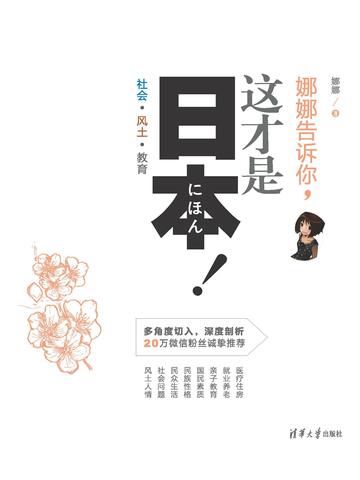



This book is very interesting! Based on her personal experience in Japan, the author Nana presents Japanese society, customs and education from multiple perspectives. The content is rich and nuanced, showing a real Japan like a puzzle. Moreover, Nana created "Nana's Japanese Classroom" and has 200,000 fans, which shows that she has done a good job in sharing Japanese culture, and this book will not disappoint!
I read it from the chapter "Princess👸🏻". I originally thought it was another lackluster Nibuki article, but I didn't expect that the author's understanding of Japan is more than that, and he can even be said to have a lot of insights. Then I started watching it from the beginning, and suddenly I thought that this Nana might be the teacher Nana who teaches Japanese fifty tones (pure speculation). The first 15 articles mostly praise Japan's excellent aspects in the modernization process, and the following are some of Teacher Nana's understanding and thinking about Japan during her study abroad period in Japan🤔. There is a three-way inequality on the Internet: those who love Japan and can speak Japanese have never been to Japan, those who have been to Japan and speak Japanese do not love Japan, and those who have been to Japan and love Japan do not know Japanese:-D Although it is a joke, it still reflects social reality to a certain extent.
This is a very interesting collection of blog posts. The language is very colloquial, so I can read it quickly. The introduction is quite comprehensive and rich, including society, customs, and education. Many of them are places that interest us because they are so different from China. We have heard about them before, but do not have a deep understanding of them. For example, the income of various industries in Japan, the impact of the gap between rich and poor, the differences between medical care, elderly care and housing compared with those in China, why girls wear short skirts (the layered explanation is very good), etc.
How should we understand foreign customs and customs, through people who have been there, through tweets from various bloggers, or through sporadic introductions from various tweets or articles? Although these methods can all obtain information, they cannot obtain all the information. But this book is different. We can fully and truly understand any knowledge and information about Japan through this book. It is highly recommended that everyone read and understand this book as a reference book.
2026.6.14.1.00 In the same country, different groups of people view the social scene differently. The scene of the Lost Thirty Years was relatively sad in the past. Although I also felt a little inward in this book. To be a waiter, you have to kneel down to serve and always be vigilant about not touching any fish. But from the perspective of an international student, I can feel the author's liveliness and love for life. Still interesting.
Nowadays, you can learn about the customs and customs of various countries around the world through online live broadcasts and videos such as Douyin. Japan seems to be a very familiar country to me! But reading this book still opened my eyes. It turns out that there are many things that are not covered in the short video and that I don't know at all. Most short videos are fragmented fragments that float on the surface, while books can sink your mind and see the unknown side behind real daily life. [Love]
Although the numbers are outrageous, you can barely skip chapters to see what you want to know.
If you are interested in Japanese culture and society, this book will provide you with an in-depth perspective and insight into Japan. This is an introductory book about Japanese society, culture and education. The author shows readers Japan's unique social system, lifestyle and education system through his own personal experience and observation. This book covers Japan's historical background, etiquette and customs, education system and social issues, while providing a wealth of examples and case analyses.
Well enough. The author has studied in Japan for many years and has made in-depth observations of Japan's customs and customs. He introduces various aspects of Japan's information in the book, hoping to show readers the real situation in Japan. But it would be a bit biased to understand this country only from the simple few years of experience of an international student. To fully understand Japan, you need to read other books to expand your knowledge. The author's preference for Japanese culture revealed in the book also made me always wary of the possibility of beautifying Japan.
I like it very much, it's very detailed, the author has very practical experience of living in Japan, the writing is fluent and the examples are real and credible.
Content-rich leisure companion
Super interesting social science books
Let's get to know a more real Japan
Even though I'm talking about things that happened in Japan ten years ago, they still have social value.
Japanese social governance is worthy of reference from the world!
Through the author's meticulous description, you can gain a deeper understanding of Japan.
The writing is very close to reality and makes me understand the country of Japan better.