Three Kingdoms: I Conquer the World by Keeping Empress He Well Fed
三国:从喂饱何皇后开始征服世界
- Status
- Completed
- Length
- 529k Words
- Genre
- Historical
- Subgenre
- Historical High-Concept
- Updated
- 3y ago
- Source
- Fanqie
Synopsis
More by this author
 Lord: My Main City Connects to the Three Kingdoms
 The Useless Prince: Level Up to God by Slaying Enemies
 Global Lord: My Troops Are Completely Overpowered
 Three Kingdoms: The Emperor's Illegitimate Son, Starting with His Marriage to Diao Chan
 Everyone Becomes a City Lord: The Nation Helps Me Build an Immortal Dynasty
 Three Kingdoms: I Started Out Faking Immortality, So How Did It Become Real?
 Why Mess With Him? Cao Cao Visits Him in Prison Every Day
 Auspicious Carp in a Year of Famine: More Children, More Blessings, and Beauties at My Door
 Three Kingdoms: Cao Cao, Stop Letting Your Imagination Run Wild. I'm Truly a Foolish Emperor
 Everyone Cuts Down Trees to Survive: I Have Billions of Times the Critical Hits
In booklists 26
Explore more →
High-Quality Three Kingdoms Novels
A transmigration story, the identity doesn't matter as long as it's high-status, but not the emperor. The protagonist should know history well and anticipate the enemy's moves, but shouldn't become a ruler. Don't deliberately denigrate certain historical figures or invent contrived schemes within schemes just to make the protagonist look clever. Nothing too short or weak, and it shouldn't lose steam halfway through. Around a million words.
Three Kingdoms Novels That Hook You from the First Page
Wins through strategy, passionate and commanding, and so gripping you can't stop reading.
Looking for Three Kingdoms Novels, the Kind You Can't Put Down
I’ve recently gotten into Three Kingdoms novels, but I haven’t found any that suit my taste. Please recommend some!
Three Kingdoms Stories Rated 9.0 or Higher, with an Incredibly Handsome Protagonist and a Cavalry-Focused Army
Ideally set in Youzhou, Bingzhou, or other regions famous for horses. The protagonist should be highly skilled in martial arts. No crossover characters or summoning.
The Three Kingdoms' Beauties: Da Qiao, Xiao Qiao, Diao Chan, and Cai Wenji
Historical Novels Set at the End of the Han, Sui, Tang, Northern Song, Ming, or Qing Dynasties
Three Kingdoms Novels Worth Reading
Looking for a quality Three Kingdoms novel with airtight logic, an exciting plot, and no stupid characters, even if the title isn’t much to write home about 😂😂😂
Are There Any Novels About the Three Kingdoms, Where a Hero Starts His Own Business in the Three States of Jing, Shu and Yang?
Three Kingdoms + Beauties + System + Army + Fourth Dimension
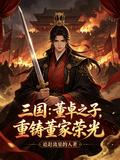
Reborn in the Three Kingdoms: Recruit Famous Generals, Strategists, and Beauties, Then Conquer the World!!!
Looking for books like The Iron Cavalry of Xiliang. When faced with the relentless wheel of history, what would you do if you were the one who transmigrated? Would you settle into a life of comfort, or rise up and take your chances? Who knows, perhaps you really could turn the wheels of history…
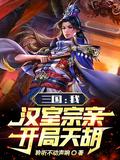
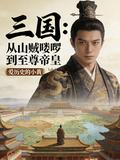
Three Kingdoms Stories Where the Protagonist Has Over 100 Strength and Recruits Guo Jia or Xi Zhicai
There Are So Many Three Kingdoms Novels. Why Are There Only a Few Good Ones? Any More?
There are so many Three Kingdoms stories, so why are only a handful rated highly? Are there really no others?
Powerful Figures, Military Technology, and Arms Deals with the Army
Food Articles, Food Articles, There Is a Shortage of Books
With food as the title, each chapter is a food name
Three Kingdoms, With a System, Summoning Famous Generals and Troop Types
You’re like this...
Looking for Three Kingdoms Stories With Summoning and a System
Overpowered
There Are No Good Three Kingdoms Novels. Disagree? Come Debate Me. Note: I Don’t Like Liu Bei
Male-Oriented Food Stories! May Good Things Come to Those Who Recommend Them 😘😘😘
Looking for Cooking God or Culinary God Stories Set in Fantasy, Xianxia, or Mythological Worlds
The protagonist has a Chef God, Food God, or gourmet-related System and transmigrates into worlds of martial arts, fantasy, xianxia, mythology, and the like. No modern urban settings! No modern urban settings! No modern urban settings!!!


Please, No Harem
Ideally, even better than Murong Fu in The Martial Arts World.
Completed! Recommend Great Completed Books Rated 9.7 or Higher
Read carefully: completed novels only, and they must be rated above 9.7. No padding the list with mediocre books.
Three Kingdoms + System + Beauties + Warlord
Three Kingdoms, a System, Beautiful Women, and Lots of Chapters
A beautiful woman, a System, and lots of Three Kingdoms content.
Palace Eunuch with a System
Reader comments 61
Translated by Google Translate
To all the handsome guys and beauties who passed by, Zhang Fei rolled around and acted cute, asking for five-star praise, [seeking attention] [seeking attention] [seeking attention] Regarding some questions raised by readers, we will respond in a unified manner. [1. People in the Han Dynasty did not eat pork] Some readers have been talking about the problem of people not eating pork in the Han Dynasty. Let's open a separate chapter to talk about it. Chinese pig raising can be traced back to 9,000 years ago, and a large number of domestic pig bones were unearthed from the Jiahu site. During the Xia and Shang Dynasties, it was difficult for ordinary people to eat meat, and the nobles mainly ate venison and fish. During the Zhou Dynasty, pork became popular. "Xiaoya: The Stone of Graduality" records: "There are pigs dancing in white, and they are wading on the waves." "Huainanzi·Si Lun Xun" says this: "The pig is the best animal, and it is not that the pig can be better than the wild beasts or elk. And the gods only eat it, why? It is considered that the pig is a common animal in the family, and it is easy to get." This evidence shows that pigs were very common livestock at the time. In the Han Dynasty, there was a very famous "Pig-Xiang Jing" that taught people how to choose pigs. At that time, castration technology was already very mature. During the Eastern Han Dynasty, castration pigs were divided into two types: wild pigs and gelding pigs. Gelding pigs are suitable for both boars and sows; gelding pigs are only for boars. And there was a special word for it at that time, (which means castrated pig.) "Yi·Da Zhu·Liu Wu Yao Ci" has a record that the pig's teeth are auspicious, which means that the castrated pig has a docile character. "Juyan Han Slips" records that from the third year of Emperor Wu's reign to the sixth year of Jianwu in the Eastern Han Dynasty, the local price of pork was 700 Wenqian (five baht) for 100 kilograms of meat. During the Wei, Jin, Southern and Northern Dynasties, eating pork became more common. The famous scholar Ruan Ji liked to eat steamed dolphin, and the method of making steamed dolphin was specifically recorded in "Qi Min Yao Shu". In the Tang Dynasty, there is a poem about "steamed dolphin with garlic sauce" in "The Complete Poems of the Tang Dynasty", and there is also a record of steamed dolphin shoulder in the Tang Dynasty roast tail feast. Therefore, some readers said that people in the Tang Dynasty did not eat pork, which was taken out of context. During the Tang and Song dynasties, influenced by the northern nomads, the nobility became popular in eating mutton, but the common people still ate pork. In the Tang Dynasty, princes and second-rank officials were provided with twenty sheep and sixty pounds of pork every month. Officials of the third rank are given twelve sheep per month, and officials of the fourth and fifth ranks are given nine sheep per month. No pork is given. By the end of the Northern Song Dynasty, the price of mutton was a little higher than that of pork. "Song Huiyao" records: "One pound of pork has six strings, and one pound of mutton has eight strings." By the time of the Southern Song Dynasty, pork once again dominated the dining table. There is a familiar poem: "Don't laugh at the farmers' wine, which is full of wax and wine. In good years, there are enough chickens and dolphins for visitors." By the Ming Dynasty, pork had an absolute advantage, so pork was also called "big meat". Some readers said that people who fled famine during the Three Kingdoms period did not eat pork. I don't know what his basis is, but it is certainly impossible. Therefore, people in the Han Dynasty ate pork, and the castration technology was also very mature. [2. Were there green onions and shallots in the Han Dynasty] Yes! Onions and ginger are all native to my country, but garlic (garlic) is produced in Siberia and was brought back by Zhang Qian. In ancient times, onions were often associated with beauty. "The Peacock Flies Southeast" describes Liu Lanzhi's "finger as if it were peeling an onion root, and his mouth as if it contained vermillion pills." The Han Dynasty Agricultural Book "Four People's Monthly Orders" specifically records the difference between green onions and shallots: "In February, do not say small onions, in June do not say green onions. In July, you can plant small and large onions. Summer onions are called small, and winter onions are called big." It can be seen that there must have been green onions during the Three Kingdoms period, and every household ate them. [3. Regarding the eunuch claiming to be a slave] A slave is a male and a maid is a female; the term slave came from the slave group in the pre-Qin period. In addition to calling themselves slaves and maids, eunuchs also call themselves our family, Sa family, Za family, etc. [Four, Queen He's name] In this book and the previous one, Queen He's name is both He Wan, which I made up myself. Some novels are called He Lian, which was also edited by the author. There is no record of Queen He's name in the history books. Her posthumous title is Queen Lingsi. [5. Let's talk about the food of the Han Dynasty] In the Han Dynasty, the five grains of rice, broomcorn millet, millet, wheat, and beetroot were already very common. In the north, millet, millet, and wheat are the main food, which is also pasta; in the south, rice is the main food, which is rice. In this era, with the development of grain processing technologies such as pestles, mortars, and mills, cereal flour became the staple food. There are many ways to make pasta, boiled ones are called soup cakes, steamed ones are called steamed cakes, and those baked on fire are called oven cakes. Among them, "soup cakes" include dolphin skin cakes, thin ring cakes, cut cakes, chicken and duck cakes, boiled cakes, etc.; "Steamed cakes" include white cakes, scorpion cakes, etc.; "Oven cakes" include sesame cakes, Hu cakes, marrow cakes, etc. In addition, during the Western Han Dynasty, King Liu An of Huainan invented tofu. Let's talk about vegetables. Generally speaking, the vegetables eaten by Han people include roots, stems and leaves, onions, garlic, melons and fruits, etc. Combining historical records and some archaeological evidence, it is certain that there are bamboo shoots, lotus roots, sunflowers, mustard greens, leeks, water spinach, turnips, shepherd's purse, taro, gourds, water chestnuts, etc. Cucumbers were also introduced from the Western Regions at that time. In terms of fruits, archaeologists have discovered that in the Han Dynasty, the fruits native to China included peaches, pears, dates, wild jujubes, apricots, plums, persimmons, plums, bayberries, bayberries, Guangdong laughing chestnuts, loquats, oranges, citrus, pomelo, lychees, mulberries, ginkgo, pine nuts, cantaloupe, muskmelon, water chestnuts, etc. The most famous fruit is the grape. Before Zhang Qian went to the Western Regions, pomegranates and olives had already been introduced. After the Silk Road was formed, walnuts, figs, papayas, and courgettes were also introduced. Let me say this much first, and I will add it as soon as I find any problems. If there is anything wrong, you can also leave a message to correct me!
Personally, I think the subject matter is quite interesting. I hope the author can write more protagonists fighting on the battlefield in the future. After all, people traveling through the Three Kingdoms want to see the protagonists unified. I support the new book. Come on, author.
The book is good. I resist giving it 2 stars. The number of words is too few and it's not enough to read. When the author's reputation is not rising, he still needs to be more popular.
Well written, keep up the good work
Authors with interesting and novel themes should keep writing and don't give up.
The book is really good. I like reading this kind of book.
It's fun but not brainless at the same time. Princess Feifei won my heart [laughing evilly]
I'm going to give you a good review after reading Chapter 6. It's the second book of God of Cooking. The last update was too slow. I'll comment after reading it later. Tmd is so well written, the descriptions of things are as delicious as the taste on the tip of the tongue, and it is not too exaggerated. There are also palace struggles, and each character is quite rich. I'm not educated, but it's so cool, and the speed is too fast, less people are watching, don't get banned
Okay, knowing how to drive is a great benefit [laughs crookedly]
I came in because of the title of the book [Shy], At first I thought it was a series of creampies [laughing], The result is literally feeding me with delicious food [making a face]. But this article is definitely worth reading!