[Editor's Pick]
Prince's sons and beiles stroll through the streets in droves, countless young masters and palace ladies fill the place, and emperors who do nothing but fret over their harems repeatedly flaunt their luxurious lives in TV dramas... Is this what the Qing Dynasty was really like?
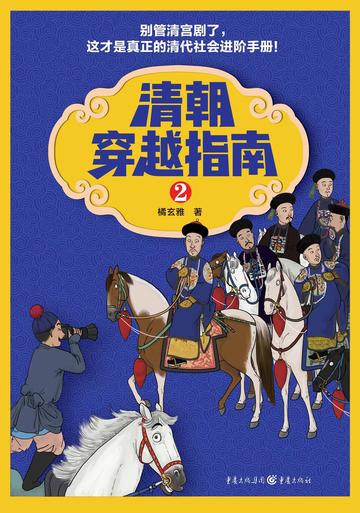
In A Guide to Transmigrating to the Qing Dynasty, we have already used details such as how to read household registers, how people spoke and addressed one another, how they ate, drank, and entertained themselves, how to buy a house and hire workers, what clothes they wore and how they traveled, what the palace and aristocratic families were like, and how women were selected for the palace, married, and kept house, to shatter the fictional Qing Dynasty portrayed in TV dramas. In A Guide to Transmigrating to the Qing Dynasty 2, we will continue letting historical details speak for themselves, using descriptions like virtual reality to immerse you in the path of social advancement for men in the Qing Dynasty!
Some details in A Guide to Transmigrating to the Qing Dynasty 2 may once again overturn what you thought you knew:
☆ The imperial examinations were risky
During the exams, candidates had to form a group of five and vouch for one another. If any one of them cheated, the others would be punished as accomplices...
☆ Exam hall rules were strict
Qing Dynasty imperial examinations prohibited candidates from bringing wooden cabinets or boxes, double-layer stools, or bedding. Inkstones could not be too thick, pen shafts had to be hollow, water had to be carried in porcelain vessels, and candle holders had to be hollow all the way through. Even pastries and steamed buns had to be cut open for inspection. Felt blankets had to be unlined, and leather coats had to be without their outer layer...
☆ Being an official in the Qing Dynasty cost money
Official robes, hat finials, and court beads were not provided by the government. Officials had to buy them themselves, and those without money had to borrow...
☆ In the Qing Dynasty, gray income was not considered bribery
Three years as an honest magistrate, and you come away with a hundred thousand taels of silver! This kind of gray income was out in the open, and even the emperor knew about it...
☆ The Qing court did not discuss government affairs in open court
In TV dramas, the emperor wears bright yellow court robes and sits in the Hall of Supreme Harmony while a crowd of civil and military officials noisily debates state affairs below. In reality, that's made up. When the emperor wanted to summon ministers to discuss a matter, he would select them by drawing name tablets...
☆ Qing Dynasty law distinguished between kin and strangers, high and low
In criminal cases involving relatives, an offender who was an elder could receive a lighter sentence...
☆ Qing Dynasty law gave certain people special consideration
The elderly, minors, people with disabilities, women, astronomical officials, and those who committed crimes by accident could receive reduced punishments. Officials' legitimate wives, women, artisans, and members of hereditary entertainer households could pay money to offset legal penalties...
This was the real Qing Dynasty!
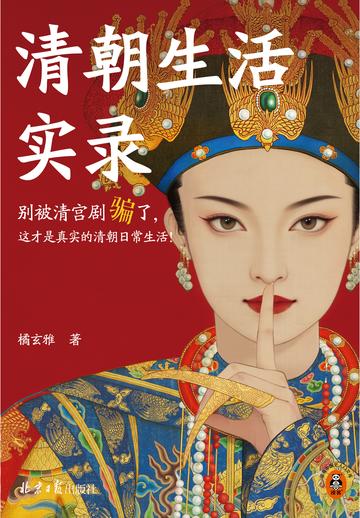
A Guide to Transmigrating to the Qing Dynasty is a popular history book about the Qing Dynasty that is not stuffy, but is absolutely serious. If you're an avid drama watcher who wants to pick apart and fact-check TV dramas and other works set in the Qing Dynasty, but doesn't want to read dry, serious textbooks or academic monographs, then this accessible, entertaining, and engaging book is a must-read. If you're a screenwriter, a creator of literary or artistic works, or a professional researcher, the meticulous details in A Guide to Transmigrating to the Qing Dynasty may also give you something to think about.


This book is very rich in content, especially the introduction to the laws of the Qing Dynasty, which impressed me deeply. The author gave me a deeper understanding of the society of the Qing Dynasty through interesting stories and cases. Moreover, I found that a lot of the content in the book resonates with my current entrepreneurial experience. For example, in the process of starting a business, you also need to abide by the rules and not take any chances. At the same time, we must also learn to be flexible. Just like the "grey income" of Qing officials, legal innovation is also important. All in all, this is a very inspiring book and I recommend it to everyone!
After reading both 1 and 2, there is only one word, "professional". Through the author, I learned more about the Qing Dynasty in all aspects. I hope the author can continue writing 3. 😄