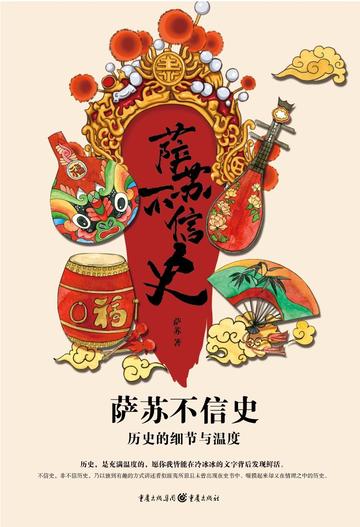
Not Believing the Official Record Doesn't Mean Rejecting History tells, in a distinctive and entertaining way, stories that seem utterly unbelievable and never made it into the history books, yet somehow make perfect sense on closer inspection. The “joking” Marquis of Haihun, the delinquent Cao Cao, the emperor who “could do nothing but rule,” a queen more formidable than Mi Yue, and the possibility that Yang Guifei was Iranian! Who would dare compete with the two empress dowagers for a husband's affections? Behind the blend of solemnity and humor, are these vivid stories, or just a gimmick?
[Synopsis] No two people have the same face, and there are countless books in the world. Chinese readers have long enjoyed judging people and discussing events, probing into the details to uncover a different side of history. Rather than offering a sweeping historical narrative, this book picks out fragments from the lives of familiar historical figures such as Liu Bang, Sima Qian, Liu He, Marquis of Haihun, Cao Cao, Fu Jian, Emperor Taizong of Tang, Emperor Renzong of Song, and Cixi. Approaching them from unconventional yet not sensationalist angles, the author draws on historical records, expert opinions, and folk tales, then adds his own analysis to tell unexpected but plausible stories in a distinctive and engaging way. Through forgotten corners, readers can experience history's vitality and feel its warmth.
History is recorded by people, and in the process, there is bound to be “silence for the revered, the beloved, and the worthy.” Much of the past is also difficult to verify because of the passage of time, leaving gaps and errors. It is understandable to question historical accounts. As for the definition of “reliable history,” meaning recorded history as opposed to prehistory, does “Unreliable History” mean a work full of wild imagination, with no sources to back it up? The title Unreliable History is intriguing, but it is clear that Sasuke's Unreliable History is not meant for serious study. Some say that although China and the West both value history, they do so in different ways: Chinese people diligently record it, while Western scholars diligently reflect on it. That seems true enough. History is not simply an accumulation of details; between those details may lie a conclusion that overturns everything we thought we knew.
Sasuke's Unreliable History makes an excellent attempt in this vein. The author, Mr. Sasuke, who once worked on the cultural comedy program Hello! History!, offers entertaining interpretations of many little-known historical facts. For instance, the “joking” Marquis of Haihun refers to how the zithers, cauldrons, and lacquer screens unearthed from his tomb corrected many modern misconceptions, as if the past were playing a joke on later generations. In the section about the emperor who “could do nothing but rule,” we see an emperor who is helpless yet kind, and can't help but marvel that even a ruler so exalted has the same ordinary human emotions and desires as anyone else. “The Imperial Physician's Prescription Didn't Cure Him,” which recounts the death of Emperor Jiaqing, not only corrects the common assumption that the imperial physician dared not prescribe medicine for fear of losing his life, but also shows that everyone is equal in the face of death, even the emperor. This lighthearted way of learning about history is well suited to readers who want to pick up some historical knowledge, broaden their horizons, and find something to talk about during their spare moments. Some stories may seem frightening or bizarre, beyond what most people know, but as Mr. Sasuke says, “This subversion is only tactical.” He is simply using a distinctive and entertaining style to record the way history looks to him.
This book is very interesting, telling many historical stories from a unique perspective and in a light and humorous way. I especially like the descriptions of characters such as Haihunhou and Cao Cao in the book. I feel that they have become more vivid. Moreover, the author will also quote some interesting legends and historical materials, which gave me a new understanding of history. As the book says, history is like a thread. If you pull it, you may pull out many unexpected things. Recommended to friends who like history, you will definitely have a different reading experience!
Exploring the historical process is interesting and informative
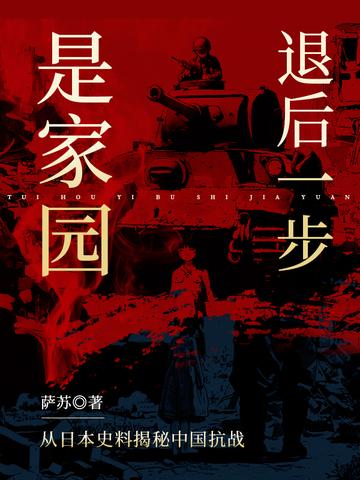 Taking a Step Back Is Home: Revealing the Secrets of China's Anti-Japanese War from Japanese Historical Materials
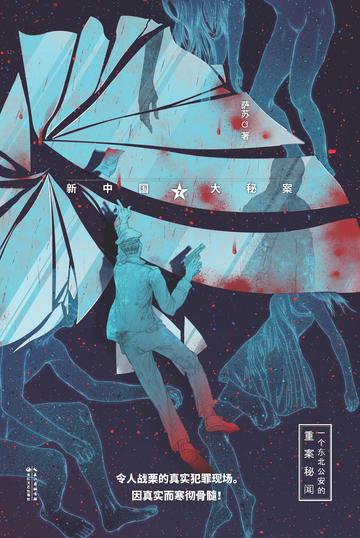 Ice and Blood: A Crime Scene at -30°C
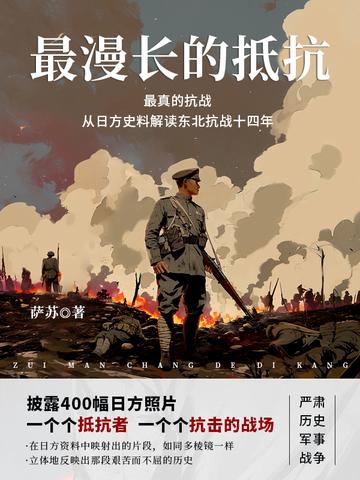 The Truest War of Resistance: The Longest Resistance, Fourteen Years in Northeast China Through Japanese Sources, Volumes One and Two
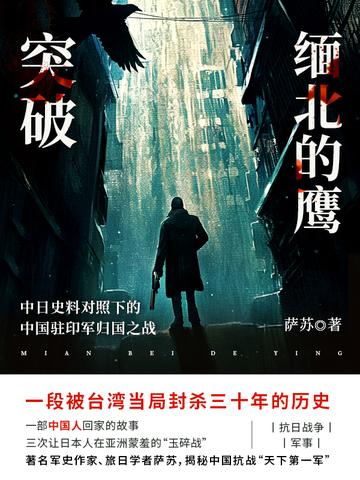 Eagles Breaking Through Northern Myanmar: The Chinese Expeditionary Force's Return Home, Compared Through Chinese and Japanese Historical Records
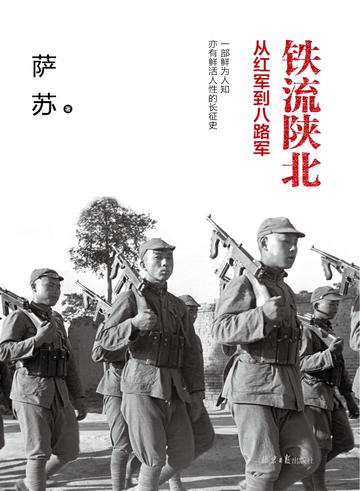 The Iron Tide of Northern Shaanxi: From the Red Army to the Eighth Route Army

This book is very interesting, telling many historical stories from a unique perspective and in a light and humorous way. I especially like the descriptions of characters such as Haihunhou and Cao Cao in the book. I feel that they have become more vivid. Moreover, the author will also quote some interesting legends and historical materials, which gave me a new understanding of history. As the book says, history is like a thread. If you pull it, you may pull out many unexpected things. Recommended to friends who like history, you will definitely have a different reading experience!
Exploring the historical process is interesting and informative