Stats
5.8Score
Synopsis
No synopsis yet.
We haven’t got an English blurb for this one. It appears once the source description has been translated.
We haven’t got an English blurb for this one. It appears once the source description has been translated.








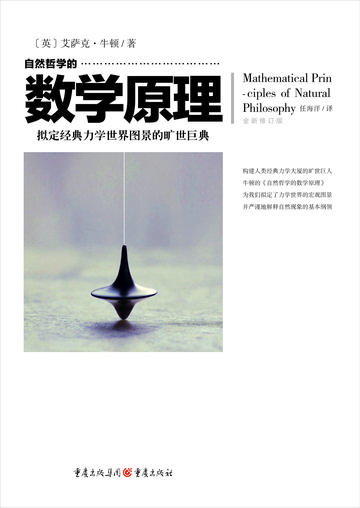
Although today's physics students and natural science researchers no longer need to read this book, the contribution of this book cannot be overestimated. It was with this book that Newton established the independent status of natural science, pulled it out of the embrace of theology, and laid the epistemological and methodological foundation and disciplinary legitimacy for the rapid advancement and knowledge accumulation of science in the following hundreds of years. Since then, physics has quickly become the crown jewel of human knowledge, and its achievements have also greatly changed the way researchers in other fields explore knowledge, providing a steady stream of knowledge power for the progress of human civilization.
Newton's contribution made the laws of nature no longer hidden in the darkness of religion, igniting the fields of physics, biology, mathematics, etc. This could show Newton's talent in multiple fields, combining natural philosophy with the fields of mathematics. The concepts and opinions in it require certain professional knowledge to understand, and it can be said that the professionalism is very high. Reading slowly requires not only careful deliberation but also careful thinking, which makes people feel the greatness of Newton and the charm of genius. It contains a large number of interpretations of calculus knowledge and the application of geometric figures, allowing readers to appreciate the beauty and elegance of the mathematical discipline.
With the strength and precision of scientific craftsmen, the three laws of mechanics are described - the definition of mass has profound connotations, and the definition of inertia points directly to the essence of appearance, distinguishes absolute and relative motion, and the essential difference between position and place, focusing on special rotation issues. The bucket experiment reveals the essence of inertial change and the existence of absolute space and time. He keenly discovered that the movement of conic sections requires centripetal force, pointing to the central center of mass. The immovable center of mass can represent absolute space. He was almost the only mathematical master who pointed out the absolute space and time that everyone was confused about: a man inspired by God - his name was Newton.
In "Principles of Natural Philosophy", Newton elaborated on his three basic laws, namely the law of inertia, the law of motion and the law of action and reaction, which form the basis of classical mechanics. Newton's mathematical principles also include a set of mathematical equations about force, mass, motion and gravity, the most famous of which is the law of universal gravitation. Newton's "Mathematical Principles of Natural Philosophy", with its profound theories and mathematical deductions, laid a solid foundation for the fields of physics, astronomy and engineering. It had an important influence on the subsequent development of science and the formation of modern scientific methods, and is widely regarded as a classic.
Nature and its laws are hidden in darkness; God said, "Let Newton come!" Then everything became light.
Oh my god, I can actually find it. This is something I didn't expect.
This book has it, I didn't expect it
Hello, my friend, your foreign persimmon may have many novels, but it can also be more than just novels.
A masterpiece, the beginning of science
The mysteries of the universe are hidden in the stars above us.
This is the greatest thought that everyone should study.
Good book, worth it