This book takes the development of artificial intelligence as the background, describes the algorithm through actual case applications, and provides Python programmers with more detailed practical solutions for in-depth learning. Mainly from the algorithm, it is divided into mathematics, search, backtracking, recursion, sorting, iteration, greedy, divide and conquer and dynamic programming; from the data structure, it is divided into string, array, pointer, interval, queue, matrix, stack, linked list, hash table, line segment tree, binary tree, binary search tree and graph structure. Aiming at classic algorithms, combined with relevant data structures, it combines problem description, problem examples, code implementation and operation results. The language is concise, simple and easy to understand. It is not only suitable for scientific researchers interested in Python programming, but also suitable as a reference textbook for colleges and universities.
Reader comments
This book explains the algorithm through actual cases, making it easy for a novice like me to understand. Moreover, the content is easy to understand and the language is concise. I feel it can help me quickly master Python programming. I plan to recommend it to other new mothers like me, so that we can all learn and make progress together!
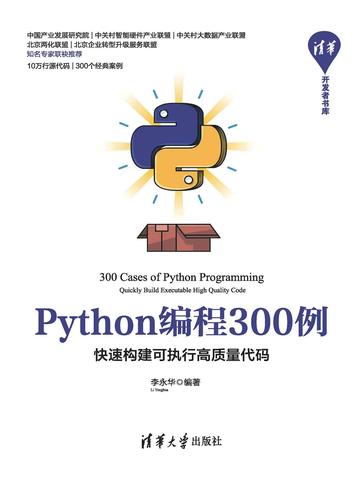


This book explains the algorithm through actual cases, making it easy for a novice like me to understand. Moreover, the content is easy to understand and the language is concise. I feel it can help me quickly master Python programming. I plan to recommend it to other new mothers like me, so that we can all learn and make progress together!
There is no copyright so it cannot be free.