Stats
8.9Score
17Chapters
Tags
Synopsis
Reader comments
In booklists 3
Psychology! ! I Really Like It, Please Read It! Girls Like Psychology
I want to read a book like "Murphy's Law: Learn a little bit of psychology every day". Please recommend some psychological articles. I really like them. I hope to recommend some psychological books. I really like to read them. Please, guys! ! !
70.6MViews374Books1dUpdated
Books That Provide Exposure to Different Professional Knowledge
Not only reading novels, but also wanting to learn a lot about daily medicine, sleep life, agricultural planting, technological transformation, and literary creation are also the best choices for entertainment.
4.6MViews1kBooks12hUpdated



Looking for an In-Depth Book
The IQ is required to be online. Don't write nonsense or make fun of it. It should be in-depth. If it's about traditional culture, even better.
272.7kViews568Books1dUpdated
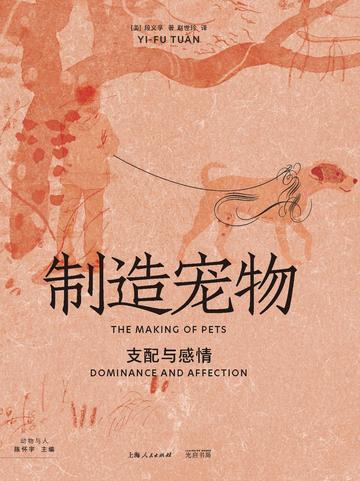
Finished reading! Let me talk about the overall situation first. The reading difficulty is medium, and the cultural gap is not that serious. After all, the author is a Chinese-American? At least Chinese. So you don't need to worry about the problems you don't understand at all. They don't exist and are easy to understand. At that time, I caught sight of the book. I had already noticed that many of the ideas in the book apply in my daily life, but I had not thought about or researched them in depth. After reading this book, I felt it was much clearer. However, the author's pattern and scope of thinking were much larger than my initial thoughts, and there were many examples. …But some examples may seem reasonable, but they are not. I still hope it will be screened, but overall I think it is blameless. I learned a lot from it, and there is no doubt that it is a spoiler. I can only say that it is also very helpful for studying the flow of power, designing relevant characters, understanding their brain circuits, or applying it in real life. Let's excerpt a paragraph at intervals: "This power over others - including the power to inflict pain and humiliation on others - is vaguely pleasurable. But at the same time there is a deep attachment... They are his possessions; their value reflects his worth; a compliment to them is a compliment to him. Of course there are real feelings involved... Intertwined with these feelings is his sense of superiority and power."
Mr. Yifu Tuan's point of view is very unique, and the content in the book also triggered my thinking about many things. As he said, pets are not only emotional sustenance, but may also involve power control. This book made me realize that we need to understand the world and the things around us more deeply in order to treat them better. It is recommended that you also read it, you will definitely gain something new!
This book shocked me a lot and is worth reading. It broadened my horizons and gave me another way of observing the world.
As expected of an American, he writes about everything
Yifu Tuan talks about pets on the surface, but he is actually talking about power - man's control of animals, man's transformation of nature, and even man's taming of man, all share the same logic. Emotion and power are not internal and external oppositions, but often two sides of the same process. The owner's love for a pet includes the desire to "transform it according to one's own wishes"; the ancient palace's favor for musicians and dwarfs was both true love and complete objectification. What Yifu Tuan asked is: Why do humans always cannot help but "control" something when they "love" it? He greatly expanded the concept of "pets" - garden bonsais are pruned nature, slave musicians are tamed people, and children and women in the feudal era are also in a "shaped" position. The logic of domestication is divided into three levels: physical domestication (artificial selection for appearance), behavioral domestication (cultivation of obedience and ingratiation), and spiritual domestication (deprivation of independent consciousness of survival). Modern pets have essentially become emotional substitutes and emotional consumer goods for urban people, and the same logic also extends to social interpersonal relationships and class control. It is worth noting that Yifu Tuan is not eager to make moral judgments. He uses descriptive language to present a different perspective of viewing. As he said, "The vast majority of people have no objection to being an 'object' as long as the object is admired" - this touches on the complicity of power relations, rather than pure oppression. The point of view is sharp and thought-provoking, but there are some debatable points: too much emphasis on human dominance, to a certain extent, it ignores the true emotional attachment of pets to people, as well as the natural affinity instincts of different animals. But Yi-Fu Tuan's value lies not in providing standard answers, but in forcing readers to ask more questions when they see "accompanying": Who shaped whom behind this companionship? You may not give up keeping pets, but you will be more clearly aware that in every seemingly pure and warm relationship, there may be a tension between shaping and being shaped. This is both a warning and a new dimension of understanding the world and oneself.
Personal feelings of domestication and self-domestication may be more in line with the nature of relationships in the biological world, and power and dominance are ideological descriptions. Otherwise, when humans play basketball, is it also the control of basketball by humans? Humans have domesticated plants and are actually trapped by them. Mothers dominate their children, but they are not dominated by their children.
It's a new perspective for me
I only read Chapter 9 and the index
This book profoundly reveals the nature of power and the causes of addiction
Relatively objective narrative, worth reading