Looking for Books for Junior High School Study! ! (Over)
My grades started plummeting when I entered junior high school. I obviously learned and knew how to do most of the questions correctly, but I got them wrong when I took the test. Now I am in high school! In the end, I did okay in the exam. Thank you everyone for reading the book (although I didn't read it either). I'll just treat this post as a souvenir.
16.6MViews300Books6dUpdated
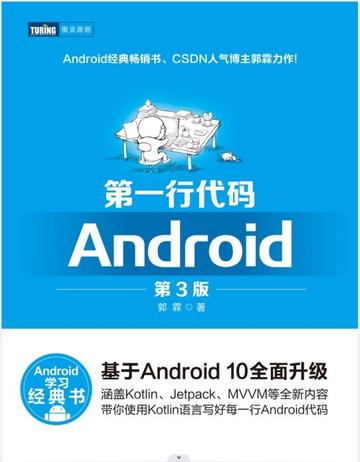





Recommended for getting started with Android. Due to work needs, I made up a lot of basic concepts of Android. The concepts in the book are explained clearly and concisely. Remember, just knowing the concept is meaningless. You must have a certain understanding of the concept, which requires understanding in practice. [Four Core Questions] 1. Is it difficult to learn Android development? : This book is relatively easy for people with other programming experience, but it may be just right for people with zero foundation. It guides readers to learn in a step-by-step manner, reducing the difficulty of learning. 2. What is the prospect of Android development? : First of all, there is no one-and-done career; With the development of mobile Internet, the demand for Android positions is constantly increasing, and it is widely used in the Internet of Things, smart homes, smart wear and other fields; Hongmeng native began to be officially launched in 2024. Learning Android well will help you quickly get started with Hongmeng. 3. How to quickly master Android development? : First of all, basic CS knowledge is required. CS refers to computer composition, operating system, database principles, network principles, etc.; Secondly, to learn the basic concepts of Android, it is recommended to supplement basic knowledge from the book system; (videos are also available, but the concept presentation efficiency is not as high as books, and in future work, more learning will be done from books, articles, and codes, so it is recommended to start from scratch) Then, apply your concepts to practical projects, strengthen your memory, and test your learning results; Finally, we must learn excellent open source code, actively participate in community exchanges, and increase diversified input capabilities. 4. What are the most common problems encountered in learning? : Passively accepting knowledge, entering through the left ear and out the right ear, knowledge flows through the brain, resulting in an empty head; The process is bumpy, and you may encounter many problems during the actual operation. It is not a very complicated technology, but simple compilation, API calling, and UI exceptions; It was just a taste, but it didn't cross the first small peak of the cognitive curve, and it even gave up halfway in the early stage due to fear of difficulties; Content Sharing 1. Foundation and development environment Introducing the Android ecosystem, version evolution, Android Studio, project structure and module organization, as well as the role of dependency management and configuration files, to build a clear development foundation for developers; the resource management system helps effectively manage various resource files, and layout files and views are key elements in building user interfaces. 2. Kotlin language Basic syntax: including variables, functions, control structures, etc., Which are the basic rules of programming. Null safety: Avoid null pointer exceptions and improve code stability and security. Functional programming: A function-based programming style that makes code more concise and easier to read. 3. Core components Activity: The basic unit of user interface, responsible for display and interaction, and its life cycle management is crucial. Fragment: Reusable interface fragment, increasing the flexibility and maintainability of the interface. Service: performs tasks in the background without affecting the user interface, enabling long-running operations. BroadcastReceiver receives broadcast messages to implement communication between systems or applications. Intent is used for communication and startup between components. 4. UI design Layout managers: such as LinearLayout, RelativeLayout, etc., Determine the structure and layout of the interface. Commonly used controls: Button, TextView, EditText, etc., To meet basic interaction needs. Theme and style: Unify the appearance style of the application to improve user experience and visual effects. 5. Data storage SharedPreferences: Stores simple key-value pair data, convenient and fast. SQLite database: Relational database, suitable for storing complex data. ContentProvider: realizes data sharing and facilitates data exchange between different applications. 6. Network communication HTTP requests: A common way to interact with data from a server. Network framework (such as Retrofit, OkHttp): Simplify the implementation of network requests and improve development efficiency. JSON data format: A widely used data exchange format that is easy to parse and generate. 7. Advanced features Jetpack components: a collection of tools that improve development efficiency and application quality. ViewModel: manages interface data and realizes the separation of data and interface. Navigation component: realizes page navigation within the application and improves user experience.
Exactly the same as the real textbook!
Still need some basic knowledge, self-study with zero basic knowledge is a bit difficult
This tool is written very interestingly and is explained in a chatting manner rather than in the form of a pure reference book. Good reviews [laughs]