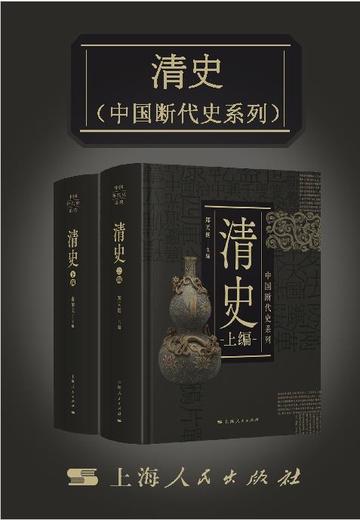
This book combines the "Part 1" compiled by the famous historian Zheng Tianting and the "Part 2" compiled by Nan Bingwen to form a complete masterpiece of Qing history. The whole book traces the development and origin of the Manchu ancestors and the rise of the Manchu people to the eve of the Opium War.
This book embodies the academic insights and research experiences of the contributors and draws on the research results of Qing history. It is rich in detailed content, vivid and concise, moderate in length, takes into account both academic and popularization, has a unique style, and has important academic value. It is one of the "Chinese Dynasty History Series" of Shanghai People's Publishing House.
The book has several notable features. First, the structural layout is reasonable. In particular, relatively independent historical content is discussed in special chapters and sections, and the time clues are combined with important events to create a clear picture, which is conducive to readers' study. Second, it is rich in content and focused. It is good at discovering distinctive content in Qing history and interspersing it with each chapter to describe various phenomena in the history of the Qing Dynasty from multiple aspects and angles. The third is to absorb past academic results in simple and solid statements of historical facts, and present independent academic insights to provide readers with meaningful enlightenment.
Reader comments
The structure of this book is very clear, the time clues and important events are well combined, and it is easy to read at a glance. The content is also rich and diverse, and the focus is very prominent, which gave me a more comprehensive understanding of Qing history. However, I don't like some of the characters in it, such as Cixi, I think she is very selfish. But overall, this is a valuable history book worth reading.
The only shortcoming is that the analysis of historical data can be placed at the end of the paragraph to facilitate analysis and comparison. The others put forward their own opinions, which is quite good! It's not about following what others say.
The structure of this book is very clear, the time clues and important events are well combined, and it is easy to read at a glance. The content is also rich and diverse, and the focus is very prominent, which gave me a more comprehensive understanding of Qing history. However, I don't like some of the characters in it, such as Cixi, I think she is very selfish. But overall, this is a valuable history book worth reading.
The only shortcoming is that the analysis of historical data can be placed at the end of the paragraph to facilitate analysis and comparison. The others put forward their own opinions, which is quite good! It's not about following what others say.
A rare good history book