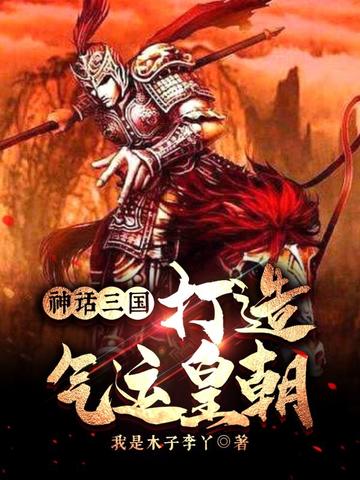
The Mythical Three Kingdoms, Creating a Destiny Dynasty
神话三国,打造气运皇朝
- Status
- Completed
- Length
- 242k Words
- Genre
- Historical
- Subgenre
- Historical High-Concept
- Audience
- Male
- Updated
- 3y ago
- Source
- Fanqie
Stats
688Reads
7.4Score
116Chapters
86Listens
168.8kReads · all time
Tags
Synopsis
Reader comments
In booklists 12
Top-Notch Three Kingdoms Books (Not for Beginners)
47.8MViews128Books1dUpdated
Dynasty, Imperial Dynasty, Imperial Dynasty, Celestial Dynasty, Fairy Court, Holy Court, Heavenly Court, Etc.
43.5MViews251Books15hUpdated
Yunchao, Dynasty, Imperial Dynasty, Heavenly Dynasty, Imperial Dynasty, Divine Dynasty,
41.2MViews142Books2dUpdated
Three Kingdoms + Full Force
Want the Three Kingdoms
35.1MViews365Books2dUpdated
In the Three Kingdoms, You Can Make a Fortune from Liaodong, Hanzhong, Jiaozhou, and Liangzhou.
Three Kingdoms
16.9MViews326Books6dUpdated
Looking for Historical Novels About the Late Han Dynasty, the Late Sui Dynasty, the Late Tang Dynasty, the Late Northern Song Dynasty, the Ming Dynasty and the Late Qing Dynasty
11.9MViews451Books1dUpdated
Three Kingdoms, Self-Reliance, System, Force
11.4MViews138Books4dUpdated
Looking for Someone Who Unified the World with Shu Han in the Late Three Kingdoms Period?
10.5MViews147Books1moUpdated
Similar to the Mythical Version of the Three Kingdoms, There Are Levels of Martial Arts Training ➕ Power Strategy ➕ Beauty ➕ Struggle for Hegemony
Three Kingdoms novel
6.6MViews226Books1moUpdated
Qiu Gaowu Three Kingdoms + Mythical Three Kingdoms
Similar to the mythical version of the Three Kingdoms, with super high force value
5.1MViews141Books11dUpdated
I Recently Fell in Love with Rebellion Books, Recommend Them to Me
4.9MViews326Books20hUpdated
Looking for a Book About Legions, Where the Protagonist Leads His Own Strength to Conquer the World.
The protagonist of the novel is decisive in killing, has online intelligence, or has a system to summon his own regiment to conquer the world.
1.8MViews119Books13hUpdated
Is there anyone who can interact online [crying] To say that I am a slanderous Emperor Wu of the Han Dynasty, you need to provide evidence. Is telling the truth considered a slander? 1. Create the rule of ignorant people: He promoted cultural autocracy and ideological suppression, deposed hundreds of schools of thought, and only respected Confucianism. He was the chief engineer of the autocratic regime in promoting cultural autocracy. 2. Search for the people's fat and their anointing, and compete with the people for profit: 1. Official management of salt and iron: In the early Western Han Dynasty, a free operation policy was adopted for the salt and iron industry. In the fifth year of Yuanshou, Emperor Wu of the Han Dynasty began to implement a state monopoly on salt and iron with the support of Sang Hongyang and others in order to increase fiscal revenue. Under Da Sinong, there is a Yan Tiecheng who is in charge of the national salt and iron operations, and a local Yang Guan Tieguan is set up to manage the production and marketing of salt and iron. Through the salt and iron officials, the government controlled the entire process of salt and iron production and circulation. The Yantie official operation played a positive role in increasing national fiscal revenue and restraining the power of businessmen. However, due to the overtones of government-business monopoly, ordinary people have suffered greatly. 2. Suanmin: This is a property tax levied by the Western Han Dynasty government on merchants, handicraftsmen, loan sharks, and car and ship owners. During the period of Emperor Wu of the Han Dynasty, due to the increasing emptiness of the national treasury, the Suan Min Order was issued in the fourth year of Yuanshou to increase the collection of property taxes on merchants. "" Refers to currency and tax calculation unit. 1 String is 1 string, 1 string is 1,000 coins, and 1 is counted as 120 coins. According to the law, a merchant's property is taxed once (6%) for every two thousand yuan; a handicraftsman's property is taxed once for every four thousand yuan; civilians who have cars are taxed once for each car, and merchants' cars are taxed twice; for boats over five feet long, one tax is charged for each boat. For those who conceal and fail to report, if the revelation is true (called "reporting"), all the property of the defendant will be confiscated and he will be fined with guarding the border for one year. The informer will be rewarded with half of the confiscated property. 3. Uniform transportation: tributes from each county should be transported directly, except those of particularly excellent quality. Generally, tributes no longer need to be sent to the capital, but are sold by uniform transportation officials nearby at high prices; or simply the tributes can be converted into cash for commercial operations, and the price difference can be earned by buying low and selling high. The equalized transportation measure commercialized the tributes and reduced the losses incurred in the past tribute transportation. However, all losers took advantage of their power to "sit down and sell things for profit" and buy and sell by force, which caused great anger among the people. 4. Jinjin: refers to the money donated by the princes when the emperor worships the ancestral temple in August every year. The gold mint has the nature of apportionment. Emperor Wen of the Han Dynasty formulated the "Law of Gold Mint", which stipulated that when the emperor personally led his ministers to worship the ancestral temple, the princes must donate gold to assist the sacrifice. The amount to be paid was calculated based on the population of the area under their jurisdiction, with four taels for every thousand people, and four taels for those with a population of less than a thousand. In the Han Dynasty, four taels of gold equaled 2,500 qian. However, the real burden of this money is not the princes, but the working people. After the princes collected the gold, they often found ways to exploit it. In the fifth year of Yuanding Dynasty, due to the poor quality and insufficient weight of the mint gold presented by the princes, Emperor Wu of the Han Dynasty ordered that "the kings cut off the counties and the princes were exempted from the country." A hundred and six people were deprived of their titles, which was known as the "bronze gold incident" in history. 5. Suanfu: Suanfu is a poll tax levied on adults. It was implemented in the Qin Dynasty. In 203 BC, Liu Bang issued an order that all people aged 15 to 56 should pay 120 yuan a year as a gift. From then on, the calculation of gifts became a custom. The oral tax is a poll tax levied by the government on children under the age of fourteen. In the early Western Han Dynasty, the tax collection amount was 20 qian per person, and the starting age was 7 years old. By the time of Emperor Wu of the Han Dynasty, he started to fight at the age of 3 years earlier. Calculated taxes and oral taxes collected currency. Although the amount was not very large, it increased the burden on farmers to a certain extent. 6. Issuance of platinum coins: "The square ruler is made of white deer skin, edged with algae, and is made into skin coins, which are four hundred thousand. Silver and tin are also made into platinum. There are three grades of platinum: one, three thousand; two, five hundred; three, three hundred. Pirates of all All money crimes are punishable by death. "A piece of deer skin is strictly worth 400,000 yuan, and a piece of silver tin is worth hundreds or thousands of dollars. If the people are required to exchange their money for such things, so as to accumulate wealth and enrich the national treasury, how can the people not be poor? 7. Politics and Diplomacy of the Jin and Yuan Dynasties "Wei Qing was more than 100,000 strong, and he attacked the Hu. The soldiers who captured the captives were rewarded with more than 200,000 catties of gold. However, more than 100,000 Han soldiers and horses were killed, and the soldiers and armor were not paid for the canal." "King Kunxie came with tens of thousands of people to surrender, so the Han Dynasty sent 30,000 chariots to meet him. When he arrived, he was rewarded and given to those who had made meritorious deeds. The annual fee is more than a million yuan." "Next year, the generals and Piaoqi will launch a large-scale attack on the Hu. They will be rewarded with half a million gold. More than 100,000 horses and horses will be killed. The money for transporting canals and chariots will not be paid. Wealth is scarce at this time, and the soldiers are very unpaid." 3. Extravagant and lustful, ungrateful and merciless: 1. Extensive construction work and luxurious palaces: He built Mingtang, built a high altar, and expanded Shanglin Garden. 2. Excessive traveling: Following in the footsteps of Queen Qin, she traveled many times and spent huge sums of money. 3. Belief in gods and monsters: pray for Zen, seek immortality and medicine, offer sacrifices to Mount Song, enshrine Mount Tai, and offer sacrifices to gods. The tree "Taiyi" is used to respect the gods and worship the gods. A large number of people went into the sea to pray for the true god of Penglai. In order to channel gods and seek immortality, he listened to the alchemists and made all the palace clothes into weird shapes. He also built a 30-foot-tall copper-pillar cactus to collect nectar and drink it with jade shavings, thinking that he could live forever. 4. Killing relatives: The superstitious and suspicious Emperor Wu eventually led to the "witchcraft disaster", forcing the prince and empress Wei to death, and tens of thousands of people were executed. 4. The people could not bear it and resisted one after another. Emperor Wu of the Han Dynasty carried out a series of tyranny no less than that of Qin Shihuang. Of course the people had a negative attitude: "The army is still in disarray, and the world suffers from its toil, and the fighting is getting more and more frequent. Those who travel are fed, those who live are sent away, domestic and foreign harass but worship each other, and the people use clever methods to exploit the abuses. There are policies from above, and countermeasures from below. The people try every means to resist. Regarding currency reform: "There are countless officials and people who steal and cast platinum. .. Platinum is a bit cheap and cannot be used by the people. It is useless for the county magistrate to ban it. After more than a year, platinum will eventually become useless. Regarding foreign wars, Emperor Wu of the Han Dynasty encouraged the people to participate in the war bravely, but the results were: "The announcement was made to the world, but the world did not respond. There were hundreds of princes, but none of them asked to join the army to attack the Qiang and Yue." The attitude of the people is normal. You plunder all their money and ask them to sacrifice their lives to fight. Who would be so stupid? So much so that Emperor Wu of the Han Dynasty: "Pardon the Heavens and imprison them, because more than 200,000 soldiers from the southern towers and boats attacked the South Vietnam, tens of thousands of people sent horses to the west of the Three Rivers to attack the Western Qiang, and tens of thousands of people crossed the river to build their residences." They had to use prisoners as soldiers. Civil riots against the imperial court continued. Thousands of people attacked the city, seized weapons from the treasury, bound, humiliated, and killed court officials including two thousand shi, and released prisoners on death row. Hundreds of people ran rampant in the countryside, looting, and blocked roads in various places. The emperor sent senior officials to lead heavy troops to kill them. Tens of thousands of people were killed, and countless people were even sitting there. But still unable to control the civil rebellion, the emperor formulated the "Shen
Young author, did you drop this 10-chapter extra coupon? Or the extra coupons for these 20 chapters?
Very good, affirmation from a 10-year-old bookworm
As a mature author, you have to work hard.
A good book about the Three Kingdoms plot. Aim high and have great ambitions. If it doesn't end badly, it will definitely become a god! Author, please don't stop updating!
The writing idea is very good, but it is not enough to read. Please give it a try, author.
Looks good, come on, be creative [Like][Like][Like]
It's rare to finally see an author who objectively evaluates Confucianism. Most of the other authors praise Confucianism in various ways, and write books without looking at history. Confucianism has done so much harm to the country over thousands of years.
There are three good things about this book The plot is not cliche The frequency of the second system is not high Three compact plots Author I want to cry
Not bad, come on, be creative I read the last chapter, which is about Murong Fu. What is the name of that novel? It feels good, I want to take a look,
How many pages does the author write in a day?
The storyline is not too cliche, but a bit new. I just hope I won't be a eunuch.
The historical simulation seems to be very fresh, very interesting, and like a development. But suddenly I found that there were more and more intrigues and plots, just like spicy crayfish, which suddenly became extra spicy. It was all spicy. Where was the shrimp flavor?
If the wood is beautiful in the forest, the wind will urge it on. People who are too sober will become confused.
The writing is very good. It would be better to use the system less. The plot is just right and it develops step by step.
Can you continue to update? Keep calm and continue to update. Don't rest and stay up all night. Use your sincerity to give back to the readers who support you.
So far it looks great, five stars
Good looking, five-star praise
Five-star praise, let's go
So far it seems pretty good! It's just too little. Come on, the author!
It's well written, but the rating is even lower than before.
Pretty good, no virgin bitch. No dog licking.
Very exciting. Come on!
Great, keep up the good work.
It's well written, but it's a pity that it's a eunuch
So far, everything looks good, keep going...
[Thinking] This reminds me of Chen Dong's ominous picture in his later years
Writing is not easy, come on
It's very good, isn't it? It's a pity that I entered the palace
The author's last chapter is a very good historical commentary.