Stats
5.8Score
Synopsis
No synopsis yet.
We haven’t got an English blurb for this one. It appears once the source description has been translated.
We haven’t got an English blurb for this one. It appears once the source description has been translated.



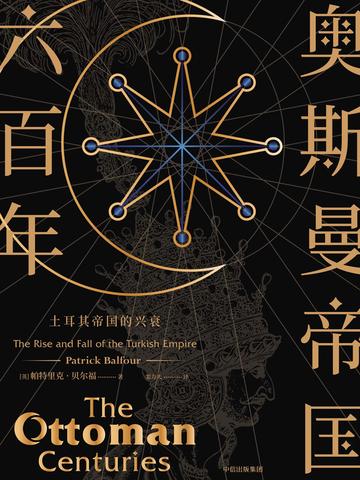
The Ottoman Empire was a multi-ethnic empire established by the Turks. It was named after its founder, Osman I. The rulers were the Ottomans, who originated from the Turkic nomadic tribes of Central Asia. The Ottomans were originally a small Turkic tribe. They first settled in Central Asia, moved to Asia Minor, and later became increasingly prosperous. After the Ottoman Empire destroyed the Byzantine Empire in 1453, it made Constantinople its capital and renamed it Istanbul. Its religion and culture had their heyday. For example, during the Tulip Period, Ottoman architecture was influenced by the highly decorative styles of Western Europe, such as Baroque, Rococo, and Empire style.
The rise and decline of the Ottoman Empire spanned six hundred years of time and space, and the author painted a magnificent historical picture. The founder of the Ottoman Empire was Osman, known as the father of Turkey. During his rule, Ottoman Türkiye was still a small country, but his hard work laid the foundation for the rise of the empire. Muhammad, who followed closely, became the unstoppable conqueror of the entire Eurasian and African continent, and the Turkish Empire made Istanbul its capital. This king who liked to expand territory had a grandson who was in the same line as him and also expanded everywhere. As a result, the empire's territory further expanded. The army rushed out of Asia Minor and conquered Syria, both sides of the Red Sea, and Egypt. At this point, the empire reached its peak and became the number one brother in the Islamic world. However, as time goes by, European countries have mastered modern civilization, and the imperial reform failed. Like a building, it collapsed and fell apart three hundred years later, which made people sigh.
This is a legendary epic. During the six hundred years of historical changes, there were declines and prosperity, a powerful empire that spanned three continents, and a past that affected history. This book introduces in detail the six hundred years of the Ottoman Empire's history, the results from prosperity to decline, and from decline to decline. The beginning and end of defeat, the prosperity built on the ruins, eventually returned to ruins, and countless self-rescue attempts were made, but obviously with little success. In this ups and downs of history, the rise and fall of an empire seems irrelevant, but the pursuit of each period of history has always been valuable.
The rise and decline of the Ottoman Empire spanned six hundred years of time and space, and the author painted a magnificent historical picture. The founder of the Ottoman Empire was Osman, known as the father of Turkey. During his rule, Ottoman Türkiye was still a small country, but his hard work laid the foundation for the rise of the empire. Muhammad, who followed closely, became the unstoppable conqueror of the entire Eurasian and African continent, and the Turkish Empire made Istanbul its capital. This king who liked to expand territory had a grandson who was in the same line as him and also expanded everywhere. As a result, the empire's territory further expanded. The army rushed out of Asia Minor and conquered Syria, both sides of the Red Sea, and Egypt. At this point, the empire reached its peak and became the number one brother in the Islamic world. However, as time goes by, European countries have mastered modern civilization, and the imperial reform failed. Like a building, it collapsed and fell apart three hundred years later, which made people sigh.
This book details the birth, development, growth, decline, division, and end of an empire. Among ancient empires, the Ottoman Empire existed for a longer period of time and had a greater impact on Europe, especially Central and Eastern Europe, and was also significant to China.
The Ottoman Empire is an ancient country with a long history. Osman is the founder of the Ottoman Empire. He is the father of Turkey. The legend of the origin of the Ottoman Empire is wonderful and magical. Once Osman spent the night in a Muslim home, he read a book, the Quran, a book that conveys the language of God. After Osman stood reading all night, he dreamed of an angel in his sleep. He dreamed that his children and grandchildren would enjoy glory for generations.
The Ottoman Empire was a multi-ethnic empire established by the Turks. It was named after its founder, Osman I. The rulers were the Ottomans, who originated from the Turkic nomadic tribes of Central Asia. The Ottomans were originally a small Turkic tribe. They first settled in Central Asia, moved to Asia Minor, and later became increasingly prosperous. After the Ottoman Empire destroyed the Byzantine Empire in 1453, it made Constantinople its capital and renamed it Istanbul. Its religion and culture had their heyday. For example, during the Tulip Period, Ottoman architecture was influenced by the highly decorative styles of Western Europe, such as Baroque, Rococo, and Empire style.
The content is clear, the logical structure is clear, and it is quite easy to read compared to other books. It is a good introduction to Ottoman history. However, it should be noted that the author is British and once worked at the British Embassy in Cairo, Egypt. He is particularly biased when talking about Britain and will intentionally whitewash British colonists. You need to pay attention when reading and do not be biased by the author's historical narrative that distorts the facts.
This book describes the Ottoman Empire from its founding to its decline in great detail. The inheritance of the throne, the advancement of weapons, the distribution of land, and the integration of ethnic groups during the more than five centuries of rule were relatively advanced systems. Therefore, they were able to expand their territory, from Asia to Africa, and to the Balkans in Europe. It was considered a great era.
This is a systematic and complete history of the Turkish Empire, as well as a rich world history. This book tells the 600-year history of the Ottoman Empire from scratch, from weakness to strength, and then to prosperity and decline. On the stage of world history, the Ottoman Empire also had a profound impact on the course of historical development. The Ottoman Empire was founded by the Turks. At its peak, the Ottoman Empire spanned three continents, stretching from Armenia in Asia in the east to Tunisia in North Africa in the west. It controlled the Islamic holy sites of Mecca and Medina in the south, inherited the core territory of Eastern Rome in the north, and even twice invaded the city of Vienna in today's Austria, threatening the entire Europe. As a popular book, the quality of this book is very high. The author conducts in-depth analysis of the politics, economy, culture, military and other aspects of the empire in various periods, showing the entire process of the empire from its rise to its decline. Maybe you have known for a long time that the people who founded this powerful country are the Turkic people who have been neighbors with China for a long time. The Turkic people are famous for their bravery and perseverance. They inherited all the advantages of the Chinese nomads and laid the foundation for the establishment of a powerful country later. As for how the Ottoman Empire disappeared from the stage of history, you can find out in this book. If you want to understand the history of the Turkish Empire, this book is an indispensable reference book.
Respecting history, it objectively reproduces the occurrence and development of the Ottoman Empire into a large empire spanning Asia, Africa and Europe. The voice is vivid and powerful, making people unable to put down the book. If you like history, read it quickly!
The writing style is simple and easy to understand, I like it very much. Moreover, the stories and history in the book are particularly exciting and made me understand a lot of things I didn't know before. The author must be very capable to explain such a complicated history so clearly. I think this book is worth reading!
Purpose? Getting started? Research information? Interest? This book is currently Good
It can be read as a novel
Unexpectedly, Venice was once an Ottoman territory, which shows how Mediterranean countries, Christians and Muslims are like each other.
Well written, it helps us understand more about the origins and history of the Middle East. I always had a limited understanding of it before.
It shows the rise and fall of the Ottoman Empire in a panoramic manner, showing the richness of history in the details, and the narrative is majestic and profound.
A very good work, suitable for understanding Ottoman history