Stats
5.8Score
Synopsis
No synopsis yet.
We haven’t got an English blurb for this one. It appears once the source description has been translated.
We haven’t got an English blurb for this one. It appears once the source description has been translated.

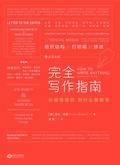
I read "Story", "Save the Cat" and "Your Script" on the recommendation of a screenwriting teacher. Personally, I think "Story" is more for beginners (not suitable for pure beginners). It has many definitions, so you need to take notes while reading. "Save the Cat" is more suitable to be read after reading "Story", which can help organize your thoughts and smoothen the plot. Especially the Snyder metronome is really great and easy to use! "Your Script Is So Bad" is suitable when you have designed the overall structure and sorted out the main and auxiliary lines. Before writing the script, you can use it to check for gaps and avoid pitfalls. "Save the Cat" is always awesome! [Laughing] I blew it!
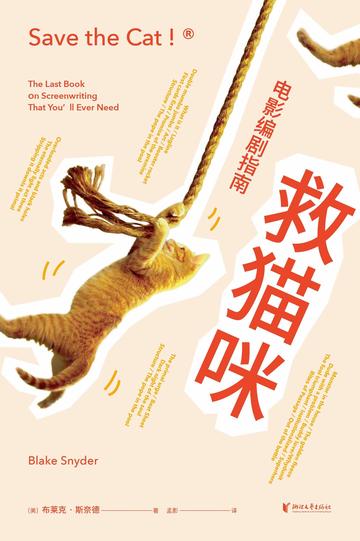
The masterpiece of Blake Snyder, a well-known Hollywood screenwriter and script mentor. It is a very interesting, concise and clear practical guide. The book does not talk about mysterious principles and theories, but candidly teaches the classic writing routines and techniques of commercial films, from letting the protagonist "save the cat", to a one-sentence story, to the structure and rhythm, to the risks and opportunities that must be paid attention to when selling the script. It is straightforward, clear and provides detailed and clear answers to all aspects of commercial script writing.
I came here because of the famous movie and learned the theory of three-act drama. I immediately applied it to practice. I first watched a high-scoring movie and split it into four big parts according to the rules. Then I disassembled the specific details and put them in each block to record the changes in the protagonist's personality, emotions, and goals from the beginning to the end. Benefit for life!
"Saving the Cat: A Guide to Film Screenwriting" is a very professional and easy-to-use practical book. It tells the ten types of story classifications, the role of the scene of rescuing the cat, Blake Snyder's fifteen-meter beat table, classification of actor types, etc. From multiple perspectives and his own experience, the author provides detailed and clear answers and direction guidance for learners who want to write business scripts. Novices who have never been exposed to this industry can learn a lot of useful knowledge and apply what they have learned.
This book "Save the Cat" is a must-read for classic drama creation. Although it has been around for many years, the theory is not outdated. It is mentioned in various writing scenarios, especially in drama, film and television creation. It allows you to master the rhythm of drama creation from scratch. It is very helpful for learning story scenes, creation types, actors' interpretation rhythm, etc. Novice screenwriters, especially those who are interested in commercial film creation, can read it and learn many basic models.
Thanks to Blake for giving us novices a wealth of useful information on Hollywood-style film screenwriting. Unlike other screenwriting books that are academic and boring, this is a shorthand guide to film screenwriting. His screenwriting methods focus on practice, are based on common sense, and are very effective. I have never seriously thought about why we like those movie protagonists or supporting characters before. We thought it was because they are cool, awesome, and always do great things. After watching this paragraph, I realized that this is not the case at all. I like the characters in the script because of a simple "rescue the cat" scene, "when we meet the protagonist, he must do something to make us like him and hope that he wins." It reminds me of the general movies where the protagonist is a criminal, and they will show that they are very funny or very principled. In short, we will like him. The author has practical experience, the script has been sold for a lot of money, and he has received script notes from many people and learned a lot of script writing knowledge. To me this is very convincing.
This is a concise and clear practical guidance manual. It does not talk about mysterious principles and theories, but candidly teaches the classic writing routines and techniques of Hollywood commercial movies. It is straightforward and can be used immediately. The rule of saving cats says: "When the protagonist appears on the stage, he must do something to make us like him and hope that he wins." A good story must be resonant and understandable to primitive people. The source of the hook is usually an external force: life. Survival, hunger, sex, protecting loved ones, fear of death, these things can grab us. All in all, a wonderful book.
I can only say that foreign books are written with the tone of wanting to teach you, and the teachings are really good. I read some domestic theoretical books on the 5th, and I still haven't recovered from the electronic ed. Writing a story in one sentence in the first chapter reminded me of Snowflake's writing method (but I won't say more about Snowflake until I've finished it). All in all, this book is worth reading.
It was quite rewarding to read it, it said a lot about what a screenwriter should do, from start to finish, even the sales part. I learned the complete process of film script creation in this book. I also saw the creative rules that the author has summarized over many years of working in the industry. In the book, he introduced 9 problems that often occur in script drafts, and also gave some suggestions on how to sell scripts. This is a very good introductory book to screenwriting, very easy to understand. Compared with an ordinary reference book, this book is more like a humorous friend. He not only tells you how to master the rhythm of creation, but also tells you many details that need to be paid attention to in writing.
This is definitely worth reading again and again to correct your own mistakes.
Thank you teacher, this book is very good
This book is like a caring friend, telling you all the secrets of Hollywood movie screenwriters! It's simple and easy to understand, no complicated theory, just practical skills. The author has rich experience and his writing style is also very humorous, allowing you to learn screenwriting while laughing. If you are interested in screenwriting, or want to write novels or copywriting, this book is worth reading. It will give you a lot of inspiration and make your story more attractive.
It's a great book that gives a layman a preliminary idea about screenwriting.
A very useful reference book that can be read over and over again.
A very practical book
I benefited a lot. Many of the issues I was vaguely aware of were pointed out directly by the author, which really prevented me from trying to figure it out on my own.
It is very suitable for beginners. After reading and understanding it, you can start writing directly.
A very useful reference book that all junior creators should read.
Full of useful information, worth a look.
Very useful advice
Studying, hope it helps
A great instructional book
👌🏻Okay, I should learn something
Yes, that makes sense
Very useful, explained clearly and understandably
It's so dry, it's a classic
It is a reference book that all authors should spend a few hours studying, but to truly understand it, it may take more than three months of accumulation of material. Good looking, watch again and again
Very useful, helped me answer some of my plot questions.
A very instructive book!
I read it over and over several times, gained some insights, and tried it in practice.