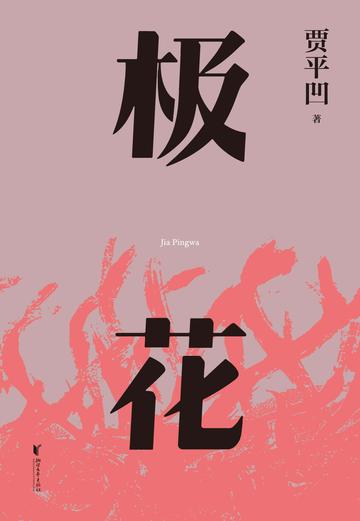
"Jihua" tells the story of Hu Die, a rural girl who followed her mother to the city to seek life. However, in an accident, she was abducted to a poor place in the northwest called Geliang Village, where she experienced physical torture and inner suffering. The work pays close attention to the damaged female group, and also pours out the author's thoughts and worries about traditional rural ecology.
Reader comments
Teacher Jia Pingwa's works are very classic, vividly describing various aspects of rural life, and the stories are also very twists and turns. Hu Die, a rural girl, followed her mother to the city to seek life. However, in an accident, she was abducted to a poor place called Geliang Village in the northwest, where she experienced physical torture and inner suffering. The author pays close attention to the group of trafficked women in rural areas, and also pours out his thoughts and concerns about traditional rural ecology. Overall it looks depressing, but there will be a lot of reflection.
"Jihua" is a treasure similar to Cordyceps sinensis produced in the mountains near this remote mountain village. The title "Ji Hua" actually hints at the content of the book, a rare girl in a remote mountain village who is abducted and trafficked - Butterfly. Named after the butterfly, it was supposed to break out of its cocoon and fly into the vast sky, but it had a completely different tragic fate. She was born in a rural area and longed for the city, but was abducted and trafficked back to a more remote village in the city. The strong contrast gives people a greater spiritual impact. When writing about the abducted butterflies, the author did not scream at the top of his lungs to describe the misery of the butterflies and the despicable villagers. Instead, he used an unexpectedly plain narrative method. As the author said, this work is like an ink painting, using plain ink to effectively highlight the hatred and accusation of trafficking.
While watching it, I was struggling with whether Hu Die should accept reality and whether he would accept reality. Is Hei Liang good? He is indeed good to Hu Die, but it is precisely because of his business that Hu Die ends up here. I have been thinking that if Hu Die is found by his family and brought home, it would be okay if he does not give birth to a child. What if he has a child? Will Hei Liang be arrested and imprisoned? He is very confused and sympathizes with criminals who buy and sell people? ? ? The ending was indeed expected. After giving birth to a child, she couldn't let go of the child. After living with them for several years, she may have regarded them as relatives. The pressure of public opinion can also make people collapse. The only thing to be thankful for is that the Hei family treated her quite well...
"Ji Hua": Exploring the tenacity and helplessness of life in suffering
When I first read "Ji Hua" by Jia Pingwa, I was deeply attracted by its unique first-person perspective. Butterfly, a trafficked woman, her experience is delicately presented in the book, as if it were a diary full of bitterness.
The book has an extremely detailed description of the butterfly's living environment after being trafficked. It was a remote mountain village isolated from the world, with cave dwellings, barren land, and ignorant villagers. Everything seemed so depressing and desperate. Butterfly was locked up in that dark room. She had no one to talk to and could only talk to the wall and the sky.
The butterfly tried to escape many times, but failed every time. She suffered merciless beatings and inhuman abuse
However, as time passed, she gradually lost the courage and hope to escape. In the process, she began to comfort herself with a comparison: she was not disabled, and the family she was sold to was considered a "rich household" in the local area. This comparison may seem absurd, but it also reflects her desire for survival and her helpless compromise with reality in a desperate situation.
However, is this change really a good thing?
I think if I were the heroine, I might choose to go back.
The works of famous writers are beautiful.
This book allowed me to see the plight and helplessness of rural women, and also feel the author's concern for social reality. Hu Die in the story reminded me of Bai Xuemei in "Blind Mountain". They were both women who were trafficked into the mountains and had a tragic fate. The author Jia Pingwa used delicate brushstrokes to describe the life in Geliang Village, which made me think more deeply about traditional villages. This book is worth reading, it will give you a better understanding of human nature and society.
Rating ten points. Deep skill. Thought provoking. I don't know whether the shell of modern civilization is running too fast, or whether traditional culture is stagnating and shrinking, but the pain of being torn in the middle has to be borne by ordinary people.
Very real and touched me a lot
The characters are vividly depicted and the language organization is clear.
The story has twists and turns, and the characters' inner characterizations are vivid.
Whether the intention is correct or not is a matter of opinion, but the delicate writing is meticulously detailed.
Not much to say, masterful writing style
This is social reality. The picture of poverty and backwardness is sad!
A clear and helpless reality!
The description of the current situation in rural areas is an in-depth and simple analysis, which vividly reflects the life in rural areas in socially backward areas. The author is sincerely concerned about the development faced by rural areas.
Very good, learned a lot
What a great book! Thanks to the author!
I have always liked Teacher Jia Pingwa's works! Worth a look!
It really gave me a different perspective. I always thought that the trafficking of women and children was the greed of those without wives and children. But it turns out that they want to solve their own problems, and no one can help them, so they can only take the wrong approach. The root of it is the yearning for a superior life. Everyone wants to live a good life, but there are also poor people among the rich. Poverty is a contrast.
There are always dark corners in society
Yes, it's everyone's handiwork.
For a weak woman whose heart is as high as the sky and whose destiny is as thin as paper, fate is also very generous to her. No matter what the ending is, it's good~~~There is no harm if there is no comparison!
The writing is so good, in line with the trend of real life, and very down-to-earth!
Teacher Jia Pingwa's works are very classic, vividly describing various aspects of rural life, and the stories are also very twists and turns. Hu Die, a rural girl, followed her mother to the city to seek life. However, in an accident, she was abducted to a poor place called Geliang Village in the northwest, where she experienced physical torture and inner suffering. The author pays close attention to the group of trafficked women in rural areas, and also pours out his thoughts and concerns about traditional rural ecology. Overall it looks depressing, but there will be a lot of reflection.
"Jihua" is a treasure similar to Cordyceps sinensis produced in the mountains near this remote mountain village. The title "Ji Hua" actually hints at the content of the book, a rare girl in a remote mountain village who is abducted and trafficked - Butterfly. Named after the butterfly, it was supposed to break out of its cocoon and fly into the vast sky, but it had a completely different tragic fate. She was born in a rural area and longed for the city, but was abducted and trafficked back to a more remote village in the city. The strong contrast gives people a greater spiritual impact. When writing about the abducted butterflies, the author did not scream at the top of his lungs to describe the misery of the butterflies and the despicable villagers. Instead, he used an unexpectedly plain narrative method. As the author said, this work is like an ink painting, using plain ink to effectively highlight the hatred and accusation of trafficking.
While watching it, I was struggling with whether Hu Die should accept reality and whether he would accept reality. Is Hei Liang good? He is indeed good to Hu Die, but it is precisely because of his business that Hu Die ends up here. I have been thinking that if Hu Die is found by his family and brought home, it would be okay if he does not give birth to a child. What if he has a child? Will Hei Liang be arrested and imprisoned? He is very confused and sympathizes with criminals who buy and sell people? ? ? The ending was indeed expected. After giving birth to a child, she couldn't let go of the child. After living with them for several years, she may have regarded them as relatives. The pressure of public opinion can also make people collapse. The only thing to be thankful for is that the Hei family treated her quite well...
"Ji Hua": Exploring the tenacity and helplessness of life in suffering When I first read "Ji Hua" by Jia Pingwa, I was deeply attracted by its unique first-person perspective. Butterfly, a trafficked woman, her experience is delicately presented in the book, as if it were a diary full of bitterness. The book has an extremely detailed description of the butterfly's living environment after being trafficked. It was a remote mountain village isolated from the world, with cave dwellings, barren land, and ignorant villagers. Everything seemed so depressing and desperate. Butterfly was locked up in that dark room. She had no one to talk to and could only talk to the wall and the sky. The butterfly tried to escape many times, but failed every time. She suffered merciless beatings and inhuman abuse However, as time passed, she gradually lost the courage and hope to escape. In the process, she began to comfort herself with a comparison: she was not disabled, and the family she was sold to was considered a "rich household" in the local area. This comparison may seem absurd, but it also reflects her desire for survival and her helpless compromise with reality in a desperate situation. However, is this change really a good thing?
I think if I were the heroine, I might choose to go back.
The works of famous writers are beautiful.
This book allowed me to see the plight and helplessness of rural women, and also feel the author's concern for social reality. Hu Die in the story reminded me of Bai Xuemei in "Blind Mountain". They were both women who were trafficked into the mountains and had a tragic fate. The author Jia Pingwa used delicate brushstrokes to describe the life in Geliang Village, which made me think more deeply about traditional villages. This book is worth reading, it will give you a better understanding of human nature and society.
Rating ten points. Deep skill. Thought provoking. I don't know whether the shell of modern civilization is running too fast, or whether traditional culture is stagnating and shrinking, but the pain of being torn in the middle has to be borne by ordinary people.
Very real and touched me a lot
The characters are vividly depicted and the language organization is clear.
The story has twists and turns, and the characters' inner characterizations are vivid.
Whether the intention is correct or not is a matter of opinion, but the delicate writing is meticulously detailed. Not much to say, masterful writing style
This is social reality. The picture of poverty and backwardness is sad!
A clear and helpless reality!
The description of the current situation in rural areas is an in-depth and simple analysis, which vividly reflects the life in rural areas in socially backward areas. The author is sincerely concerned about the development faced by rural areas.
Very good, learned a lot
What a great book! Thanks to the author!
I have always liked Teacher Jia Pingwa's works! Worth a look!
It really gave me a different perspective. I always thought that the trafficking of women and children was the greed of those without wives and children. But it turns out that they want to solve their own problems, and no one can help them, so they can only take the wrong approach. The root of it is the yearning for a superior life. Everyone wants to live a good life, but there are also poor people among the rich. Poverty is a contrast.
There are always dark corners in society
Yes, it's everyone's handiwork.
For a weak woman whose heart is as high as the sky and whose destiny is as thin as paper, fate is also very generous to her. No matter what the ending is, it's good~~~There is no harm if there is no comparison!
The writing is so good, in line with the trend of real life, and very down-to-earth!
Rich and colorful content