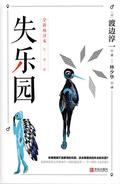
This book is a collection of conversations by Franz Kafka.
In 1920, literary young man Janosz first visited Kafka, who was working in an insurance company, and a friendship began between him and his friend.
For more than two years, Kafka developed a series of insightful thoughts and expressions around topics such as literature, art, reading, writing, freedom, love, and loneliness, during countless discussions in the office or while walking and chatting in Prague.
He used books to build a barrier against his own limitations and inertia, and against the desk and chair in front of him. Janosz recorded these sentences that sparkle with thoughts, giving us the honor to hear the true voice of this literary saint.
In this book, Kafka not only talks about daily thoughts on literature, writing, and art, but also talks about universal topics such as work, human freedom, family, and urban life. The golden sentences appear frequently and are very exciting.
For example, talking about health and disease: "For healthy people, life is an unconscious and unspoken escape from the awareness that man must die. Illness is always a warning and at the same time a struggle. Therefore, illness, pain, and illness are also extremely important sources of piety."
For example, talking about writers and language: "Language is only lent to the living for an indeterminate period of time. We can only use it. In fact, it belongs to the dead and the unborn. We must be careful when possessing language."
Reader comments
The image of Franz Kafka emerges from the page. He is no longer a wandering thought decorated with beetles and the letter K, but a living and truly existing prophet. His words will not disappear with the wind and will always give strength to future generations.
People are always lonely when they touch the most secret pain in their hearts. If they are not filled with true and unconventional love, the words of others can only pass by.
The title of the book is very good. I felt a lot after reading it and benefited a lot from it. Through the conversation record, the two people talking have become three-dimensional. Their thoughts and inner feelings have been encountered with us across hundreds of years through books, which makes people feel very magical.
This book allowed me to see the breadth and depth of Kafka's inner world. His thinking was really profound, and he often came up with golden sentences! As he said, "Language is only lent to living people for an uncertain period of time." It gave me a new understanding of words and expressions. Through the dialogue with Kafka, the author shows us a real and multi-dimensional Kafka. It feels like chatting with a wise man and benefits a lot! Worth reading!
Wow! During the reading process, Kafka stayed with me like a friend for 4 hours, and many of his insights were recorded. I really liked his pessimism, anarchism, and the fact that wisdom, truth, and kindness were the foundation of his humanity. Kafka is my favorite writer after Tostoevsky. For no other reason than to understand their truth-like and real life, this is the best book.
A grand ideological fireworks. An exquisite and delicious meal. You can appreciate the depth of Kafka's thoughts and the subtlety of translation.
Vivid words and profound meaning.
A rebellion against the world.
Ge Fei's introduction is very good. The author Gustav Janosch's confusion in his youth, his internal and external troubles in his youth, his illusion of happiness that was constantly shattered by reality, his sudden deprivation of rights and his increasing inner and outer loneliness, and his gray daily life that was completely gnawed by fear made him tightly attached to Dr. Franz Kafka who patiently endured everything.
The postscript is very sincere. Kafka incarnates as a spiritual mentor to lead a confused Jewish young man out of real life difficulties. Everyone has a different experience reading Kafka. Kafka's mottos make young people in confusion think, what does the Great Wall look like? You can't see it and you can't understand it. What you see is a part, or a part of a part. This is Kafka's fable. How those gray daily experiences of confusion, frustration and loneliness make people "attach" themselves to him and gain comfort in the tremors of the same frequency.
If a person can't stand the stimulation of the sun in this world in life, he can block the sun with one hand. Use your other hand to jot down everything you see in the world. You may die during your lifetime, but you are the real rescuer. Kafka, more than any other writer, was concerned with the concept of "rescue"
Only when a person is thrown out of the wheel of society can he become an individual in the true sense. Only when one has experienced failure and can only feed on pain and loneliness can one understand the sense of absurdity that the world presents to us.
The superior authority that determines whether we are guilty or not usually comes in three forms: God, law, morality, or conscience. The punishment of morality and conscience is a kind of self-punishment. So where does conscience or morality come from? How does it enter our consciousness as a judge of our desires? I won't go into detail on this issue. Let everyone think about it for themselves. Anyone with desires, more or less, is inevitably punished by conscience and morality.
This is the first book that I felt the need to keep on my bookshelf after reading it. There are many philosophies in the book that are worthy of my careful and repeated appreciation.
Ge Fei is good at writing and quotes from other sources. The outline of the story is also very clear [Like][Like][Like]
The prophetic voice will never die.
Very good, highly recommended
After reading this, I understand why classics are classics, not novels, which can stimulate people's thoughts and bring more cognitive improvement.
"Internal Conflict Kafka and His External Conflict Friends"
After reading this, we can understand Kafka better. Kafka had a great influence on the author and was his guide.
From the dialogue, we can learn that Kafka was a great man with great philosophy and kindness.













The image of Franz Kafka emerges from the page. He is no longer a wandering thought decorated with beetles and the letter K, but a living and truly existing prophet. His words will not disappear with the wind and will always give strength to future generations.
People are always lonely when they touch the most secret pain in their hearts. If they are not filled with true and unconventional love, the words of others can only pass by.
The title of the book is very good. I felt a lot after reading it and benefited a lot from it. Through the conversation record, the two people talking have become three-dimensional. Their thoughts and inner feelings have been encountered with us across hundreds of years through books, which makes people feel very magical.
This book allowed me to see the breadth and depth of Kafka's inner world. His thinking was really profound, and he often came up with golden sentences! As he said, "Language is only lent to living people for an uncertain period of time." It gave me a new understanding of words and expressions. Through the dialogue with Kafka, the author shows us a real and multi-dimensional Kafka. It feels like chatting with a wise man and benefits a lot! Worth reading!
Wow! During the reading process, Kafka stayed with me like a friend for 4 hours, and many of his insights were recorded. I really liked his pessimism, anarchism, and the fact that wisdom, truth, and kindness were the foundation of his humanity. Kafka is my favorite writer after Tostoevsky. For no other reason than to understand their truth-like and real life, this is the best book.
A grand ideological fireworks. An exquisite and delicious meal. You can appreciate the depth of Kafka's thoughts and the subtlety of translation. Vivid words and profound meaning. A rebellion against the world.
Ge Fei's introduction is very good. The author Gustav Janosch's confusion in his youth, his internal and external troubles in his youth, his illusion of happiness that was constantly shattered by reality, his sudden deprivation of rights and his increasing inner and outer loneliness, and his gray daily life that was completely gnawed by fear made him tightly attached to Dr. Franz Kafka who patiently endured everything. The postscript is very sincere. Kafka incarnates as a spiritual mentor to lead a confused Jewish young man out of real life difficulties. Everyone has a different experience reading Kafka. Kafka's mottos make young people in confusion think, what does the Great Wall look like? You can't see it and you can't understand it. What you see is a part, or a part of a part. This is Kafka's fable. How those gray daily experiences of confusion, frustration and loneliness make people "attach" themselves to him and gain comfort in the tremors of the same frequency. If a person can't stand the stimulation of the sun in this world in life, he can block the sun with one hand. Use your other hand to jot down everything you see in the world. You may die during your lifetime, but you are the real rescuer. Kafka, more than any other writer, was concerned with the concept of "rescue" Only when a person is thrown out of the wheel of society can he become an individual in the true sense. Only when one has experienced failure and can only feed on pain and loneliness can one understand the sense of absurdity that the world presents to us. The superior authority that determines whether we are guilty or not usually comes in three forms: God, law, morality, or conscience. The punishment of morality and conscience is a kind of self-punishment. So where does conscience or morality come from? How does it enter our consciousness as a judge of our desires? I won't go into detail on this issue. Let everyone think about it for themselves. Anyone with desires, more or less, is inevitably punished by conscience and morality.
This is the first book that I felt the need to keep on my bookshelf after reading it. There are many philosophies in the book that are worthy of my careful and repeated appreciation.
Ge Fei is good at writing and quotes from other sources. The outline of the story is also very clear [Like][Like][Like]
The prophetic voice will never die.
Very good, highly recommended
After reading this, I understand why classics are classics, not novels, which can stimulate people's thoughts and bring more cognitive improvement. "Internal Conflict Kafka and His External Conflict Friends"
After reading this, we can understand Kafka better. Kafka had a great influence on the author and was his guide.
From the dialogue, we can learn that Kafka was a great man with great philosophy and kindness.