Our ignorance is always greater than we imagine. Human beings have built complex societies and mastered difficult technologies: we learned to make fire, created democratic systems, left footprints on the moon, and put genes in place... However, each of us is a master of mistakes and often makes stupid behaviors. Most of us don't even understand the basic working principles of the toilet. How do we know so little yet achieve so much? "The Illusion of Knowledge" points out that individual human beings have very little understanding of the world, and no one has a super brain. Fortunately, human beings are good at each other and interdependent in a rich knowledge community. Almost all of our daily needs rely on the professional knowledge and skills of others. We are good at gaining experience and wisdom from the people, things and things around us. Therefore, what makes human beings stand out from all living beings and dominate the world is not individual rationality, but unparalleled collective thinking. It is precisely because of the existence of others that we think we know everything. This is the illusion of knowledge. This also explains why we often overestimate our own understanding, why political prejudices and myths are always deeply ingrained, and why personal elitist education and management always end in vain. The understanding of "ignorance" is a unique way for us to understand ourselves, others and society. This helps us get along with others better, treat technology more rationally, face cumbersome information more objectively, and coexist harmoniously with human rationality and irrationality.
Reader comments
This book was interesting and made me realize that we often have an illusion of knowledge about ourselves. The book mentions that "most human decisions are just the product of emotions and rules of thumb." This sentence is really enlightening. I loved the part about groupthink in the book, it made me understand the importance of teamwork. As the book says, no one can build a church by himself. We all need each other's wisdom and strength.
Understand the illusion of knowledge and reveal the mystery of cognition!
We often confidently think that we know a lot, but this book tells us: that may be just an illusion. The knowledge possessed by individual human beings is actually extremely limited, and we mostly rely on the wisdom of the group and external information.
When we understand the world, we often rely on intuition and experience without thinking deeply. This "illusion of knowledge" makes us think we know everything.
Being aware of the existence of illusions can make us more humble and understand the importance of cooperation; at the same time, it prompts us to work hard to break the limitations of cognition and pursue more real and in-depth knowledge.
[Three core questions]
1. Why do we often overestimate our knowledge level?
: Because we tend to mistake the knowledge of a team or society as personal, and easily overlook the limitations of our own knowledge.
2. What is the relationship between social division of labor and the illusion of knowledge?
: The social division of labor makes us rely on the expertise of others, which makes it easy for us to create illusions of knowledge.
(We know all the parameters of electronic equipment well and think we already understand this industry very well, but in fact we do not understand its internal complex technical principles)
3. How can we more accurately understand the boundaries of our own knowledge?
: Stay humble, keep learning, obtain information from multiple angles, and verify your own ideas; do more self-reflection and communication with others, accept challenges and criticism, and keep exploring unknown areas.
Content Sharing
1. "We think we know more than we actually know, and this illusion stems from the fact that we live in an intellectual community."
2. "Human understanding depends largely on knowledge of which we are unaware."
3. "Individual ignorance is covered up by collective wisdom, causing us to have a wrong estimate of our own knowledge level."
4. "Knowledge is not entirely stored in an individual's mind, but is distributed throughout society and the environment."
5. "We often overestimate our understanding of things and underestimate the complexity of the world."
One of the few valuable books that can be seen on Tomato so far
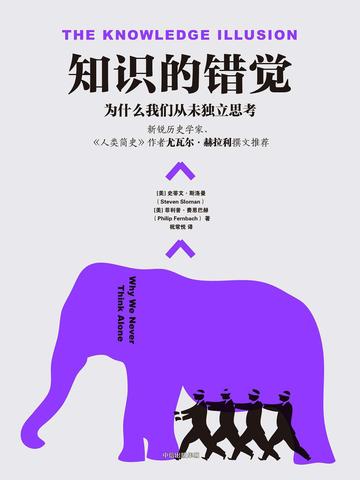





This book was interesting and made me realize that we often have an illusion of knowledge about ourselves. The book mentions that "most human decisions are just the product of emotions and rules of thumb." This sentence is really enlightening. I loved the part about groupthink in the book, it made me understand the importance of teamwork. As the book says, no one can build a church by himself. We all need each other's wisdom and strength.
Understand the illusion of knowledge and reveal the mystery of cognition! We often confidently think that we know a lot, but this book tells us: that may be just an illusion. The knowledge possessed by individual human beings is actually extremely limited, and we mostly rely on the wisdom of the group and external information. When we understand the world, we often rely on intuition and experience without thinking deeply. This "illusion of knowledge" makes us think we know everything. Being aware of the existence of illusions can make us more humble and understand the importance of cooperation; at the same time, it prompts us to work hard to break the limitations of cognition and pursue more real and in-depth knowledge. [Three core questions] 1. Why do we often overestimate our knowledge level? : Because we tend to mistake the knowledge of a team or society as personal, and easily overlook the limitations of our own knowledge. 2. What is the relationship between social division of labor and the illusion of knowledge? : The social division of labor makes us rely on the expertise of others, which makes it easy for us to create illusions of knowledge. (We know all the parameters of electronic equipment well and think we already understand this industry very well, but in fact we do not understand its internal complex technical principles) 3. How can we more accurately understand the boundaries of our own knowledge? : Stay humble, keep learning, obtain information from multiple angles, and verify your own ideas; do more self-reflection and communication with others, accept challenges and criticism, and keep exploring unknown areas. Content Sharing 1. "We think we know more than we actually know, and this illusion stems from the fact that we live in an intellectual community." 2. "Human understanding depends largely on knowledge of which we are unaware." 3. "Individual ignorance is covered up by collective wisdom, causing us to have a wrong estimate of our own knowledge level." 4. "Knowledge is not entirely stored in an individual's mind, but is distributed throughout society and the environment." 5. "We often overestimate our understanding of things and underestimate the complexity of the world."
One of the few valuable books that can be seen on Tomato so far