Stats
5.8Score
Synopsis
No synopsis yet.
We haven’t got an English blurb for this one. It appears once the source description has been translated.
We haven’t got an English blurb for this one. It appears once the source description has been translated.

In the first half of 1944, the Soviet Red Army launched an offensive against the areas occupied by Nazi Germany and its allies in Eastern Europe. The Soviet Red Army launched a large-scale offensive in Ukraine with the goal of recovering the Ukrainian areas occupied by Germany. In this battle, the Soviet Red Army achieved an important victory, forcing the German army to retreat and finally liberating Ukraine. The Soviet Red Army pursued the victory and launched a series of offensives in Poland, aiming to liberate the Polish areas occupied by the German army. In this battle, the Soviet Red Army cooperated with the Polish underground resistance organization, successfully recaptured some important cities in Poland, and advanced towards Germany.
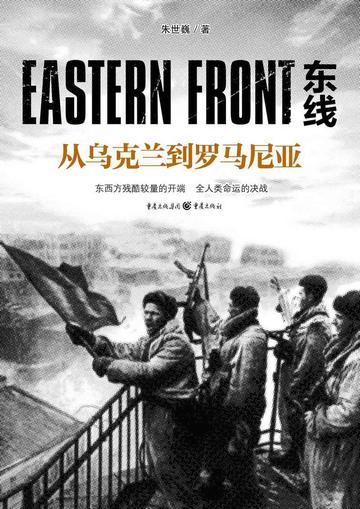
This book is a story explaining the history of World War II. It tells the final battle between the Soviet Union and Germany on the eastern battlefield. In 1944, the Soviet Red Army launched several battles against Germany, which laid the foundation for the overall victory of the entire Second World War. The book accurately depicts the cruelty of the battlefields in World War II and the authenticity of people's lives on the front lines. After reading this book, you can have your first understanding of the battles of World War II, understand the war situation in society at that time, and feel the reality of the war.
This book tells the story of the Soviet-German war in World War II. The Soviet-German War was an important part of World War II. The book uses detailed data, rich maps, and various pictures to describe the war in a comprehensive and detailed manner. The data comparison of personnel, equipment, and supplies between the Soviet and German sides is very intuitive. The information is very rich, and the text is concise and solid. The words are full of a sense of urgency and crisis, which brings us an extremely direct feeling, as if it takes us back to the time when the war was raging and the bloody battle was fought.
In the war on the Eastern Front, both sides paid a huge price in manpower and material resources. The German army achieved a series of early victories, but as the war continued, the Soviet army gradually recovered and launched a counterattack. Both sides carried out large-scale strategic and tactical operations, including huge sieges, urban warfare, and strategic bombings. This book focuses on several encirclement battles in the southern part of the Eastern Front in the first half of the year, corresponding to the upper part "Eastern Front: The Decisive Battle of the Dnieper River".
In 1943, after the Soviet army won the Battle of Kursk and the Battle of the Dnieper River, the strength of both the Soviet Union and Germany had undergone a fundamental change. Coupled with a series of war materials produced by the Soviet army throughout 1943, the Soviet army was able to launch a comprehensive strategic offensive in 1944. The Leningrad-Novgorod battle was the earliest strategic offensive and was also known as the first of the "Ten Major Assaults". In this month and a half of fighting, the Soviet army annihilated 3 German divisions and defeated 23 German divisions, making a good start for the counterattack against Nazi Germany.