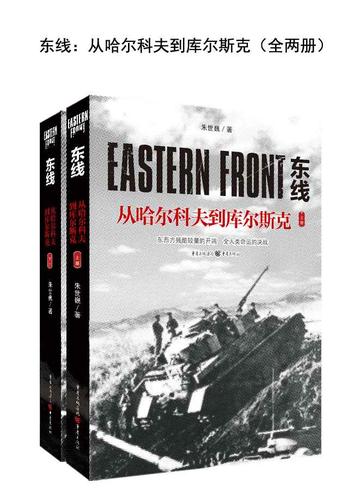
Eastern Front******************
东线****************
- Status
- Completed
- Source
- Fanqie
Stats
5.8Score
Synopsis
No synopsis yet.
We haven’t got an English blurb for this one. It appears once the source description has been translated.
Reader comments
In booklists 2
A Masterpiece of War, a Grand Scene of Bloody Battles
Do you guys have any novels with particularly grand war scenes? It can also be passionate. It doesn't have to be war fantasy or anything like that. The battle scenes can be grand.
9MViews306Books2dUpdated

A Book About World War II in Germany
It's okay to fight Germany in World War I. Let me see the glory of the German Empire.
3.6MViews197Books13dUpdated
I cannot deny that the "Eastern Front" series of books gave me a deeper understanding of World War II with its unique storytelling method. In this work, the author meticulously describes various scenes on the Soviet-German battlefield, making me feel as if I was actually there and feeling the tense atmosphere of that bloody battle. As a reader who is keen on military history, I especially appreciate the author's delicate writing style and in-depth research when describing the Battle of Kursk. The importance of this battle lies in the fact that it completed a fundamental turning point in the course of the war, which is fully highlighted in the author's description. I deeply lament that this is a work not to be missed, both military enthusiasts and ordinary readers can get depth and fun from it.
After the Battle of Stalingrad, the German army was defeated and its strength was greatly reduced. At the same time, the German army's southern front was weak. The Soviet army took advantage of the situation to pursue and capture Rostov, and then continued to Belgorod and Kharkov, until the Dnieper River and even the entire Donets Basin. The Eastern Front campaign had an important impact on the course of World War II. The Soviet Union gained an important strategic advantage in the Battle of Kursk, laying the foundation for its counteroffensive on the Eastern Front. After that, the Soviet Red Army gradually launched a counterattack and eventually drove the German troops out of Soviet territory, which played a crucial role in the Allies' final victory over Nazi Germany.
The Red Army attempted to launch a larger offensive in the northern part of the Eastern Front. Its primary goal is to clear the two salients of Demyansk and Mga, and then defeat the entire German Army Group North. However, in order to shorten the front line, the Germans had approved the abandonment of the Demyansk salient on February 1; by February 27, the German 16th Army had completed its retreat. The Soviets came up short. Its attack on the Muga salient also did not go well. In mid-to-late March, the northern section of the Eastern Line stabilized. Central part of the Eastern Front. At the beginning of 1943, the German Army Group Center under Marshal Kluge was facing a crisis. In the Rzhev salient on its northern flank, General Model's 9th Army repelled the Red Army's "Mars" offensive, but it also suffered heavy losses.
I highly recommend the "Eastern Front" series of books. This work shows the cruelty and bravery of war through in-depth analysis of the Soviet-German battlefield in World War II. The southern Soviet-German battlefield after the Battle of Stalingrad in 1943 described in this volume has extremely high historical research value and is of great help in understanding the wars of that era. In the work, the description of the Battle of Kursk is even more impressive, fully demonstrating the significance of this battle from both military and political perspectives. It can be said that the author has successfully brought a piece of dusty history back to the readers. For readers committed to understanding and researching the history of World War II, this work provides a valuable perspective and a wealth of information.
This book respects history, restores history, and reproduces the heroic battle scenes in World War II with true and delicate writing. This work mainly takes the development of World War II as a temporal context. On the premise of fully respecting historical facts, it carries out a corresponding artistic reproduction, achieving both historical and artistic qualities. In addition, a major feature of this book is that the description of specific wars is all-round and multi-level. It not only describes the far-sightedness of war decision-makers, but also the unique and comprehensive vision of military strategists. Highly readable.
Details and historical materials about the war. After the Battle of Stalingrad, from the beginning of 1943 to the summer of that year, the war process occurred in the southern part of the Soviet-German battlefield. In early 1943, the German army suffered consecutive disastrous defeats in the southern part of the Eastern Front, and it was not until the counterattack in Kharkov that the German army stabilized its position. The Soviet-German battlefield thus ushered in a longer period of calm. As the war situation changed, both warring parties were considering how to end the war. A campaign was therefore needed to test the new balance of power.
Great book! De's three three-point ax has been defeated, and now it's time to enter the tiger's end!