Stats
5.8Score
Synopsis
No synopsis yet.
We haven’t got an English blurb for this one. It appears once the source description has been translated.
Reader comments
In booklists 2


Are There Any Mercenary Novels with Professional Tactical Information, Similar to Mercenary Fate?
I want to read a book similar to "The Fate of a Mercenary (Also known as: The Fate of a Mercenary)".
4.6MViews111Books11dUpdated

Looking for Historical Novels About Shinra, Byzantium, Rome, and Germany.
I would like to read a book similar to "History of World Empires: The Austro-Hungarian Empire".
4.3MViews149Books4dUpdated
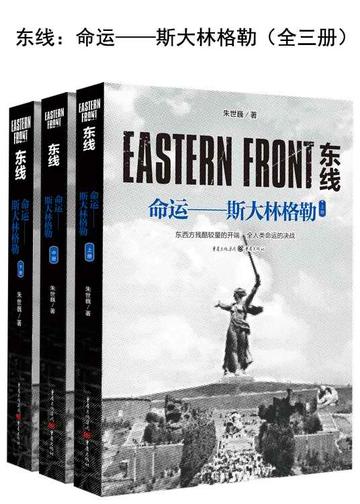
This book is a continuation of "Winter 1941" and tells the story after Germany failed to attack Moscow. During the Soviet-German War, Hitler changed his strategy and focused on local attacks. He finally determined the attack plan in 1942 and reached Stalingrad and the Caucasus in one fell swoop. There was fierce fighting until the winter. The Soviet army finally counterattacked and captured the German army. It was really exciting to see the back part, especially when the Soviet army was defeated many times and finally stood up again to repel the German army. Sometimes life is like this, with ups and downs.
It introduces the fate of Stalingrad in detail, records the process of the war with detailed data, uses a large amount of data to interpret the battle, and shows the battlefield results fairly and impartially. From history classes, I know that the Battle of Stalingrad was the turning point of World War II, but after reading this book, I understood many details. This is a good book worth reading. It is easy to understand and reveals the cruelty of war, the truth behind war, and the reasons for success or failure. It also tells us a common and true truth: aggression is always unpopular, and we can only fight wolves hard and not show mercy. I pray that there will never be a war in the world, and that there will be no bloodshed or people suffering from war.
To this day, people still view Germany and the Soviet Union with awe and admiration for this largest war in human history, marveling at the endless torrent of steel in the Soviet Union, and praising the terrifying combat effectiveness of German officers and soldiers.
The author Zhu Shiwei, a native of Nanchang, Jiangxi, is a famous military writer in my country. He has written articles for publications such as "Weapons", "Battlefield", and "Military World Pictorial". He also participated in the compilation of "The Complete Collection of German Tanks and Armored Vehicles in World War II" and "Soviet Tanks and Armored Vehicles in World War II". His major works include "Eastern Front: From Kharkov to Kursk", "Eastern Front: The Decisive Battle of the Dnieper River", "Eastern Front: From Ukraine to Romania", "Eastern Front: The Destruction of Army Group Center", etc.
This is a detailed work on the Battle of Stalingrad in World War II. Through rich historical materials and in-depth research, the author restores the historical background, battle process and impact of the Battle of Stalingrad. This book vividly depicts the battle scenes, command decisions and soldiers' lives in the Battle of Stalingrad. Through reading, readers can have an in-depth understanding of the hardship and cruelty of the Eastern Front battlefield in World War II, and feel the bravery and sacrifice of the soldiers. At the same time, this book also provides in-depth thinking on the history of war and military strategy, allowing readers to reflect on the impact and lessons of war on human society.
This is a detailed work on the Battle of Stalingrad in World War II. Through rich historical materials and in-depth research, the author restores the historical background, battle process and impact of the Battle of Stalingrad. This book vividly depicts the battle scenes, command decisions and soldiers' lives in the Battle of Stalingrad. Through reading, readers can have an in-depth understanding of the hardship and cruelty of the Eastern Front battlefield in World War II, and feel the bravery and sacrifice of the soldiers. At the same time, this book also provides in-depth thinking on the history of war and military strategy, allowing readers to reflect on the impact and lessons of war on human society.
As the second book in the "Eastern Front" series, this book details the heroic and brutal Soviet-German war in World War II. The story mainly tells how after the failure of Germany's attack on Moscow in 1941, Hitler changed his approach and carried out assaults on local key points, formulating a summer attack plan with the main goal of seizing the Caucasus oil fields and cutting off the communication lines in the central and southern Soviet Union. With this as a background, the author describes not only the cruelty of war but also the touching feelings of family and country. The plot is vivid and smooth and is worth reading.
The author is very professional and rigorous, and I read it for a long time, giving people a panoramic and in-depth experience.