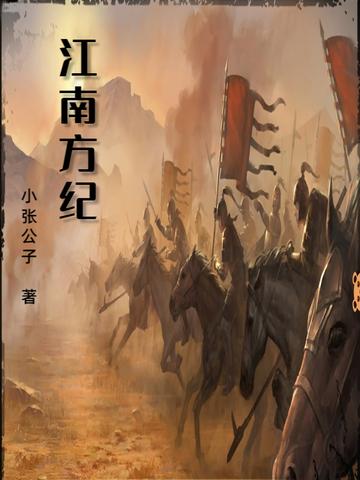
During the Huizong period, Emperor Zhao Ji was fond of exotic flowers and stones, and set up supervisors in the Jiangnan area to search for people's flowers, stones, bamboos, trees, and rare treasures, which was called the "Flower and Stone Guide" at that time. Gao Zhizhou, the Jiangnan supervisor of Hua Shi Gang, took Fangzhuang's sacred tree by force and persecuted everyone in Fangzhuang. Fang La, the owner of Fangzhuang Village, his son Fang Tianding, his brother Fang Maang, and his nephew Fang Jie gathered a total of one hundred Jiangnan heroes in the south of the Yangtze River. They performed righteous deeds and resisted the court. They eventually lost in a contest with the Thirty-six Tiangang and the Seventy-two Disha, writing a songable spirit of criticizing the decadent ruling class and praising the heroes of the uprising.
Reader comments
This is a newcomer's first full-length novel, so I'll work hard to update it.
You should support yourself, but don't go too far [smile]
The best outcome of this book is that Jiangnan La is successfully pushed to the Song Dynasty, or the other three major bandits are defeated.
This is a newcomer's first full-length novel, so I'll work hard to update it. You should support yourself, but don't go too far [smile]
The best outcome of this book is that Jiangnan La is successfully pushed to the Song Dynasty, or the other three major bandits are defeated.