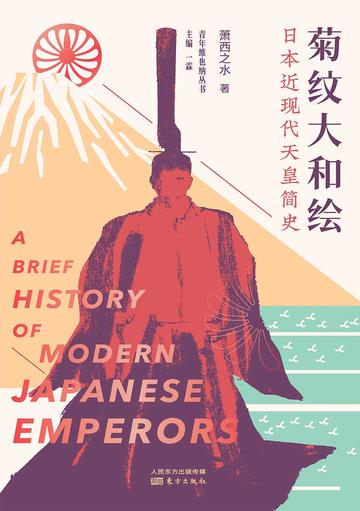
Since the Meiji Restoration 150 years ago, the Japanese emperor has experienced several changes in status and power, and will continue to change in the future. These changes themselves are also a microcosm of the changes in Japan's political system and social and cultural evolution. Therefore, understanding the emperor is an important entrance to understanding Japan.
This book uses first-hand historical materials such as the emperor's chronicles, government documents, diaries and letters of contemporary people, etc., And follows the conventional research model of history to explain the growth experience of the six emperors of Takamei, Meiji, Taisho, Showa, Heisei and Reiwa. This book does not regard the emperor as a lofty monarch, but as an ordinary person who holds the position of "emperor". It strives to analyze the emergency response and mental process of every Japanese emperor when encountering major historical events. The personal personalities and historical images of the six emperors are treated separately, and how they face the surrounding environment and the various characters around them is explored from the perspective of human hearts.
Reader comments
This book is very interesting! It writes about the emperors as ordinary people, allowing us to see their true reactions in major historical events. I especially like the analysis of the emperor's character in the book, which feels very close to reality. Moreover, the author's Japanese proficiency is superb and he can explain ancient Japanese clearly! But what I hate the most are the characters who are fighting for power, it's really annoying. As the book says, "The replacement of the emperor has once again made the emperor system and Japan under the emperor system the focus of attention." This book is really worth reading!
This book is very interesting! It writes about the emperors as ordinary people, allowing us to see their true reactions in major historical events. I especially like the analysis of the emperor's character in the book, which feels very close to reality. Moreover, the author's Japanese proficiency is superb and he can explain ancient Japanese clearly! But what I hate the most are the characters who are fighting for power, it's really annoying. As the book says, "The replacement of the emperor has once again made the emperor system and Japan under the emperor system the focus of attention." This book is really worth reading!