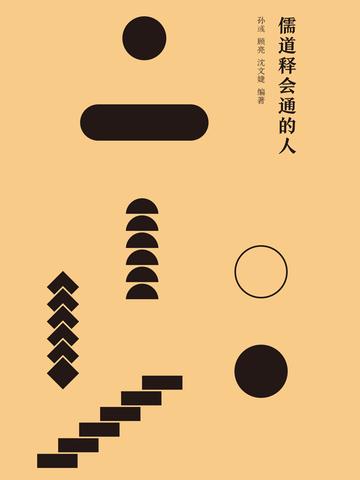
"The Man Who Knows Confucianism, Taoism, and Buddhism" is a book in the "Chinese" book series. This book series selects classic theories and representative figures, and uses the ideal figures who serve as benchmarks in various schools, schools and eras as the outline to show the spiritual development process of the Chinese people. It is hoped that the majority of young people and ordinary readers can truly understand the spiritual essence and cultural lineage of those cultural figures who have had a significant impact on the development of their nation, understand their "origins" through reading, establish their own sense of national identity, and grow into a Chinese in the true sense of the word with a Chinese stance, world vision, cosmic feelings, and human care. This volume mainly selects Confucius, Mencius, Laozi, Zhuangzi, Dong Zhongshu, Han Yu, Liu Zongyuan, Su Shi, Lu Jiuyuan, Wang Yangming, Fang Yizhi and other figures to display their thoughts and doctrines. Starting from the inner connection of Confucianism, Buddhism and Taoism, it explains the mutual influence, conflict and coordination of Confucianism, Buddhism and Taoism in the process of their respective occurrence, development and change, and displays the Chinese people's unique understanding of the world, life and society and their values.
Reader comments
I think these people are so amazing. Their ideas have influenced China for thousands of years! Just like the wonderful people around me, their thoughts and actions also affect me. Moreover, this book gave me a deeper understanding of traditional Chinese culture. It turns out that Confucianism, Taoism and Buddhism have so many things in common. I think I will pay more attention to Chinese traditional culture in the future and draw more wisdom and strength from it.
I think these people are so amazing. Their ideas have influenced China for thousands of years! Just like the wonderful people around me, their thoughts and actions also affect me. Moreover, this book gave me a deeper understanding of traditional Chinese culture. It turns out that Confucianism, Taoism and Buddhism have so many things in common. I think I will pay more attention to Chinese traditional culture in the future and draw more wisdom and strength from it.