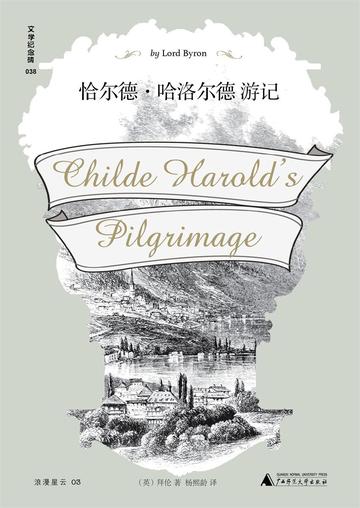
"The Travels of Childe Harold" is a great autobiographical poem in British Romantic literature. It was deeply loved by people at the time and its influence spread throughout the nineteenth century on both sides of the Atlantic.
Byronic melancholy and its causes and consequences are fully reflected in Travels.
All emotional activities, no matter how ups and downs and mixed emotions, are ultimately caused by the romantic self. This self puts him in a dilemma and very painful.
There is reason to believe that Byron spoke to some extent for everyone.
This translation was first published in 1956, revised by the translator Mr. Yang Xiling, and revised editions were published in 1959 and 1990.
This edition is based on the 1990 edition and is a complete reproduction of the seventy-eight exquisite prints from the 1869 edition of John Murray Publishing Company.
Reader comments
The writing style of this book is so unique! Byron used his romantic and melancholy writing style to make me feel like I was in Harold's journey. The descriptions in the book are delicate and make people feel empathy. Like "Don Juan", it is Byron's classic work. Moreover, the exquisite prints in the book add an artistic atmosphere and make people intoxicated. Highly recommended to friends who like romantic literature!
This book is not only a guide book that can be carried with you when traveling across the European continent, but also Byron's spiritual confession. The language in the book is gorgeous and reflects the otherworldly beauty of nature and monuments under Byron's romantic magnifying glass. Byron was deeply immersed in this beauty, but he also felt sorry for the short-lived nature of this beauty. He found that "the rise and fall of prosperity, the end of prosperity" is an inevitable tragedy for human beings and civilization. He lived in an era where the British Industrial Revolution had been developing for a long time and the society was undergoing great changes. Personal destiny was involved in industrial gears and many revolutions. Byron became disappointed with reality. He borrowed the skin of Childe Harold and started a pilgrimage, hoping to find a place for his soul to rest. It is a pity that the flowers are gone, and many splendid ancient civilizations such as ancient Rome, ancient Greece, and Venice have become corrupted and declined. These powerful civilizations are likely to be enslaved by another powerful civilization again. After seeing all this, Byron finally decided to devote himself to helping these civilizations pursue freedom and escape from slavery.





The writing style of this book is so unique! Byron used his romantic and melancholy writing style to make me feel like I was in Harold's journey. The descriptions in the book are delicate and make people feel empathy. Like "Don Juan", it is Byron's classic work. Moreover, the exquisite prints in the book add an artistic atmosphere and make people intoxicated. Highly recommended to friends who like romantic literature!
This book is not only a guide book that can be carried with you when traveling across the European continent, but also Byron's spiritual confession. The language in the book is gorgeous and reflects the otherworldly beauty of nature and monuments under Byron's romantic magnifying glass. Byron was deeply immersed in this beauty, but he also felt sorry for the short-lived nature of this beauty. He found that "the rise and fall of prosperity, the end of prosperity" is an inevitable tragedy for human beings and civilization. He lived in an era where the British Industrial Revolution had been developing for a long time and the society was undergoing great changes. Personal destiny was involved in industrial gears and many revolutions. Byron became disappointed with reality. He borrowed the skin of Childe Harold and started a pilgrimage, hoping to find a place for his soul to rest. It is a pity that the flowers are gone, and many splendid ancient civilizations such as ancient Rome, ancient Greece, and Venice have become corrupted and declined. These powerful civilizations are likely to be enslaved by another powerful civilization again. After seeing all this, Byron finally decided to devote himself to helping these civilizations pursue freedom and escape from slavery.