History is a kaleidoscope. Everyone sees it differently, and every angle reveals something different. Some see cruelty, others warmth. Some see slaughter, others redemption. Some see other people, while others see themselves. Some treat the false as true, and others treat the true as false.
A passage or a name from the history books takes on unexpected faces under Zhang Wei's pen. The history Zhang Wei writes is both principled and warm. Principled, because in each story from "Mantou Shuo," Zhang Wei tries to recount historical events as they happened, from a third-party perspective and without emotional bias.
Many historical events and figures have two sides. We cannot step outside their historical context and judge the people and events of the time from our present-day "God's-eye view." That would be unfair to those who lived through it. And warm, because history is engaging and full of feeling. It is no longer cold and unapproachable. Historical events may seem to consist of nothing but times, places, and strings of data, but their real protagonists are living, breathing people, with human nature, stories, and genuine personalities. The lively writing brings history, once dry and dull, vividly to life.
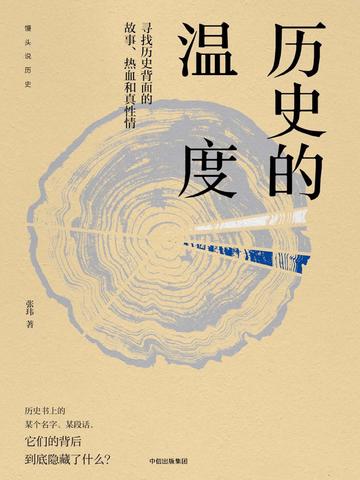
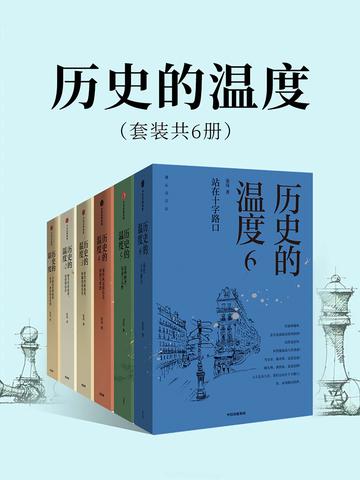
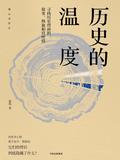

In terms of character introduction in this book, everyone has their own personality, which cannot be summed up by a good person or a bad person. The author introduces the task characters in each article, picks out the important parts, and quickly depicts the character's personality. Some of them show their unique side. If you understand the author's life experience, you will find that due to the nature of his work and his knowledge of many people and stories, the work is particularly real and moving. I recommend everyone to read and study it. It is a very classic and typical work.
"History is a pile of ashes, but there is still warmth deep in the ashes." When we look at historical figures and events, we always evaluate the merits and demerits objectively from a third party. However, the author of this book believes that "many historical events or historical figures have two sides. We cannot jump out of the historical environment at that time and use the "God's perspective" to evaluate people and events at that time now. This is unfair to the people at that time." These historical figures are human beings, and humans must have humanity, stories, and warmth.
Here is the story of a scientist. This scientist was so famous that women and children all over the world knew it. Even after his death, some people secretly preserved his brain and wanted to know why he was so smart. However, has such an almost godlike existence really made no mistakes at all? Is it really otherworldly? Have you really spent your life happily in the admiration of thousands of people? Let us follow the author's writing style to explore Einstein's story and feel the shock that that era brought to us.
This book is very interesting. The author tells historical stories with an objective attitude, making history vivid and interesting. The characters in the book are all vivid, and I especially like his evaluation of historical figures, which is very real. However, I kind of hate people who fake things in history and cover up the truth. Overall, this is a good book worth reading.
All the stories are well told, eloquently and without sensationalism. The first half is lighthearted and insightful, but in the second half the story suddenly becomes heavy once the style changes. It tells a lot of historical chapters that people are not so familiar with, especially the chapter on the history of the Anti-Japanese War. I have always been a little resistant to modern history and often cried, because it was written for each of the living people, and it was much more vivid than the textbook. The book is rational yet tender, and I brought tears to my eyes several times while reading the second half.
The whole book is divided into three chapters: characters, anecdotes and war. As far as I'm concerned, the fun and readability also decrease. One of the highlights of this book is that it restores a character, a story or a war to the maximum possible extent in a limited space. This kind of fragmented historical knowledge is actually the most interesting. His advantage is that it is interesting and easy to read. It is really friendly for people like me who are interested in history but don't want to read large historical works.
The historical temperature series is worth savoring again and again😁
Very exciting! Learned the historical details that had been ignored before. And there are a lot of new angles to see and think about history. Great reading experience!
You can take a look. Very good.
I like history very much, but I don't really like long articles. It just so happens that this kind of short article is very suitable for me.