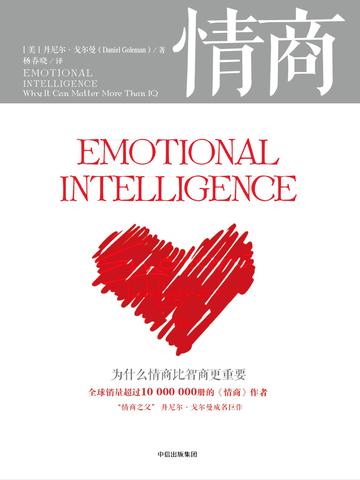
Is IQ destiny? In fact, IQ is not as important as we think. The book "Emotional Intelligence" not only breaks the long-standing innate determinism of IQ, but also provides a key explanation for the long-discussed issue of "emotional intelligence" in psychology. Daniel Goleman believes that our understanding of human intelligence is severely limited by not taking into account a series of key abilities that have a significant impact on human behavior. In the more than ten years since "Emotional Intelligence" was published, the term "emotional intelligence" has now become people's daily language. The authors draw on groundbreaking research in brain and behavioral science to illustrate the factors that influence people with high IQs to underperform and those with average IQs to do well. These factors include self-awareness, self-discipline, and empathy, which are not innate but can create new pathways for us. Emotional intelligence is formed in our childhood but can be nurtured and strengthened in adulthood – with direct benefits to our health, relationships and work. Emotional intelligence is a basic survival ability that determines the performance of your other mental abilities, as well as the direction and achievements of your life. "Emotional Intelligence" (10th Anniversary Edition) reflects the latest research progress and the author's thinking and understanding. At the same time, the author also provides answers to the main questions he encountered during his lectures around the world. Emotional intelligence research is a rapidly developing field, and the new appendix also provides readers with reference materials in the field of emotional intelligence.
Reader comments
There are many cases around me where a very capable person is never reused and can only work under some leaders who have average ability but are good at dealing with people. For some better ones, the leaders only give away the work results. For some unlucky ones, the work results are taken away by leaders with evil intentions, but they can only swallow their anger in order to support their families. These people really should read this book. Emotional intelligence is also a kind of wisdom and intelligence. We didn't have this concept when we were young, and we did suffer a lot. We learned lessons through blood and tears as we grew up, and we grew up slowly.
The debate between IQ and EQ has been going on for many years. The author clearly sides with emotional intelligence. Daniel introduces the concept, components and cultivation methods of emotional intelligence in detail from the perspectives of psychology, neuroscience and education. He also uses a large number of examples to illustrate the importance of emotional intelligence to human self-perception, interpersonal relationships, career and health. Compared with IQ, emotional intelligence pays more attention to the abilities of emotional expression, communication skills, conflict management and self-regulation, which are the basic conditions necessary for individuals to succeed in various environments, establish good relationships and obtain satisfaction. This book also became a milestone in the field of emotional intelligence research and had a profound impact on subsequent emotional intelligence education and application.
After reading this book, I realized that emotional intelligence can also be cultivated! Emotional intelligence is formed in childhood, but can continue to be cultivated and strengthened in adulthood, so it's never too late to learn how to improve your emotional intelligence. In interpersonal interactions, in life, and in work, emotional intelligence is so important. Sometimes we often offend people because of a casual remark, and we often don't know why. It's really a disadvantage! When reading this book, I often benchmark myself and find that I have made too many mistakes inadvertently! Now I feel that I have grown up and look forward to a better version of myself.
I learned a lot about emotions and how to control them. The author is really great. He analyzed emotional intelligence from various angles and experiments in the field of brain science. Emotional intelligence should be grasped from an early age. He explained it in simple terms and benefited a lot! Many people are always controlled by their emotions in life, and acting impulsively can easily lead to very serious consequences and lead to big mistakes. After reading, I realized a truth: the ability to regulate other people's emotions is the core of the art of dealing with interpersonal relationships, which requires a certain level of emotional self-control. Self-control is the beginning of the ability to reduce one's own anger and distress, and control impulses and excitement. Managing your emotions well is a very important lesson in life.
Which one is more important, IQ or EQ? The author of this book points out that in many situations, the role of EQ is more prominent. A person with high EQ can express himself with ease, whether in the shopping mall or in the interpersonal field. Therefore, the relationship between success and EQ can be said to be closely related. This book tells us that in today's increasingly competitive world, we must have both high IQ and higher emotional intelligence, especially the ability to express high emotional intelligence, in order to achieve success.
This book made me realize the importance of emotional intelligence and its profound impact on our lives and work. The factors mentioned in the book such as self-awareness, self-discipline, and empathy can indeed help us better understand ourselves and others. I think everyone should read it to improve their emotional intelligence. However, I kind of disliked the characters in some instances in the book, their actions were truly speechless. But overall, this is a very valuable book!
We often envy people with high IQs, but in fact the people who can really thrive in society are those with high emotional intelligence. This book scientifically and systematically explains the mechanism, essence and application of emotional intelligence. It also uses a large number of typical experiments and cases, and uses easy-to-understand language to clearly explain to us the knowledge and skills of improving emotional intelligence, helping us to control our emotions, improve self-awareness, and learn to correctly handle the interpersonal relationships around us.



There are many cases around me where a very capable person is never reused and can only work under some leaders who have average ability but are good at dealing with people. For some better ones, the leaders only give away the work results. For some unlucky ones, the work results are taken away by leaders with evil intentions, but they can only swallow their anger in order to support their families. These people really should read this book. Emotional intelligence is also a kind of wisdom and intelligence. We didn't have this concept when we were young, and we did suffer a lot. We learned lessons through blood and tears as we grew up, and we grew up slowly.
The debate between IQ and EQ has been going on for many years. The author clearly sides with emotional intelligence. Daniel introduces the concept, components and cultivation methods of emotional intelligence in detail from the perspectives of psychology, neuroscience and education. He also uses a large number of examples to illustrate the importance of emotional intelligence to human self-perception, interpersonal relationships, career and health. Compared with IQ, emotional intelligence pays more attention to the abilities of emotional expression, communication skills, conflict management and self-regulation, which are the basic conditions necessary for individuals to succeed in various environments, establish good relationships and obtain satisfaction. This book also became a milestone in the field of emotional intelligence research and had a profound impact on subsequent emotional intelligence education and application.
After reading this book, I realized that emotional intelligence can also be cultivated! Emotional intelligence is formed in childhood, but can continue to be cultivated and strengthened in adulthood, so it's never too late to learn how to improve your emotional intelligence. In interpersonal interactions, in life, and in work, emotional intelligence is so important. Sometimes we often offend people because of a casual remark, and we often don't know why. It's really a disadvantage! When reading this book, I often benchmark myself and find that I have made too many mistakes inadvertently! Now I feel that I have grown up and look forward to a better version of myself.
I learned a lot about emotions and how to control them. The author is really great. He analyzed emotional intelligence from various angles and experiments in the field of brain science. Emotional intelligence should be grasped from an early age. He explained it in simple terms and benefited a lot! Many people are always controlled by their emotions in life, and acting impulsively can easily lead to very serious consequences and lead to big mistakes. After reading, I realized a truth: the ability to regulate other people's emotions is the core of the art of dealing with interpersonal relationships, which requires a certain level of emotional self-control. Self-control is the beginning of the ability to reduce one's own anger and distress, and control impulses and excitement. Managing your emotions well is a very important lesson in life.
Which one is more important, IQ or EQ? The author of this book points out that in many situations, the role of EQ is more prominent. A person with high EQ can express himself with ease, whether in the shopping mall or in the interpersonal field. Therefore, the relationship between success and EQ can be said to be closely related. This book tells us that in today's increasingly competitive world, we must have both high IQ and higher emotional intelligence, especially the ability to express high emotional intelligence, in order to achieve success.
This book made me realize the importance of emotional intelligence and its profound impact on our lives and work. The factors mentioned in the book such as self-awareness, self-discipline, and empathy can indeed help us better understand ourselves and others. I think everyone should read it to improve their emotional intelligence. However, I kind of disliked the characters in some instances in the book, their actions were truly speechless. But overall, this is a very valuable book!
We often envy people with high IQs, but in fact the people who can really thrive in society are those with high emotional intelligence. This book scientifically and systematically explains the mechanism, essence and application of emotional intelligence. It also uses a large number of typical experiments and cases, and uses easy-to-understand language to clearly explain to us the knowledge and skills of improving emotional intelligence, helping us to control our emotions, improve self-awareness, and learn to correctly handle the interpersonal relationships around us.