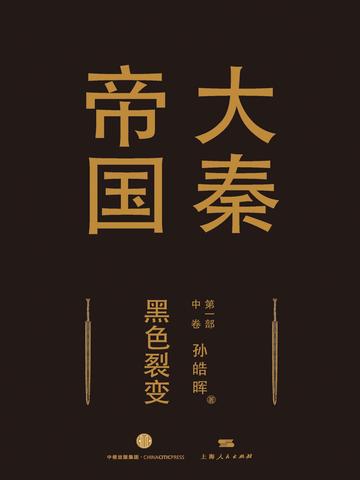
Qin Xiaogong and Shang Yang implemented reforms to become stronger. The Qin State turned from weak to strong, regained its lost territory, and began to rise. In the "era of great contention" where heroes compete for power and mountains and rivers change day by day, in the Warring States period when heroes emerge in large numbers and hundreds of schools of thought contend, the western frontier of China is experiencing an unprecedented "black fission." In 362 BC, Duke Xiang of Qin was poisoned by an arrow and died in a battle. His legitimate son Yingqu ascended the throne in front of Liang Lingqian, and was known as Duke Xiao of Qin in history. The Qin State was despised by the foreign powers and its national power was weak. The six kingdoms of Shandong also formed an alliance and plotted to divide Qin.
The 22-year-old young monarch Qin Xiaogong wrote a blood letter on the monument of national humiliation, and issued a request for talents to the world, vowing to strengthen the country through reforms. In repeated discussions with the scholars of the Qin Dynasty, Shang Yang stood out. On the bow of the Weishui River, Shang Yang showed his political opinions and impressed Duke Xiao of Qin with his Legalist thoughts. Qin Xiaogong worshiped Shang Yang as his prime minister and began a twenty-year reform of the monarchy and ministers. Shang Yang, the master of Legalism, presided over the comprehensive reform and led the Qin State to create a wartime legal civilization step by step. The new army of the State of Qin was trained, the country was prosperous and the people were strong, the people were brave enough to fight in public, and civilians strived for military merit. Although they were less than fifty years old, Qin Xiaogong and Shang Yang were both physically and mentally exhausted after working hard on state affairs all year round. Duke Xiao of Qin recalled the prince Ying Si who had been in exile for twenty years, and then died. Ying Si ascended the throne and was known as King Hui of Qin in history. The six countries took the opportunity to put pressure on Qin and asked Qin to kill Shang Yang to thank the world. In order to prevent Qin from falling into civil strife, Shang Yang surrendered his political power and military power. He was imprisoned and was killed by an old man's car. Ying Si took advantage of the opportunity to clear out all the old nobles who opposed the reform, established Shang Yang's law as the law of the world, and focused on planning how to make the already powerful Qin country break through the siege of the six countries and achieve the rise of a powerful country.
Reader comments
"The Qin Empire" recreates the fission of the Warring States Period with a bronze-like texture. The ragged scholars used their feet to measure every inch of land on the Wei River, Shangyu, and Hexi. The wind and frost of the entire Qin Dynasty were wrapped in their ragged clothes.
The steepness of the Ziwu Valley, the distinct river valleys, and the shadowy wind are not only geographical coordinates, but also a spiritual quenching ground that must be passed by reformers. Wei Yang's scorching gaze under his unkempt face, Cha Ying's change from surprise to solemnity, the hurricane that is about to sweep through Thailand has already been brewing in subtle ways.
Thunder is heard in silence, and the weight of historical novels comes to life on the page. The author opens a unique window for us to see the fission of civilization.
Sorry, it's a quenching field. I'm correcting my own language. It has nothing to do with the excellence of the original work! [Shy][shy]
Shang Yang in the book is really amazing. His reform measures made Qin gradually stronger. I think he is like Zhuge Liang in "The Romance of the Three Kingdoms", both of them are extremely intelligent figures. Moreover, the friendship between Qin Xiaogong and Shang Yang is also very touching. This reminds me of the story of Li Shimin and Wei Zheng in "The Long Song of Zhenguan". They both worked hard for the strength of the country. I think this book is worth reading and I recommend it to you!
Good book, true. It's so valuable
A good-looking article, based on history, with vivid characters and compact plot.
Very beautiful, amazing
Good, good, very good, very good
Well worth reading
I like reading history books
Very satisfied Very satisfied
Vivid, engaging
Super pretty, love it 😘
This book is well written.
'This book is easy to understand and easy to read.
Good-looking, good-looking, good-looking
Fully understand historical and cultural heritage
Good, good, good, good, good
Said - This article allows us to understand the process of Shang Yang's reform.
The storyline is rich and colorful
In the Spring and Autumn Period, when warring men and women fought for supremacy, you showed us why Qin became the foundation for unifying China.
This book is good, with a good plot and conciseness.
I like this book. I especially like Shang Yang. I give this book a thumbs up.
The book is so beautiful and the content is rich and colorful. I would recommend it to more friends.
"The Qin Empire" recreates the fission of the Warring States Period with a bronze-like texture. The ragged scholars used their feet to measure every inch of land on the Wei River, Shangyu, and Hexi. The wind and frost of the entire Qin Dynasty were wrapped in their ragged clothes. The steepness of the Ziwu Valley, the distinct river valleys, and the shadowy wind are not only geographical coordinates, but also a spiritual quenching ground that must be passed by reformers. Wei Yang's scorching gaze under his unkempt face, Cha Ying's change from surprise to solemnity, the hurricane that is about to sweep through Thailand has already been brewing in subtle ways. Thunder is heard in silence, and the weight of historical novels comes to life on the page. The author opens a unique window for us to see the fission of civilization. Sorry, it's a quenching field. I'm correcting my own language. It has nothing to do with the excellence of the original work! [Shy][shy]
Shang Yang in the book is really amazing. His reform measures made Qin gradually stronger. I think he is like Zhuge Liang in "The Romance of the Three Kingdoms", both of them are extremely intelligent figures. Moreover, the friendship between Qin Xiaogong and Shang Yang is also very touching. This reminds me of the story of Li Shimin and Wei Zheng in "The Long Song of Zhenguan". They both worked hard for the strength of the country. I think this book is worth reading and I recommend it to you!
Good book, true. It's so valuable
A good-looking article, based on history, with vivid characters and compact plot.
Very beautiful, amazing
Good, good, very good, very good
Well worth reading
I like reading history books
Very satisfied Very satisfied
Vivid, engaging
Super pretty, love it 😘
This book is well written.
'This book is easy to understand and easy to read.
Good-looking, good-looking, good-looking
Fully understand historical and cultural heritage
Good, good, good, good, good
Said - This article allows us to understand the process of Shang Yang's reform.
The storyline is rich and colorful
In the Spring and Autumn Period, when warring men and women fought for supremacy, you showed us why Qin became the foundation for unifying China.
This book is good, with a good plot and conciseness.
I like this book. I especially like Shang Yang. I give this book a thumbs up.
The book is so beautiful and the content is rich and colorful. I would recommend it to more friends.
Quite awesome𠂉You highly recommend it