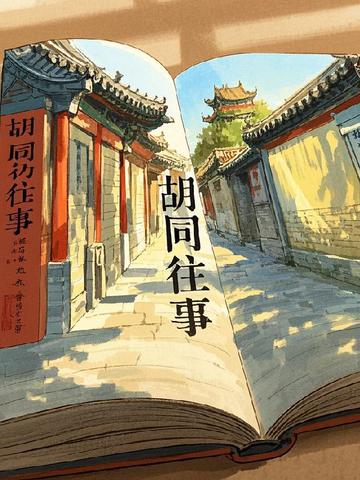
I have lived in an alley since I was a child. I have not seen much of the world, but I have a happy home.
There are family members who care about me; partners who have grown up with me; and friends who talk to me about everything. These beautiful alley memories will never be forgotten by me!
Today, I picked up the pen in my hand to record the good things in the past, tell you about the past in the hutong, and keep the old memories of the hutong.
The story begins with my grandfather. Because, without my grandfather's hard work and hard work, there would be no kid like me in the alley.
Reader comments
The hutongs in the book are not just narrow streets, but also emotional containers carrying countless memories. The quarrelsome parents in the neighborhood and the laughter and quarrels of the children are the background of hutong life. In the early morning, the alley is awakened by the steaming heat of the breakfast stall; in the evening, the neighbors sit around and share the day's experiences. These seemingly ordinary moments, recorded by the author, have become the most affectionate memories of the past life.
The author is very skilled in character creation. The elders, aunts, and young people in the alley are all given fresh vitality. Their joys, sorrows, joys and sorrows are vividly displayed on the page, making people feel for them. Readers can seem to see the old man shaking his fan leisurely under the tree, and hear the hearty laughter of the aunts chatting about home affairs. These vivid characters constitute the soul of hutong life.
From a cultural perspective, "Once Upon a Time in Hutong" is a precious folklore chronicle. It shows the customs, customs and traditional customs of old Beijing. From the layout of the courtyard to the celebration of festivals, it contains profound historical and cultural heritage. Through this book, readers can have a glimpse of the unique charm of old Beijing Hutong culture and feel the continuation and inheritance of traditional culture in daily life.
"Past in the Hutong" is not only a review of personal memories, but also an affectionate tribute to an era and a culture. It allows us to stop and look back at the forgotten warmth and beauty in the fast-paced modern life. This is a masterpiece that can touch the soul and arouse resonance, leading readers to travel through time and space and relive the long years in the hutongs.
The characters in the book are also more three-dimensional and full-bodied. Looking back again, I can realize that behind the chatter of the aunts and uncles, there is a deep love for life and a cherished relationship with neighbors; the passionate struggle of the young people demonstrates the vitality and infinite longing for the future bred in the hutongs. Their stories connect the past and present of Hutong and become a vivid footnote of the changes of the times.
From a more macro perspective, "Past in the Hutong" is like a cultural link, connecting the past and the present. In today's cities with many high-rise buildings, hutong culture has gradually been marginalized, but this book has revitalized it. It reminds us that those traditional lifestyles and warm neighborliness are an integral part of our cultural roots, and they are worth remembering and inheriting forever.



The hutongs in the book are not just narrow streets, but also emotional containers carrying countless memories. The quarrelsome parents in the neighborhood and the laughter and quarrels of the children are the background of hutong life. In the early morning, the alley is awakened by the steaming heat of the breakfast stall; in the evening, the neighbors sit around and share the day's experiences. These seemingly ordinary moments, recorded by the author, have become the most affectionate memories of the past life. The author is very skilled in character creation. The elders, aunts, and young people in the alley are all given fresh vitality. Their joys, sorrows, joys and sorrows are vividly displayed on the page, making people feel for them. Readers can seem to see the old man shaking his fan leisurely under the tree, and hear the hearty laughter of the aunts chatting about home affairs. These vivid characters constitute the soul of hutong life. From a cultural perspective, "Once Upon a Time in Hutong" is a precious folklore chronicle. It shows the customs, customs and traditional customs of old Beijing. From the layout of the courtyard to the celebration of festivals, it contains profound historical and cultural heritage. Through this book, readers can have a glimpse of the unique charm of old Beijing Hutong culture and feel the continuation and inheritance of traditional culture in daily life. "Past in the Hutong" is not only a review of personal memories, but also an affectionate tribute to an era and a culture. It allows us to stop and look back at the forgotten warmth and beauty in the fast-paced modern life. This is a masterpiece that can touch the soul and arouse resonance, leading readers to travel through time and space and relive the long years in the hutongs. The characters in the book are also more three-dimensional and full-bodied. Looking back again, I can realize that behind the chatter of the aunts and uncles, there is a deep love for life and a cherished relationship with neighbors; the passionate struggle of the young people demonstrates the vitality and infinite longing for the future bred in the hutongs. Their stories connect the past and present of Hutong and become a vivid footnote of the changes of the times. From a more macro perspective, "Past in the Hutong" is like a cultural link, connecting the past and the present. In today's cities with many high-rise buildings, hutong culture has gradually been marginalized, but this book has revitalized it. It reminds us that those traditional lifestyles and warm neighborliness are an integral part of our cultural roots, and they are worth remembering and inheriting forever.