When the crimson blossoms open, they drift away on the wind; a ghostly butterfly can leave behind a wisp of fragrance.
One by one, old friends have faded away. Their glory now lies forgotten, with no phoenix left to draw near.
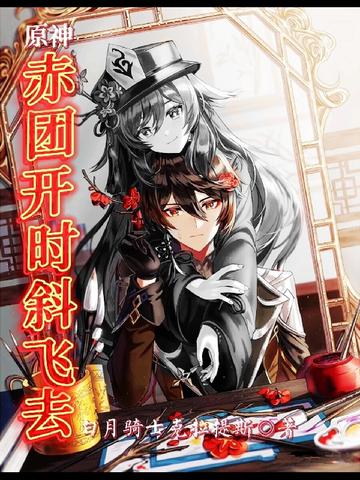
Zhongli finally removed the Qiankun Taigua hat adorned with a red plum blossom, silently facing the flames leaping atop the funeral pyre.
There, he had witnessed the passing of too many mortals and the fading of too many old friends.
And if a god were to fall and become mortal, how could he face this funeral pyre and its ever-burning flames?
Who knows?
Zhongli silently recited the Farewell Rite and turned to leave. A sense of relief suddenly washed over him. Immortality might not be a blessing, but a curse of erosion.
And falling, perhaps, meant freedom.






This book is original content carefully edited by Kratis, which is very different from that published by Miyoushe. However, the plot of this book is more coherent, making people want to know the follow-up immediately; the writing is skillful and delicate, like jade that has been polished for the first time, making people cherish it. Beware of knives, I quite appreciate it.
Teacher Kratis's writing is really good. The writing style is very different from the current online writing. It can be viewed more as a literary work. The author made a lot of foreshadowing in the beginning, and finally integrated all the foreshadowing to form a complete, rigorous and logical story. The real climax of the novel tells the story of how the seven stars in Liyue are fighting each other, and the fools are invading and infiltrating outside. How the heroes of Liyue fought one after another to protect their family and country, and save Liyue from fire and water. Putting the story of Liyue into reality, isn't this a microcosm of the past of our Chinese land? (Personal superficial evaluation, don't comment if you don't like it)
It is a good book with a unique style, but unfortunately it seems out of place and unlikable in the fast-paced Tomato.
I have read it several times, but I still think it is very well written, and it feels different from the first edition of Mishe.