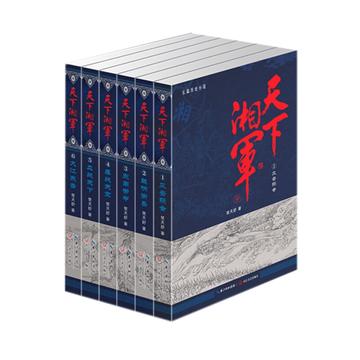
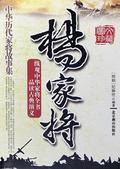
"Xiang Army" was the name given to the local armed forces in Hunan during the late Qing Dynasty. It was first called "Xiang Yong" and later "Xiang Army". The Hunan Army was founded by Zeng Guofan. It successively established a land division, a navy division, a camp office and a grain station. The main generals were mainly Hunanese. Zeng Guofan was from the same hometown, teachers and students, of the same age, or relatives and friends as them. The Hunan Army attaches great importance to education. Soldiers are recruited by the battalion officers themselves, and sentry commanders and captains are appointed by the battalion officers. Later, there are division commanders and commanders above the battalion officers, who can manage several battalions or dozens of battalions. All levels were subordinated, and the entire army obeyed only one person, Zeng Guofan.
When the country is in trouble, just a piece of paper can send the Hunan army thousands of miles to the emergency. They resisted Russia in Xinjiang, Japan in Liaoning, the Eight-Power Allied Forces in Shanxi, and Japan and France in Taiwan and Guangxi. It grew rapidly in the process of fighting against peasant uprisings and foreign invaders from all over the country. There were 29 Hunan Army generals to governors, hundreds of provincial and ministerial officials, and countless seventh-grade holders. "Zhongxing General, Shijiu Huxiang" "Since ancient times, there is no army without Hunan, and the world's Hunan army comes out of Xiangxiang." The Hunan Army has six major factions: Zeng Guofan, Hu Linyi, Zuo Zongtang, Li Hongzhang, Jiang Zhongyuan and Wang Kaiyun.
Yang Du said: "If China is destroyed, all the people in Hunan must die." The Hunan Army is a "sword that relies on heaven" and a "stone that mends the sky." The eight words of Hunan spirit are "loyalty, responsibility, seeking truth and striving for strength".
Reader comments
Although I feel that this book is partial to praise the Hunan Army, it still respects the general history, is more realistic and vivid, and uses fluent language. Great book! Very willing to listen.
It's readable, has a strong sense of substitution, and some parts of the story are unclear and a bit fragmented!
A very good storyline, recreating the scene of the Hunan Army's battle on the battlefield
This book reminds me of a friend of mine who really likes history, especially the story of the Hunan Army. The writing style of this book is very vivid, like watching a historical drama. And by reading this book, I have a deeper understanding of the Hunan Army and their spirit of loyalty and responsibility. I think this book is worth reading, especially for those interested in history.
This is a huge work of modern Chinese history, with voluminous volumes, detailed historical materials, flesh and blood, and both spiritual and physical features. People can not only feel the profoundness of the Chinese bloodline, but also have a deep understanding and baptism of her history of vicissitudes, blood, tears and suffering. This is the historical mission and practical value of literary works.
This work can be called a classic [like][like][like]
Compact structure, clear context, and unconventional writing
It has the flavor of some romance novels, which is very good
Although I feel that this book is partial to praise the Hunan Army, it still respects the general history, is more realistic and vivid, and uses fluent language. Great book! Very willing to listen.
It's readable, has a strong sense of substitution, and some parts of the story are unclear and a bit fragmented!
A very good storyline, recreating the scene of the Hunan Army's battle on the battlefield
This book reminds me of a friend of mine who really likes history, especially the story of the Hunan Army. The writing style of this book is very vivid, like watching a historical drama. And by reading this book, I have a deeper understanding of the Hunan Army and their spirit of loyalty and responsibility. I think this book is worth reading, especially for those interested in history.
This is a huge work of modern Chinese history, with voluminous volumes, detailed historical materials, flesh and blood, and both spiritual and physical features. People can not only feel the profoundness of the Chinese bloodline, but also have a deep understanding and baptism of her history of vicissitudes, blood, tears and suffering. This is the historical mission and practical value of literary works.
This work can be called a classic [like][like][like]
Compact structure, clear context, and unconventional writing
It has the flavor of some romance novels, which is very good