
Stats
304Reads
9.1Score
143Shelves
21Chapters
23Listens
14.7kReads · all time
Tags
Synopsis
Reader comments
In booklists 3
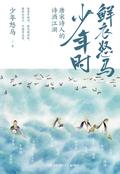
Why Not Read Classics?
Recommend some good books that are meaningful, influential and well-written.
54.6MViews881Books7hUpdated
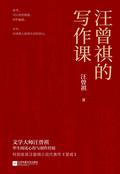

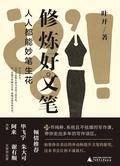
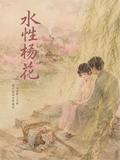
A Must-Read for Chinese Language and Literature Majors
Are there any books that can actually help improve your writing and expression skills?
4.8MViews605Books4dUpdated



A Book That Turns Others into Skin
I want to read a book similar to "Weird Apocalypse: I am a Painted Corpse Lolita". I'm looking for a book that turns others into skin. I haven't read much lately.
639.5kViews60Books22dUpdated
Desire comes from limited freedom, and once freedom is in an infinite setting, desire cannot become desire because it cannot touch the limit. In contemporary society, human tragedies may come from such paradoxes. Like the paradox of life and death, Gide wants to remind us that if there is no death, if there are no boundaries, if there are no restrictions on freedom, we will also be unable to achieve happiness. At the end of the novel, Marceline is completely uncooperative - shouldn't she cooperate with Gide in his pursuit of "managing" happiness? —— Died on the ground, what "I" felt was, "There is nothing more discouraging than this persistent clear sky." Michelle asked her friends: "Pull me away from here, but I can't do it on my own. Part of my will has been damaged, and I don't even know where the strength came from to leave Cantara."
My first impression after reading it is that it reads very smoothly, without too much emotional ups and downs or discomfort. I feel that the translation is very good, and of course, the main author writes well. I feel that the male protagonist is an ordinary person. This ordinary does not refer to external finances or blood, but to his character. At first, like most people, he completed his studies, joined the workforce, and got married. He was academically serious, conscientious, and fulfilled his responsibilities. It wasn't until he recovered from the illness and returned to the manor, where he met new people and new things, that his mentality began to change, or in other words, he wanted a different way of living. Coupled with the accumulation of his previous family and his years of hard work, he has no financial worries, and then he can think more. So he began to try to explore the things that the public thought were forbidden, and reveal a little bit of what he had hidden in his heart, such as his acquiescence in stealing things and the charming thoughts arising from seeing a man's naked feet, some things that were subtle and not so easy to detect. Until he met Menarke, an independent and unique character. He advised the male protagonist to do what he wanted to do, enjoy his nature and not care about the worldly eyes. Later, the male protagonist's wife had a miscarriage and he was no longer around, and his wife's wandering after contracting tuberculosis can all be seen in the male protagonist's struggle and desire. He wanted freedom and then was trapped in freedom. Until the heroine passed away, the hero was freed from the bondage he thought he had, but in the end he failed to get the freedom he wanted. The author shows the journey of an educated ordinary person's transgression. Strictly speaking, he is not a transgressor. He touches but leaves, wants but struggles. At the end of the book, I found a relatively specific content analysis, which made me understand it more deeply. There is also a brief summary of the author's life experience at the end, which I feel can help me better understand this book. It can be said that the male protagonist is the portrayal of most of the author's life experience.
After reading it, I felt disappointed. The ending was sudden, but it seemed natural. Each of us walking in the world cannot help but think about how to live our lives well. We cannot leave everything behind, live without caring about the eyes of outsiders, and get along with others who cannot completely become a masked person. In this bizarre world, we are constantly being shaped by worldly events. It may be difficult, but I hope that everyone can maintain a sense of coolness and tranquility while being busy with the hustle and bustle.
Should people live up to the standards expected by society, or should they live out their instinctive selves regardless of everything? Gide gave a pessimistic intermediate answer: purely obeying external morality will make people hypocritical and withering; purely abandoning all morality and only satisfying the self will inevitably hurt close others and ultimately bring guilt and emptiness. Both extreme paths have fatal flaws, and individuals will always walk in the dilemma between the two.
This book is very interesting and reminds me of Maugham's "The Moon and Sixpence". Michelle in the book is somewhat similar to Clandestine in "The Moon and Sixpence", both are pursuing true freedom. Gide's writing is true and avant-garde, making me think more about myself and my desires. I really like this kind of resonant book, and I recommend you to read it.
The plain narrative unexpectedly made me unable to stop reading. As I read it, I felt a different kind of emotion. Ha ha. After seeing the last few additions, I discovered that he was the author of "The Narrow Gate". However, I also had an immature and wild idea. After reading it, I added to his character that the author had homosexual tendencies. I couldn't help but think of the thoughts he had about the little boy described in the book that I didn't understand at the time. Um. Is it the same as my guess? Collecting private goods O_o?
This book depicts the awakening process of French farmers in the 19th century who broke through the moral shackles and pursued their own instincts without the pressure of survival. He changed from a "decent person" who followed social norms to breaking free from the constraints of marriage, religion and secular ethics. So my personal reflection on reading is that today's readers feel that some names are exaggerated and the writing is average. This is also a so-called God's perspective. When readers read a certain book, they can simply understand the author's life and the style and habits of the society and country at that time, so as to better understand the author's writing ideas🤗
This celebrity talked about his travel experience, which makes us understand that the life of celebrities can also be very simple, so we should not think of celebrities as extraordinary people, but should treat them as ordinary people living like us.
The wings of death sweep over, peeling off the coating on one's body formed by education, religious ethics, and revealing one's original appearance. The strong breath of same-sex love can be felt in the narrative, which dominates the beating of life, feelings and longing for freedom. Thoughts on life are very heavy and difficult to understand, but the author scatters them in the scenery of the journey, innocent children and working workers, delicately and smoothly.
One of Gide's Moral Trilogy
Should we follow the secular world, or should we satisfy our own desires and seek the happiness of freedom? It's really hard to choose
A very wise book
I asked why it was so literary and artistic. When I saw the introduction to the third part, I understood.