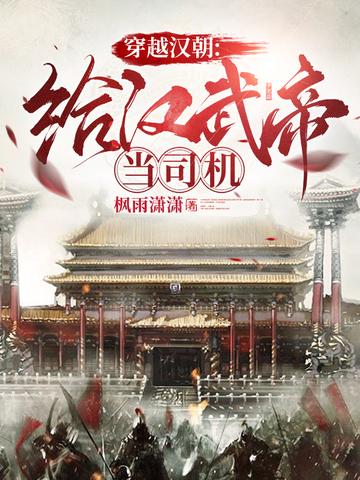
A special forces soldier transmigrates to the late reign of Emperor Wu of Han. With no identity, relatives, or friends, and his hair cut short, he is mistaken by the county magistrate for a criminal who has undergone the punishment of shaving and is thrown in jail. His transmigration starts on the hardest difficulty: as a prisoner from hell.
He goes to jail, only to wipe out a band of mountain bandits...
He serves as a low-ranking frontier guard, only to shoot down a famed archer and earn military honors and a reward...
He opens a little restaurant in Chang'an, only to meet Emperor Wu, Huo Guang, Sima Qian, Dongfang Shuo, Sang Hongyang, and other famous figures of the Han dynasty...
He sits in on classes at the Imperial Academy, only to debate the scholars and spark the famous Discourse on Salt and Iron...
He serves as a palace attendant to Emperor Wu, only to get caught up in the Witchcraft Crisis...
At last, he makes it to the rank of Commander of the Feathered Forest Guards, only to be sent to the Xiongnu to retrieve the head of a traitor...
I've been looking for this kind of book. I read the last chapter you wrote today. Why didn't I give you five stars? Is it because you were too quick when dealing with the title of knight? Then what happens in the future? How will the title be sealed and force the protagonist to rebel in the end? Think about Huo Qubing and Wei Qing, who were granted no titles and had military power. How did Liu Bing deal with Huo Wei's descendants? I personally think that it was very difficult to get a title in ancient times. Even from a poor family, even with royal connections, military merit is the most rare. There are also emotional dramas of the protagonists. Some are so and so, not delicate enough, and in which era the status of businessmen was only slightly better than that of beggars and refugees. At that time, whether it was the royal family, scholar-bureaucrats, or intellectual groups, because Lu Buwei was very wary of businessmen. As for Shi Ning of the Shi family According to the layout at the beginning of the story, the protagonist should be content to be given to him as a concubine by his family, and Zheng Ji should be positioned as a subordinate of the protagonist. The relationship between superiors and subordinates at that time was orderly. It is impossible for such a picture to appear. For example, based on your current layout, if the other three people appeared in the Three Kingdoms period, Daqiao, Xiao Qiao, and Mrs. Gan appeared in front of Liu Guanzhang, and asked Taiwei Qiao to be the son-in-law of Liu, Guan, and Zhang. Do you think Guan Yu and Zhang Fei dare to choose? No matter how good the beauties are, how much they like and admire them, they must find a way to withdraw. This is the right thing to do. Young and Dangerous has a good saying: You are not allowed to seduce your sister-in-law. There is respect between superiors and inferiors. This is an iron rule. You say there is brotherhood, But you take it for granted. In ancient times, when you followed someone else's subordinates to do things, you had to follow the psychological preparation of your subordinates.
Wow, well written
Come on come on come on come on come on come on come on come on come on come on come on come on come on come on come on come on come on come on come on come on come on come on come on come on come on come on come on come on! ! ! ! ! ! ! ! ! !
I hope to continue writing. It is very well written. Among the time-travel novels about Emperor Wu of the Han Dynasty, he is one of the best.
It's an interesting read and worth a look!
Tomato also has such a book. Rare.
There is a breath of fresh air in Tomato, and the author has some literary qualities.
It's pretty good, you can take a look
I hope the author will not let Baijia decline