


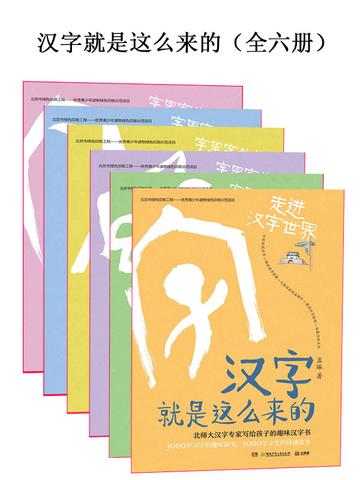
This Is How Chinese Characters Come From
汉字就是这么来的
- Status
- Completed
- Length
- 242k Words
- Genre
- Historical
- Subgenre
- Unknown
- Updated
- 4y ago
- Source
- Fanqie
Stats
100Chapters
239Reads
9.4Score
21Listens
23.5kReads · all time
Tags
Synopsis
In booklists 4
Books About Studying
Are there any books that can help with studying? Please recommend some!!!!!!
855Books102MViews1dUpdated
Strong Knowledge Base, Any Topic Is Fine
Looking for books like *Gourmet Food: Starting with Running the Bear's Prison Canteen*.
622Books3.5MViews1dUpdated
Gradually Growing Stronger Through Proficiency
Looking for books similar to Shield Hero: Do You Even Know How to Use a Shield? Usually, the protagonist has a profession from the start and grinds out abilities related to it. They gradually improve through their own hard work, step by step. Not the kind where they’re invincible and everything comes easily.
365Books12.5MViews6dUpdated
Looking for Traditional Culture, Not Gossip Dramas
315Books2.4MViews1moUpdated
Reader comments 25
Google Translate
This book is really interesting! It uses pictures and stories to tell the origin and evolution of Chinese characters, which gave me a deeper understanding of Chinese characters. Just like I just got married and started a new stage of life, Chinese characters also have their own "life story". Moreover, the book is very rich in content, including not only knowledge of Chinese characters, but also history and culture, which I benefited a lot from. I think this book is very suitable for children to read, allowing them to learn Chinese characters and understand Chinese culture in a relaxed and pleasant atmosphere.
This set of books is a popular science series for students and is also very suitable for adults to read. This book "Into the World of Chinese Characters" clearly explains the development process of Chinese characters, from Cangjie's creation to oracle bone inscriptions, bronze inscriptions, small seal script, and then to official script and regular script. Based on Mr. Xu Shen's interpretation of Chinese characters, the four basic character creation methods of pictography, meaning, meaning, and pictophonetic sound were introduced. The following five books select Chinese characters for classification and introduction from five perspectives: astronomy and geography, humanities and history, the world of the human body, food, clothing, housing and transportation, and the world of animals. From the perspective of character creation, these familiar Chinese characters have a different feel. Some of the stories in the book have been seen on the stage of "National Treasure". I feel that this set of books will be interesting to study together with visiting the museum.
Starting from the origin of Chinese characters, if you re-understand the most basic meaning of a character, it will not be difficult to understand the meaning of the words it consists of, and you will feel suddenly enlightened. Looking at it now, Chinese characters and words are really beautiful and full of connotations. Show it to children in primary school. They also like it very much. Recommended [Like][Like][Like][Like]
Chinese characters are an ancient hieroglyphic script that has been passed down to this day and is still widely used in the world. However, during the thousands of years of historical evolution, Chinese characters have been continuously simplified and have lost their pictographic connotations to a large extent, which has also caused difficulty in literacy for beginners. This book attempts to arouse young readers' interest in learning Chinese characters. Through a series of fascinating stories, it allows them to understand the origin and development of Chinese characters, deepen their impression of Chinese characters, and at the same time enhance their understanding and recognition of the history and culture of the Chinese nation.
Chinese characters, as a precious heritage of Chinese traditional culture, are a monument in Chinese history. This book is reasonably organized and uses the new curriculum standards to select 400 magical Chinese characters that are commonly used by primary school students and reflect the logic of word creation and Chinese history and culture. It is accompanied by multiple pictures, both illustrated and text, to explain the evolution of different Chinese characters, making it easier for readers to learn, deepen their understanding and expand their ideas. At the same time, from the perspective of the six calligraphy methods, typos are fundamentally eliminated.
From this book, we can learn about the origin, development and evolution of Chinese characters, and learn more about the formation principles and evolution rules of Chinese characters. In the book, the author first tells the origin of ancient human writing, the formation of hieroglyphics and reference characters, as well as the characteristics and evolution of ancient characters such as oracle bone inscriptions and bronze inscriptions. It deeply discusses the structure and construction rules of Chinese characters, including left-right structure, upper-lower structure, central structure, etc., And introduces the evolution of commonly used radicals and glyphs. By studying this book, we can learn more about Chinese characters.
This book tells the story from the origin of Chinese characters to the development of traditional Chinese culture. The story is simple and easy to understand, and contains many fine traditions, including the relationship between Chinese characters and traditional Chinese medicine, and the relationship between Chinese characters and solar terms. No matter you read it at any age, you will have unexpected gains.
To be honest, I have actually bought this book before. But I feel that after reading it again, many things in it have a new meaning. It is recommended to give it to children aged 6 to 12 years old, it may be a great inspiration for their Chinese language.
It's easy to understand and increases your knowledge. I hate the late contact. Thank you to the author.
It's a very meaningful book, worth studying [Like]