The Kind of Book Where You Can Learn a Lot of Practical Knowledge for Free.
I want to read a book similar to "The Art of Testing Chinese Characters". Question: I read a novel. The realms in the novel are warlocks, human masters, earth masters, and heavenly masters. Then someone commented that behind the Heavenly Master there was a real person. I am interested in Taoist culture, but I don't know what the realm of real people is
1.8MViews644Books1dUpdated
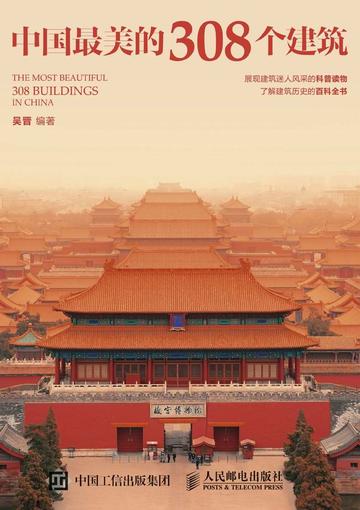

Pavilions, pavilions, row upon row, white walls and black tiles, brick by brick, all express the Chinese people's unique aesthetic feelings for humanity and scenery. The author explains China's representative aesthetic architecture in detail, including its historical significance and architectural artistic expression techniques. From large palaces to small residences, the author carefully and reasonably categorizes various types of buildings to express the symmetrical beauty unique to China. Especially the description of garden architecture allows us to feel the unique charm bred by Jiangnan Feng Shui. It is a sincere feeling for the integration of man and nature, and it is a poetic and beautiful display of the people of Xiaoqiaoliushui.
If I were asked to choose the most beautiful building in China, I would choose the Forbidden City in Beijing. It carries thousands of years of history and was the imperial palace of the Ming and Qing dynasties. It is also known as the Forbidden City. It is a model of ancient Chinese palace architecture and is known as one of the largest ancient wooden building complexes in the world and one of the world cultural heritages. The architectural style of the Forbidden City is mainly based on palaces, temples and courtyards. The most famous buildings include the Meridian Gate, Qianqing Gate, Hall of Supreme Harmony, Forbidden City, Qianlong Garden, etc. These buildings demonstrate the unique charm of ancient Chinese architecture with their exquisite carvings, paintings and traditional yellow-glazed rubble roofs. There are also a large number of Chinese characteristic buildings in the book. If you are interested, you can read them.
It's really good. After reading it, I deeply felt the unique charm of Chinese architecture, which is not inferior to those famous buildings in the West. The entire book uses rich and detailed information to show the great architecture of China in different periods, including palace architecture, ancient pagoda architecture, pavilion architecture, mausoleum architecture, residential architecture, and garden architecture. These great architectural forms are introduced in detail by category. It also collects a large number of exquisite pictures, allowing you to feel the shape of the building and its charm up close. A very good book, I hope there will be more books like this in the future.
I was very interested in it at first, but reading it slowly became a bit boring for me. It is said to be the most beautiful, but there is no such feeling in terms of pictures or audio. The narration is also dry, just a simple talk. It takes less than three pages to describe a building. It does not even explain the structure, story, and origin of the building clearly. It is impossible to feel the beauty of the building at all. But the brilliant culture and art of the Chinese nation are truly admirable. The building is "beautiful". I haven't seen enough related pictures in this book, so I hope that I will have the opportunity to walk into buildings in the future and experience the most beautiful buildings in China!
China has had many buildings since ancient times. This book evaluates the buildings that the author thinks are the most beautiful in China. These 308 buildings embody the wisdom of China from ancient times to the present. These buildings combine the efforts of construction workers and the aesthetics of designers. By analyzing the configuration and design of these buildings, the author allows us to further understand Chinese wisdom, Chinese power and the preferences of ancient Chinese people. This book is very suitable for people who are interested in architecture and agriculture.
Moreover, there are many beautiful pictures in the book, which made me feel the beauty of architecture more intuitively. I think this book is a bit similar to "One Hundred Thousand Whys", both of which allowed me to learn a lot of knowledge. I also particularly like the introduction to the history of architecture, which is like listening to interesting stories. I want to learn from the architects in the book, study hard, and build great buildings in the future!