If you seek for the best, to put it mildly, you will get a lot of benefits, and you will be promoted step by step. During his mourning period, Zeng Guofan almost ruined his future by asking for an official position, which he deeply reflected on in his later years. After experiencing this incident, Zeng Guofan had a better grasp of the relationship with his superiors and a certain concept of "degree". Zeng Guofan made requests to the court and tried to avoid making direct requests. Instead, he made indirect requests to achieve his own goals. Not only did he get what he asked for, but he also kept his dignity. The memorial written by Zeng Guofan in 1857 after working as a teacher in Jiujiang is such a typical work. The first point in the memorial was that he repeatedly emphasized that the Hunan Army's naval divisions commanded by Li Xubin and Yang Yuebin were originally Zeng Guofan's troops. They were seconded to Hu Linyi because of the urgent need to reinforce Hubei. Now not only Wuchang, the provincial capital of Hubei, has been recovered, but also the cities along the river in Qizhou and Huangzhou in Hubei. The implication was that the Qing government was required to return the Hunan Army's water and land divisions commanded by Li and Yang to Zeng Guofan for control and deployment. The second point in the memorial was to publicize the illustrious military exploits of his old amphibious divisions Li Xubin and Yang Yuebin, to embellished the Hunan Army and gild himself. The third point in the memorial emphasizes the strength of the land and sea divisions under Li and Yang, thereby enhancing their own status. The fourth point in the memorial is the key point in the memorial. He did not say that he was the commander of the amphibious divisions of Li Xubin and Yang Yuebin, but in the memorial he asked for and paid wages for the Hunan army of Li and Yang, which was tantamount to claiming that he was the commander of Li and Yang's troops. Looking at Zeng Guofan's four points above, nowhere does he clearly state that he also requires the court to return the troops of Li and Yang, etc., But instead goes around and around to express his intention. This is how Zeng Guofan expressed his wishes and requirements to his superiors, the emperor and the Qing government. This was also a method of overcoming strength with softness. As expected, the Qing court played it correctly, and the troops of Yang and Li were still under the command of Zeng. When facing leaders, you must keep a low profile in everything and use softness to overcome toughness. Zeng Guofan's approach tells us that only by adhering to moderation and being tactful and gentle in everything can we integrate into the crowd and enter society.
Reader comments
Throughout the ages, literati and scholars have aimed at cultivating their moral integrity, regulating their families, governing the country, and bringing peace to the world. Zeng Guofan personally achieved these points. This work is Zeng Guofan's thoughts and summary on personal cultivation and governance of the country, as well as a summary of his experience and lessons in practice. It covers Zeng Guofan's thoughts, moral concepts, philosophy of life and many other aspects. He emphasized the importance of personal self-cultivation and proposed a series of codes of conduct and moral norms to guide personal behavior and life development. These principles include loyalty, diligence, integrity, perseverance, humility, etc., And are designed to cultivate people's moral character and literacy.
If you seek for the best, to put it mildly, you will get a lot of benefits, and you will be promoted step by step. During his mourning period, Zeng Guofan almost ruined his future by asking for an official position, which he deeply reflected on in his later years. After experiencing this incident, Zeng Guofan had a better grasp of the relationship with his superiors and a certain concept of "degree". A gentleman has great and independent ambitions and does not let the world easily see them. He has the courage to defy the emperor and retreat the three armies, but he never shows it easily. How to measure talents is actually a question of talent evaluation. Here, Zhuge Liang not only attaches great importance to selecting and evaluating talents, but also appoints talents in a non-conformist manner.
Zeng Guofan's way of doing things is to have moderation in everything, never make hasty judgments at any time, and do not insist on doing things. Here we can see his golden mean as a Confucian scholar; and his commander of the Hunan army was still favored by the king, and he was sincere and loyal to him. Good, strict rewards and punishments; each chapter of this book has a small story, and each small story reveals a big truth; but they are all choices and decisions made by Zeng Guofan on the road of life; they have great guiding significance for our spiritual practice and interpersonal communication.
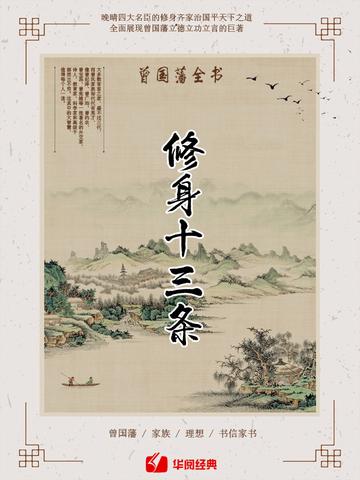
Zeng Guofan's philosophy of self-cultivation is no less than that of any great Confucian, and this book introduces Zeng Guofan's thirteen principles of self-cultivation in detail. This book uses Zeng Guofan's experience in self-cultivation to plan a correct and long-term road to self-cultivation for readers. Reading this book carefully will help us shape correct moral concepts and life beliefs. In addition, this book can also inspire readers to have courage when facing difficulties, persist in improving their self-personality, and pursue perfect cultivation.
Life in this world is nothing more than cultivating one's body and mind. This book takes as its theme the self-cultivation philosophy and practical experience of our country's historical statesman Zeng Guofan, allowing us to better learn from it how to shape good moral character and cultivation, and improve our own moral quality and abilities. It can not only provide us with a value guide and help us shape correct moral concepts and life attitudes, but also inspire readers to face difficulties bravely in daily life and persist in the pursuit of self-improvement.
I like listening to books, they are very nice
This book really resonated with me, especially when it comes to communicating with superiors. Zeng Guofan's approach was very wise. His tact and softness reminded me of some of my own experiences in the entrepreneurial process. Sometimes expressing your demands directly may hit a wall, but using another method may have unexpected results. This book can not only learn the wisdom of dealing with people, but also draw lessons from management experience. It is worth reading.


Throughout the ages, literati and scholars have aimed at cultivating their moral integrity, regulating their families, governing the country, and bringing peace to the world. Zeng Guofan personally achieved these points. This work is Zeng Guofan's thoughts and summary on personal cultivation and governance of the country, as well as a summary of his experience and lessons in practice. It covers Zeng Guofan's thoughts, moral concepts, philosophy of life and many other aspects. He emphasized the importance of personal self-cultivation and proposed a series of codes of conduct and moral norms to guide personal behavior and life development. These principles include loyalty, diligence, integrity, perseverance, humility, etc., And are designed to cultivate people's moral character and literacy.
If you seek for the best, to put it mildly, you will get a lot of benefits, and you will be promoted step by step. During his mourning period, Zeng Guofan almost ruined his future by asking for an official position, which he deeply reflected on in his later years. After experiencing this incident, Zeng Guofan had a better grasp of the relationship with his superiors and a certain concept of "degree". A gentleman has great and independent ambitions and does not let the world easily see them. He has the courage to defy the emperor and retreat the three armies, but he never shows it easily. How to measure talents is actually a question of talent evaluation. Here, Zhuge Liang not only attaches great importance to selecting and evaluating talents, but also appoints talents in a non-conformist manner.
Zeng Guofan's way of doing things is to have moderation in everything, never make hasty judgments at any time, and do not insist on doing things. Here we can see his golden mean as a Confucian scholar; and his commander of the Hunan army was still favored by the king, and he was sincere and loyal to him. Good, strict rewards and punishments; each chapter of this book has a small story, and each small story reveals a big truth; but they are all choices and decisions made by Zeng Guofan on the road of life; they have great guiding significance for our spiritual practice and interpersonal communication.
Zeng Guofan's philosophy of self-cultivation is no less than that of any great Confucian, and this book introduces Zeng Guofan's thirteen principles of self-cultivation in detail. This book uses Zeng Guofan's experience in self-cultivation to plan a correct and long-term road to self-cultivation for readers. Reading this book carefully will help us shape correct moral concepts and life beliefs. In addition, this book can also inspire readers to have courage when facing difficulties, persist in improving their self-personality, and pursue perfect cultivation.
Life in this world is nothing more than cultivating one's body and mind. This book takes as its theme the self-cultivation philosophy and practical experience of our country's historical statesman Zeng Guofan, allowing us to better learn from it how to shape good moral character and cultivation, and improve our own moral quality and abilities. It can not only provide us with a value guide and help us shape correct moral concepts and life attitudes, but also inspire readers to face difficulties bravely in daily life and persist in the pursuit of self-improvement.
I like listening to books, they are very nice
This book really resonated with me, especially when it comes to communicating with superiors. Zeng Guofan's approach was very wise. His tact and softness reminded me of some of my own experiences in the entrepreneurial process. Sometimes expressing your demands directly may hit a wall, but using another method may have unexpected results. This book can not only learn the wisdom of dealing with people, but also draw lessons from management experience. It is worth reading.
Like praise