Stats
5.8Score
Synopsis
No synopsis yet.
We haven’t got an English blurb for this one. It appears once the source description has been translated.
We haven’t got an English blurb for this one. It appears once the source description has been translated.
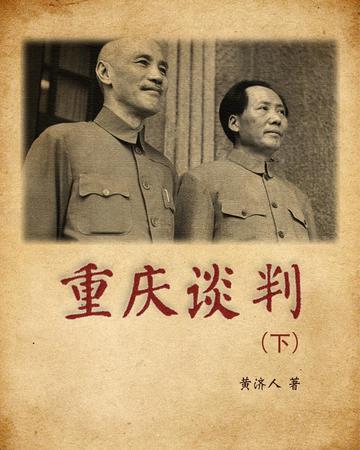
Not bad, a popular historical science book, not too difficult to read. The full text is concise and smooth. It provides a detailed, systematic and comprehensive introduction to the historical event of the Chongqing Negotiations, and truly reproduces the historical facts. In the process of interpretation, easy-to-understand language is used, and it is also accompanied by corresponding pictures. The pictures and texts are both beautiful and easy for readers to understand. It is a popular historical science book suitable for the public to read. At the same time, the author looks at the problem from a historical perspective, looks at the historical facts dialectically, and gives corresponding opinions that are reasonable and in place.
After reading it, I have a certain understanding of history. On August 15, 1945, Japan announced its unconditional surrender, and the Chinese people finally ushered in the dawn of victory. However, on the Chinese battlefield, the battle not only did not end, but became more intense. In order to avoid civil war and strive for peace, the Communist Party of China and the Kuomintang government conducted 43 days of peace negotiations in Chongqing from August 29 to October 10, 1945, known as the Chongqing Negotiations in history. The holding of Chongqing negotiations and the signing of the Double Ten Agreement showed that the Kuomintang recognized the status of the CCP.
Recommended, worth reading. This book is a very good popular historical science book. The full text is concise and smooth. It provides a detailed, systematic and comprehensive introduction to the historical event of the Chongqing Negotiations, and truly reproduces the historical facts. In the process of interpretation, easy-to-understand language is used, and it is also accompanied by corresponding pictures. The pictures and texts are both beautiful and easy for readers to understand. It is a popular historical science book suitable for the public to read. At the same time, the author looks at the problem from a historical perspective, looks at the historical facts dialectically, and gives corresponding opinions that are reasonable and in place.
The Chongqing Negotiations were a historic meeting held in Chongqing on the occasion of the victory of the Anti-Japanese War between the Communist Party of China and the Chinese Kuomintang on China's future development prospects and construction plans. This book also tells what happened during this meeting. The plot in the book is detailed and vivid, and I can still remember it. I was even very angry when I read the emotional parts. I lamented the efforts they made for China's future during that period. I am also indignant at those traitors who cannot resist the temptation. At the same time, I am amazed at the exquisiteness of the author's technique, which can bring me into it. The author draws on historical facts and adds his own thoughts and opinions to form this book. It also allows more people to understand the story behind the Chongqing negotiations and understand their efforts for our peaceful and beautiful life. Today's good life is hard-won.
I was interested in that historical period, so I read the entire book. The whole book seems to be grand in conception, placing the 43 days of Chongqing negotiations between Mao Zedong and Chiang Kai-shek in the international environment. The various contradictions are complicated, the plot is dramatic, the scenes are intensely described, and the atmosphere is rich. The image of Mao Zedong described by the author is both great and ordinary, and deeply touching. The images of other historical figures, such as Zhou Enlai, Stalin, and Churchill, are also vividly depicted.