History is continuous. During the dynasty changes from the Ming to the Qing, the basic structure of the power structure has always maintained a strong inertia. Corruption is the entrance to analyzing this power structure.
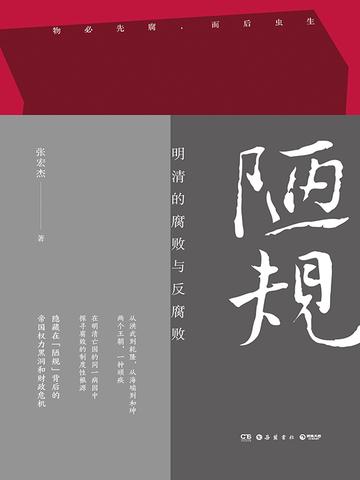
This book focuses on the Ming and Qing Dynasties, and uses clear logic and vivid details to completely tell the whole story of Zhu Yuanzhang, Hongli and others' anti-corruption efforts. By elaborating on their background, process, outcome and impact, it focuses on the various difficulties that caused the Ming and Qing dynasties to be trapped in the quagmire of corruption. Taking "bad regulations", a phenomenon of corruption that ran through the Ming and Qing dynasties, as an entry point, it reproduces the imperial system structure and officialdom ecology at that time, deeply explores the root causes of the decline of the Ming and Qing dynasties, and puts forward reflections that transcend the times.
Reader comments
This book can be regarded as an economics work, and the whole book demonstrates whether it is advisable to maintain integrity with high salary. In fact, from ancient times to the present, there are many people who have this understanding, but why don't the authorities do it? The book mentions that some people suggested this during the Kangxi Dynasty, but the opponents used the banner of not competing with the people for profit, arguing that high salaries were adding burdens to the people. But to be honest, how many of the opponents really agree with "not competing with the people for profit"? Maybe they just see through it and keep silent to make a fortune.
This book made me know that Emperor Qianlong was one of the most successful emperors in Chinese history. From a vertical comparison, the Qianlong era was the most prosperous and powerful era in the entire ancient Chinese history; from a horizontal comparison, the Qing Empire under Qianlong's rule was also the most powerful country in the world at that time. The economic aggregate is huge and the country has strong financial resources. Although there are various debates about the calculation method of gross domestic product (GDP) at that time, using the calculation method recognized by most people, China's economic aggregate during the Qianlong period accounted for more than 30% of the world's total, which is far greater than the United States' share of the world's economic aggregate today.
I have read the author's biography of Zeng Guofan before, and it was very well written. I read this book again, and the quality continues to be online. It analyzes the power structure of the Ming and Qing dynasties with corruption as the core, tells the whole story of Zhu Yuanzhang, Hongli and others' anti-corruption efforts, and explores the various difficulties and reasons why the two dynasties were trapped in the quagmire of corruption. Taking history as a mirror can help us understand the ups and downs. By exploring the root causes of corruption in the Ming and Qing Dynasties, proposing cross-era reflections and providing reference suggestions for today's anti-corruption, it can be said to be a high-level disciplinary inspection and supervision report in the Ming and Qing Dynasties and an anti-corruption revelation.
In the world of crows, swans are guilty
Manpower is no match for humanity
I saw the north wind and the rain falling, but I didn't know that people were hurting my head and bleeding.
Very good hahahaha good good
It's good-looking, not long, easy to understand, very popular, and not suitable for beginners. It would be more beneficial if you have some knowledge of history.


This book can be regarded as an economics work, and the whole book demonstrates whether it is advisable to maintain integrity with high salary. In fact, from ancient times to the present, there are many people who have this understanding, but why don't the authorities do it? The book mentions that some people suggested this during the Kangxi Dynasty, but the opponents used the banner of not competing with the people for profit, arguing that high salaries were adding burdens to the people. But to be honest, how many of the opponents really agree with "not competing with the people for profit"? Maybe they just see through it and keep silent to make a fortune.
This book made me know that Emperor Qianlong was one of the most successful emperors in Chinese history. From a vertical comparison, the Qianlong era was the most prosperous and powerful era in the entire ancient Chinese history; from a horizontal comparison, the Qing Empire under Qianlong's rule was also the most powerful country in the world at that time. The economic aggregate is huge and the country has strong financial resources. Although there are various debates about the calculation method of gross domestic product (GDP) at that time, using the calculation method recognized by most people, China's economic aggregate during the Qianlong period accounted for more than 30% of the world's total, which is far greater than the United States' share of the world's economic aggregate today.
I have read the author's biography of Zeng Guofan before, and it was very well written. I read this book again, and the quality continues to be online. It analyzes the power structure of the Ming and Qing dynasties with corruption as the core, tells the whole story of Zhu Yuanzhang, Hongli and others' anti-corruption efforts, and explores the various difficulties and reasons why the two dynasties were trapped in the quagmire of corruption. Taking history as a mirror can help us understand the ups and downs. By exploring the root causes of corruption in the Ming and Qing Dynasties, proposing cross-era reflections and providing reference suggestions for today's anti-corruption, it can be said to be a high-level disciplinary inspection and supervision report in the Ming and Qing Dynasties and an anti-corruption revelation.
In the world of crows, swans are guilty
Manpower is no match for humanity
I saw the north wind and the rain falling, but I didn't know that people were hurting my head and bleeding.
Very good hahahaha good good
It's good-looking, not long, easy to understand, very popular, and not suitable for beginners. It would be more beneficial if you have some knowledge of history.