Why did the Egyptians discard the brains when mummifying them?
Can the brain "digest" knowledge like the intestines?
Does the skull collecting craze reveal rationality or ignorance?
What pseudoscientific ideas continue to influence our understanding of the brain?
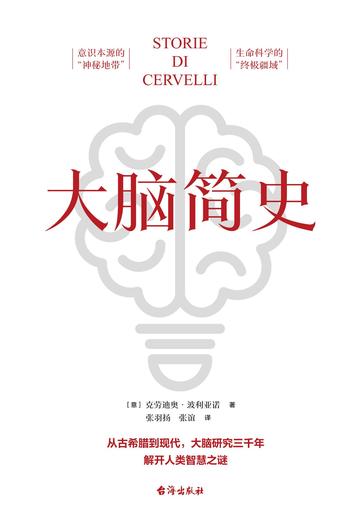
From the first written records of the brain in ancient Egypt to the current booming "neuroscience", humans have always been attracted by these mysteries - how is wisdom born? Where does knowledge reside? What is the nature of consciousness? It can be said that the history of brain science is also the history of human self-discovery and self-understanding.
A professor of the history of science at the University of Pisa, a European university, he combines knowledge from philosophy, medicine, anatomy, ethics and other disciplines to tell the story of humans and the brain from a new perspective.
Reader comments
I particularly enjoyed the interesting cases mentioned in the book, such as the reason why the Egyptians discarded the brains when mummifying them. However, sometimes some of the technical terms in the book are a bit difficult to understand. Overall, this is a good book worth reading and will give you a deeper understanding of the brain.








I particularly enjoyed the interesting cases mentioned in the book, such as the reason why the Egyptians discarded the brains when mummifying them. However, sometimes some of the technical terms in the book are a bit difficult to understand. Overall, this is a good book worth reading and will give you a deeper understanding of the brain.