Based on the research results and thinking approaches of anthropology on nomadic societies, combined with the research methods of history, philology, geography and other disciplines, Professor Wang Mingke investigated the early nomadic societies in northern China - the Xiongnu, Xiqiang, Xianbei and Wuhuan in the Han Dynasty. It mainly explores the environmental ecology, animal ecology and breeding, economic activities, social organization, relationship between nomadic and settled groups of the three nomadic tribes, and on this basis their interactions with the Han Empire. The seemingly "free" choice of the nomads is a "last resort" survival choice in a living situation. The development of an ethnic group cannot be judged as high or low, but a state based on the environment and internal social structure. Through careful combing of historical materials and dialectical discussion, Professor Wang Mingke hopes to form a new understanding of the historical relationship between ethnic groups and re-understand the development trajectory of ethnic groups and nation-states.
Reader comments
This book contains a large number of beautiful pictures, such as: the peaceful times in border counties of the Han Empire, bronze medals unearthed from Xiongnu tombs, bronze horses, bronze medals for yak, bronze medals about beasts eating sheep, bronze daggers of the grassland nomads, Mingdy Color, bronze daggers of the grassland nomads, herdsmen and herders on the Mongolian grassland (New Barhu Right Banner, Inner Mongolia), fences around livestock in Mongolian herdsmen villages (Keshigten Banner, Inner Mongolia), grasslands under the Tianshan Mountains ( Barkol, Xinjiang), early spring herding horses on the Mongolian grassland (New Barhu Right Banner, Inner Mongolia), desert land on the Mongolian grassland (Mu Us Sandy Land), sheep on the grassland (Barkol, Xinjiang), summer migratory grazing on the Qinghai-Tibet Plateau (Hongyuan, Sichuan), winter fields of herdsmen on the Qinghai-Tibet Plateau (Ruoergai, Sichuan), plateau nomadic pastures on the upper reaches of the Yangtze River (Seda, Sichuan), and summer pastures on the Qinghai-Tibet Plateau (Hongyuan, Sichuan). Quite exquisite.
The name "China" shows that we have long been dealing with the relationship between the Chinese nation and the foreign ethnic groups in the southeast and northwest from a self-centered standpoint, which resulted in the "distinction between Yi and Xia". From this perspective, before the Han Empire conquered the Western Regions, the ancient people's identification with China was concentrated in the feudal states of the Zhou Dynasty; after that, the northwest, southwest, northeast, and southeast were gradually included in the territory of the central dynasty to ensure the stability and prosperity of the areas inhabited by the Han ethnic group. When we step out of this perspective and examine from the perspective of nomadic tribes what choices they will make in the face of the expansion of the Han Empire, the understanding of the relationship between the state and the nation becomes interesting. This may be the reflection that Teacher Wang Mingke's book brings us.
If you are interested in the relationship between ancient China and the nomadic peoples of the north, as well as the historical development of their culture, politics, and economy, then I recommend you to read this book. This book's description of historical events is very detailed and accurate. Readers can have a comprehensive understanding of the political structure of the Han Dynasty, the cultural customs of the nomadic people, as well as the wars and trade between the two. At the same time, this book also reveals to us more real situations and diverse patterns of historical changes in many familiar historical events or legends, allowing us to have a deeper understanding of this period of history.
Professor Wang Mingke conducted academic research on the Xiongnu, Xiqiang, Wuhuan, Xianbei and other ethnic groups in the Han Dynasty in this early nomadic society in northern China. It tells the story of the changes in tribes or regimes that happened on the grassland in a chronicle style. Research is mainly conducted in conjunction with anthropology, history, philology, geography and other disciplines. The book is not obscure to read, and the language is fluent. Readers can easily follow the author's writing and sink into the history of the vast grassland thousands of years ago, which is full of pleasure.
If you are interested in the relationship between ancient China and the nomadic peoples of the north, as well as the historical development of their culture, politics, and economy, then I recommend you to read this book. This book's description of historical events is very detailed and accurate. Readers can have a comprehensive understanding of the political structure of the Han Dynasty, the cultural customs of the nomadic people, as well as the wars and trade between the two. At the same time, this book also reveals to us more real situations and diverse patterns of historical changes in many familiar historical events or legends, allowing us to have a deeper understanding of this period of history.
This book contains a large number of beautiful pictures, such as: the peaceful times in border counties of the Han Empire, bronze medals unearthed from Xiongnu tombs, bronze horses, bronze medals for yak, bronze medals about beasts eating sheep, bronze daggers of the grassland nomads, Mingdy Color, bronze daggers of the grassland nomads, herdsmen and herders on the Mongolian grassland (New Barhu Right Banner, Inner Mongolia), fences around livestock in Mongolian herdsmen villages (Keshigten Banner, Inner Mongolia), grasslands under the Tianshan Mountains ( Barkol, Xinjiang), early spring herding horses on the Mongolian grassland (New Barhu Right Banner, Inner Mongolia), desert land on the Mongolian grassland (Mu Us Sandy Land), sheep on the grassland (Barkol, Xinjiang), summer migratory grazing on the Qinghai-Tibet Plateau (Hongyuan, Sichuan), winter fields of herdsmen on the Qinghai-Tibet Plateau (Ruoergai, Sichuan), plateau nomadic pastures on the upper reaches of the Yangtze River (Seda, Sichuan), and summer pastures on the Qinghai-Tibet Plateau (Hongyuan, Sichuan).
Quite exquisite.
Wang Mingke is a well-known anthropologist. In order to create this book, he conducted ten years of fieldwork and conducted detailed research and in-depth investigations on the early nomadic societies in northern China - the Xiongnu, Xiqiang, Xianbei and Wuhuan in the Han Dynasty. The nomadic people and the Chinese people who grew up on the Loess Plateau have widely different characteristics and are inextricably related. "The nomadic society seen in anthropology first lets us get rid of these romantic imaginations, emphasizing that this is an economic and social ecological system in which people use marginal and unstable natural resources - life is full of crises and uncertainties, and there is no romance at all." Their life seems to be galloping on the vast prairie, but in fact it is a helpless struggle for life.
Professor Wang Mingke conducted academic research on the Xiongnu, Xiqiang, Wuhuan, Xianbei and other ethnic groups in the Han Dynasty in this early nomadic society in northern China. It tells the story of the changes in tribes or regimes that happened on the grassland in a chronicle style. Research is mainly conducted in conjunction with anthropology, history, philology, geography and other disciplines. The book is not obscure to read, and the language is fluent. Readers can easily follow the author's writing and sink into the history of the vast grassland thousands of years ago, which is full of pleasure.
The name "China" shows that we have long been dealing with the relationship between the Chinese nation and the foreign ethnic groups in the southeast and northwest from a self-centered standpoint, which resulted in the "distinction between Yi and Xia". From this perspective, before the Han Empire conquered the Western Regions, the ancient people's identification with China was concentrated in the feudal states of the Zhou Dynasty; after that, the northwest, southwest, northeast, and southeast were gradually included in the territory of the central dynasty to ensure the stability and prosperity of the areas inhabited by the Han ethnic group. When we step out of this perspective and examine from the perspective of nomadic tribes what choices they will make in the face of the expansion of the Han Empire, the understanding of the relationship between the state and the nation becomes interesting. This may be the reflection that Teacher Wang Mingke's book brings us.
China has a long history. This is a monograph on the study of Chinese history. The book explores the relationship between the Han Empire and the nomadic tribes of North Asia during the Han Dynasty, paying special attention to how the Han Empire responded to the threats and challenges of the nomadic tribes. Through detailed historical materials and in-depth analysis, the author reveals the complex relationship and mutual influence between the Han Dynasty and the nomadic tribes. Readers can learn about the Han Dynasty's policies and strategies towards nomadic tribes and the impact of these policies on Chinese history.
This is a monograph on the study of Chinese history. The book explores the relationship between the Han Empire and the nomadic tribes of North Asia during the Han Dynasty, paying special attention to how the Han Empire responded to the threats and challenges of the nomadic tribes. Through detailed historical materials and in-depth analysis, the author reveals the complex relationship and mutual influence between the Han Dynasty and the nomadic tribes. Readers can learn about the Han Dynasty's policies and strategies towards nomadic tribes and the impact of these policies on Chinese history.
This book is very interesting! Professor Wang Mingke used easy-to-understand words and gave me a deeper understanding of the Xiongnu, Xiqiang and other nomadic tribes in the Han Dynasty. The characters in the book have distinct personalities and their experiences are fascinating. Moreover, the writing style is rigorous and combines research methods from multiple disciplines to make history vivid and interesting. I think this book is very helpful in understanding the historical relationships between ethnic groups and is worth reading!
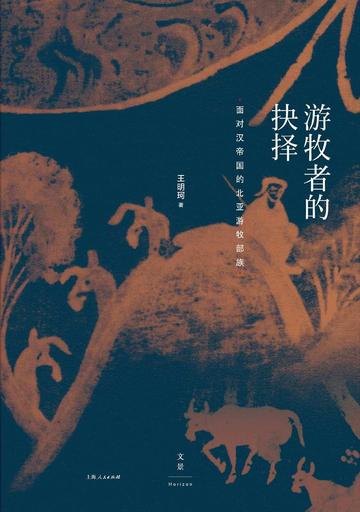





This book contains a large number of beautiful pictures, such as: the peaceful times in border counties of the Han Empire, bronze medals unearthed from Xiongnu tombs, bronze horses, bronze medals for yak, bronze medals about beasts eating sheep, bronze daggers of the grassland nomads, Mingdy Color, bronze daggers of the grassland nomads, herdsmen and herders on the Mongolian grassland (New Barhu Right Banner, Inner Mongolia), fences around livestock in Mongolian herdsmen villages (Keshigten Banner, Inner Mongolia), grasslands under the Tianshan Mountains ( Barkol, Xinjiang), early spring herding horses on the Mongolian grassland (New Barhu Right Banner, Inner Mongolia), desert land on the Mongolian grassland (Mu Us Sandy Land), sheep on the grassland (Barkol, Xinjiang), summer migratory grazing on the Qinghai-Tibet Plateau (Hongyuan, Sichuan), winter fields of herdsmen on the Qinghai-Tibet Plateau (Ruoergai, Sichuan), plateau nomadic pastures on the upper reaches of the Yangtze River (Seda, Sichuan), and summer pastures on the Qinghai-Tibet Plateau (Hongyuan, Sichuan). Quite exquisite.
The name "China" shows that we have long been dealing with the relationship between the Chinese nation and the foreign ethnic groups in the southeast and northwest from a self-centered standpoint, which resulted in the "distinction between Yi and Xia". From this perspective, before the Han Empire conquered the Western Regions, the ancient people's identification with China was concentrated in the feudal states of the Zhou Dynasty; after that, the northwest, southwest, northeast, and southeast were gradually included in the territory of the central dynasty to ensure the stability and prosperity of the areas inhabited by the Han ethnic group. When we step out of this perspective and examine from the perspective of nomadic tribes what choices they will make in the face of the expansion of the Han Empire, the understanding of the relationship between the state and the nation becomes interesting. This may be the reflection that Teacher Wang Mingke's book brings us.
If you are interested in the relationship between ancient China and the nomadic peoples of the north, as well as the historical development of their culture, politics, and economy, then I recommend you to read this book. This book's description of historical events is very detailed and accurate. Readers can have a comprehensive understanding of the political structure of the Han Dynasty, the cultural customs of the nomadic people, as well as the wars and trade between the two. At the same time, this book also reveals to us more real situations and diverse patterns of historical changes in many familiar historical events or legends, allowing us to have a deeper understanding of this period of history.
Professor Wang Mingke conducted academic research on the Xiongnu, Xiqiang, Wuhuan, Xianbei and other ethnic groups in the Han Dynasty in this early nomadic society in northern China. It tells the story of the changes in tribes or regimes that happened on the grassland in a chronicle style. Research is mainly conducted in conjunction with anthropology, history, philology, geography and other disciplines. The book is not obscure to read, and the language is fluent. Readers can easily follow the author's writing and sink into the history of the vast grassland thousands of years ago, which is full of pleasure.
If you are interested in the relationship between ancient China and the nomadic peoples of the north, as well as the historical development of their culture, politics, and economy, then I recommend you to read this book. This book's description of historical events is very detailed and accurate. Readers can have a comprehensive understanding of the political structure of the Han Dynasty, the cultural customs of the nomadic people, as well as the wars and trade between the two. At the same time, this book also reveals to us more real situations and diverse patterns of historical changes in many familiar historical events or legends, allowing us to have a deeper understanding of this period of history.
This book contains a large number of beautiful pictures, such as: the peaceful times in border counties of the Han Empire, bronze medals unearthed from Xiongnu tombs, bronze horses, bronze medals for yak, bronze medals about beasts eating sheep, bronze daggers of the grassland nomads, Mingdy Color, bronze daggers of the grassland nomads, herdsmen and herders on the Mongolian grassland (New Barhu Right Banner, Inner Mongolia), fences around livestock in Mongolian herdsmen villages (Keshigten Banner, Inner Mongolia), grasslands under the Tianshan Mountains ( Barkol, Xinjiang), early spring herding horses on the Mongolian grassland (New Barhu Right Banner, Inner Mongolia), desert land on the Mongolian grassland (Mu Us Sandy Land), sheep on the grassland (Barkol, Xinjiang), summer migratory grazing on the Qinghai-Tibet Plateau (Hongyuan, Sichuan), winter fields of herdsmen on the Qinghai-Tibet Plateau (Ruoergai, Sichuan), plateau nomadic pastures on the upper reaches of the Yangtze River (Seda, Sichuan), and summer pastures on the Qinghai-Tibet Plateau (Hongyuan, Sichuan). Quite exquisite.
Wang Mingke is a well-known anthropologist. In order to create this book, he conducted ten years of fieldwork and conducted detailed research and in-depth investigations on the early nomadic societies in northern China - the Xiongnu, Xiqiang, Xianbei and Wuhuan in the Han Dynasty. The nomadic people and the Chinese people who grew up on the Loess Plateau have widely different characteristics and are inextricably related. "The nomadic society seen in anthropology first lets us get rid of these romantic imaginations, emphasizing that this is an economic and social ecological system in which people use marginal and unstable natural resources - life is full of crises and uncertainties, and there is no romance at all." Their life seems to be galloping on the vast prairie, but in fact it is a helpless struggle for life.
Professor Wang Mingke conducted academic research on the Xiongnu, Xiqiang, Wuhuan, Xianbei and other ethnic groups in the Han Dynasty in this early nomadic society in northern China. It tells the story of the changes in tribes or regimes that happened on the grassland in a chronicle style. Research is mainly conducted in conjunction with anthropology, history, philology, geography and other disciplines. The book is not obscure to read, and the language is fluent. Readers can easily follow the author's writing and sink into the history of the vast grassland thousands of years ago, which is full of pleasure.
The name "China" shows that we have long been dealing with the relationship between the Chinese nation and the foreign ethnic groups in the southeast and northwest from a self-centered standpoint, which resulted in the "distinction between Yi and Xia". From this perspective, before the Han Empire conquered the Western Regions, the ancient people's identification with China was concentrated in the feudal states of the Zhou Dynasty; after that, the northwest, southwest, northeast, and southeast were gradually included in the territory of the central dynasty to ensure the stability and prosperity of the areas inhabited by the Han ethnic group. When we step out of this perspective and examine from the perspective of nomadic tribes what choices they will make in the face of the expansion of the Han Empire, the understanding of the relationship between the state and the nation becomes interesting. This may be the reflection that Teacher Wang Mingke's book brings us.
China has a long history. This is a monograph on the study of Chinese history. The book explores the relationship between the Han Empire and the nomadic tribes of North Asia during the Han Dynasty, paying special attention to how the Han Empire responded to the threats and challenges of the nomadic tribes. Through detailed historical materials and in-depth analysis, the author reveals the complex relationship and mutual influence between the Han Dynasty and the nomadic tribes. Readers can learn about the Han Dynasty's policies and strategies towards nomadic tribes and the impact of these policies on Chinese history.
This is a monograph on the study of Chinese history. The book explores the relationship between the Han Empire and the nomadic tribes of North Asia during the Han Dynasty, paying special attention to how the Han Empire responded to the threats and challenges of the nomadic tribes. Through detailed historical materials and in-depth analysis, the author reveals the complex relationship and mutual influence between the Han Dynasty and the nomadic tribes. Readers can learn about the Han Dynasty's policies and strategies towards nomadic tribes and the impact of these policies on Chinese history.
This book is very interesting! Professor Wang Mingke used easy-to-understand words and gave me a deeper understanding of the Xiongnu, Xiqiang and other nomadic tribes in the Han Dynasty. The characters in the book have distinct personalities and their experiences are fascinating. Moreover, the writing style is rigorous and combines research methods from multiple disciplines to make history vivid and interesting. I think this book is very helpful in understanding the historical relationships between ethnic groups and is worth reading!
A good book worth reading