Updated to the 2015 CITIC commemorative edition
★ The history of Chinese business over more than two thousand years is, at its core, a history of power struggles between government and business! ★
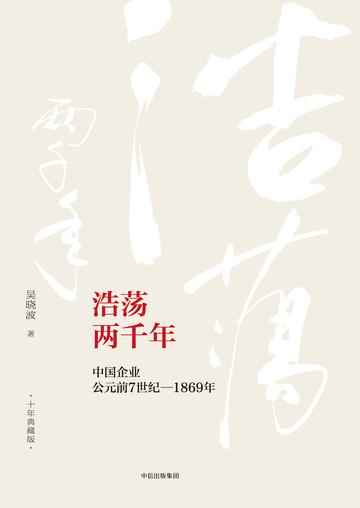
★ Following Turbulent Thirty Years and Tumultuous Hundred Years, renowned financial writer Wu Xiaobo continues his research into the relationship between the state and capital, and between the government and the merchant class, across the more than two thousand years from the seventh century BCE to 1869. ★
Why did Chinese commercial civilization develop so early yet mature so late? What role did the merchant class play in social progress? Why have relations between government and business in China been so rigid and antagonistic? How will China’s market economy ultimately be fully established? Is there room to reconcile and integrate “Chinese characteristics” with universal principles?
The third volume in the “History of Chinese Business” trilogy, this book follows Turbulent Thirty Years and Tumultuous Hundred Years. Covering the more than two thousand years from the seventh century BCE to 1869, renowned financial writer Wu Xiaobo continues the themes of his earlier works, once again exploring the relationship between the state and capital, and between the government and the merchant class, while seeking answers to questions that remain relevant today. The author’s account shows that under a highly authoritarian system of centralized rule, conflict and tension between the government and the commercial classes persisted throughout more than two thousand years of imperial history. For more than two millennia, state control of, interference in, and extraction from commerce were the greatest obstacles to the development of commercial civilization. Ultimately, the history of Chinese business over more than two thousand years is a history of power struggles between government and business. Some of these questions find answers in this book, while others remain shrouded in fog.








This book uses a unique perspective and rich historical materials to interpret the development history of China's enterprises for more than two thousand years. It is very interesting. I like the discussion on the relationship between politics and business in the book. It gave me a deeper understanding of China's economic development. Recommended to friends who are interested in history and business, it is worth reading!