The most touching book on the universe since "A Brief History of Time" explains how the ultimate evolution of stars rewrites the pattern of the universe
★What kind of celestial body is a black hole? Since light cannot escape, why is there "Hawking radiation"?
★What exactly is inside a black hole? Why can't relativity explain it? How does quantum mechanics describe black holes from a microscopic perspective?
★How to create a singularity in a space-time depression? What enlightenment does the successive discovery of white dwarfs, neutron stars, and quasars bring to the development of black hole theory and mankind's search for black holes?
★Is Cygnus X-1, the "number one black hole suspect in the universe", really a black hole? Have you heard of the "noodle effect"? Do you want to take a wonderful journey into a black hole?
The black hole theory has been criticized since its birth, but this does not prevent it from becoming the focus of astrophysics research and people's widespread love for it. Marcia Bartusa's "A Brief History of Black Holes" is chronologically organized and comprehensively explains how the birth and development of this great theory are closely intertwined and mutually reinforcing with the evolution of basic physical theories. The study of the nature of black holes will bring us a grand unified theory that Einstein dreamed of, thereby solving the ultimate problem in physics.
Reader comments
The content of the book starts with the origin of black holes and introduces the concept, properties and characteristics of black holes, as well as their status in the universe and their impact on the future of the universe. The author explains scientific concepts such as the gravity of black holes, space-time curvature, and quantum fluctuations in a simple and easy-to-understand manner. He also tells the research process and ideological collisions of scientists in this field. Reading this book can give readers a deeper understanding of the mysterious celestial body called black holes, and at the same time provide a more intuitive understanding of the exploration process of scientific research.
How does space-time depression create a singularity? What enlightenment does the successive discovery of white dwarfs, neutron stars, and quasars bring to the development of black hole theory and mankind's search for black holes? Is Cygnus X-1, the "number one black hole suspect in the universe", really a black hole? Have you heard of the "noodle effect"? Do you want to take a wonderful journey into a black hole? The black hole theory has been criticized since its birth, but this does not prevent it from becoming the focus of astrophysics research and people's widespread love for it. Marcia Bartusa's "A Brief History of Black Holes" is chronologically organized and comprehensively explains how the birth and development of this great theory are closely intertwined and mutually reinforcing with the evolution of basic physical theories.
The theory of black holes is highly controversial, but it has also proven that it is the focus of our research and the passion of many scientists who work tirelessly. The development of our science and technology allows us to better understand the universe and space in which we live, and also understand more about our own existence. Just like now, we generally believe that there will be parallel universes, which is very romantic. Those people you once liked very much but had to lose may be living romantically with us in another universe.
If a popular science book sells well, it means that the author's writing level and scientific research ability are very advanced. This book is one of them. The author uses simple and popular language to explain how stars form, evolve and eventually explode into supernovae. Supernova explosions produce extremely dense matter that may form black holes. The book explores what will happen if someone or an object enters a black hole, as well as the distortion effects on time and space. With its popular science style, this book explains complex physics concepts and theories in an easy-to-understand manner, becoming an important reference for us to understand black holes and the universe.
"A Brief History of Black Holes" is a popular science book worth reading, suitable for readers who are curious about science and the universe. This book not only gives people a deeper understanding of black holes, but also gives people a deeper understanding of the exploration process of scientific research. Black hole theory has been criticized since its birth, but this does not prevent it from becoming the focus of astrophysics research and people's widespread love for it. Moreover, there are many interesting illustrations and annotations in the book, which can help readers better understand the content of the book.
Just like looking for love, we are always full of curiosity and desire to explore the unknown. Moreover, the evolution of basic physical theories mentioned in the book also reminded me of the process of continuous learning and growth in our lives. I think this book is not only suitable for people who are interested in astronomy, but also for everyone who loves knowledge and pursues truth.
A very good book and very popular science
I have read the physical version of this book no less than five times. I personally feel that it is very well written, popular science but still interesting [Love]





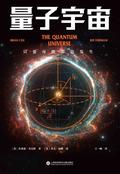





The content of the book starts with the origin of black holes and introduces the concept, properties and characteristics of black holes, as well as their status in the universe and their impact on the future of the universe. The author explains scientific concepts such as the gravity of black holes, space-time curvature, and quantum fluctuations in a simple and easy-to-understand manner. He also tells the research process and ideological collisions of scientists in this field. Reading this book can give readers a deeper understanding of the mysterious celestial body called black holes, and at the same time provide a more intuitive understanding of the exploration process of scientific research.
How does space-time depression create a singularity? What enlightenment does the successive discovery of white dwarfs, neutron stars, and quasars bring to the development of black hole theory and mankind's search for black holes? Is Cygnus X-1, the "number one black hole suspect in the universe", really a black hole? Have you heard of the "noodle effect"? Do you want to take a wonderful journey into a black hole? The black hole theory has been criticized since its birth, but this does not prevent it from becoming the focus of astrophysics research and people's widespread love for it. Marcia Bartusa's "A Brief History of Black Holes" is chronologically organized and comprehensively explains how the birth and development of this great theory are closely intertwined and mutually reinforcing with the evolution of basic physical theories.
The theory of black holes is highly controversial, but it has also proven that it is the focus of our research and the passion of many scientists who work tirelessly. The development of our science and technology allows us to better understand the universe and space in which we live, and also understand more about our own existence. Just like now, we generally believe that there will be parallel universes, which is very romantic. Those people you once liked very much but had to lose may be living romantically with us in another universe.
If a popular science book sells well, it means that the author's writing level and scientific research ability are very advanced. This book is one of them. The author uses simple and popular language to explain how stars form, evolve and eventually explode into supernovae. Supernova explosions produce extremely dense matter that may form black holes. The book explores what will happen if someone or an object enters a black hole, as well as the distortion effects on time and space. With its popular science style, this book explains complex physics concepts and theories in an easy-to-understand manner, becoming an important reference for us to understand black holes and the universe.
"A Brief History of Black Holes" is a popular science book worth reading, suitable for readers who are curious about science and the universe. This book not only gives people a deeper understanding of black holes, but also gives people a deeper understanding of the exploration process of scientific research. Black hole theory has been criticized since its birth, but this does not prevent it from becoming the focus of astrophysics research and people's widespread love for it. Moreover, there are many interesting illustrations and annotations in the book, which can help readers better understand the content of the book.
Just like looking for love, we are always full of curiosity and desire to explore the unknown. Moreover, the evolution of basic physical theories mentioned in the book also reminded me of the process of continuous learning and growth in our lives. I think this book is not only suitable for people who are interested in astronomy, but also for everyone who loves knowledge and pursues truth.
A very good book and very popular science
I have read the physical version of this book no less than five times. I personally feel that it is very well written, popular science but still interesting [Love]