People who have not been loved as children, even when they grow up, will still have the desire to be willful and coquettish, to do whatever they want, to want the world to revolve around them, and to want to be noticed.
To put it bluntly, at heart they are still a child who loves to act coquettishly, lacks a sense of responsibility and is extremely dependent.
The adult society cannot satisfy their infantile desires, so they will project their desire to act like a spoiled child onto the parent-child relationship.
When faced with children whose power, strength, and status are not equal to their own, they are more likely to show:
Behaviors such as dependence, coercion, manipulation, hidden abuse, repayment of favors, and false reciprocity.
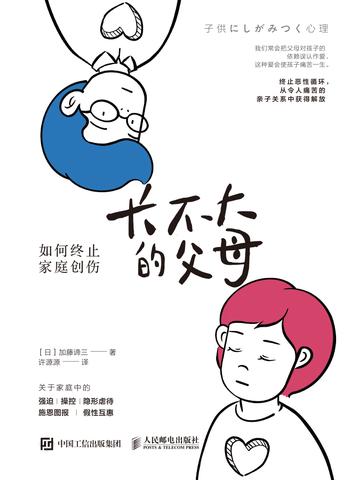
The author of "Parents Who Never Grow Up: How to End Family Trauma" proposes that "parents who never grow up" have become a social problem.
For example, in recent years people have been hotly discussing the "poisonous father", "poisonous mother" and "poisonous tribe". They not only cause children to lose their childhood happiness, but also leave a shadow on the child's underlying personality, affecting his or her life. At the same time, bad relationships will be passed down from generation to generation.
This is a healing manual to help you end family trauma. The author Teizo Kato uses a wealth of real cases to deeply analyze the causes and psychological structure of "parents who never grow up" and puts forward effective suggestions to end this vicious cycle.
Reader comments
This book touched my heart very much and it pointed out the problems that exist in many families. As mentioned in the book, some parents may not give their children enough love, but instead ask for love from their children, which is very detrimental to the growth of their children. I think this book is not only suitable for parents, but also for young people. It allows us to better understand family relationships and avoid becoming "parents who have not grown up." It reminded me of the book "Family of Origin", both of which explore the impact of family on individuals. I hope everyone can read it and get some inspiration from it.
Very well said. Helped me understand where some of the painful feelings in my family were coming from.
Hey, family happiness is very important
It was very insightful and made me reflect on my own family issues.
A great book. The whole book focuses on the discussion of "reversed parent-child relationship" and analyzes this matter very thoroughly. [Like][Like][Like][Like]

This book touched my heart very much and it pointed out the problems that exist in many families. As mentioned in the book, some parents may not give their children enough love, but instead ask for love from their children, which is very detrimental to the growth of their children. I think this book is not only suitable for parents, but also for young people. It allows us to better understand family relationships and avoid becoming "parents who have not grown up." It reminded me of the book "Family of Origin", both of which explore the impact of family on individuals. I hope everyone can read it and get some inspiration from it.
Very well said. Helped me understand where some of the painful feelings in my family were coming from.
Hey, family happiness is very important
It was very insightful and made me reflect on my own family issues.
A great book. The whole book focuses on the discussion of "reversed parent-child relationship" and analyzes this matter very thoroughly. [Like][Like][Like][Like]