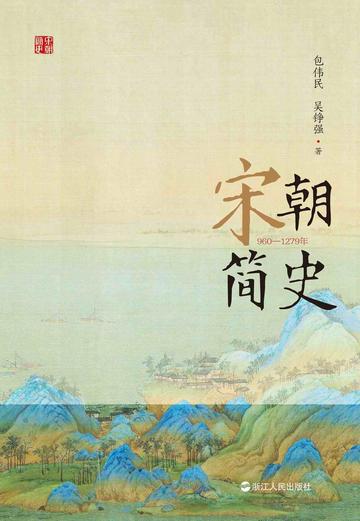
As the Song army was completely annihilated in the Yashan naval battle, the Zhao and Song Dynasties, which had been in existence for more than 300 years, finally perished. Looking back at the ups and downs of the dynasty over the past 300 years, the Song Dynasty succeeded the turbulent times of the late Tang Dynasty and established the country, but it never fully recovered the vast territory of the Han and Tang Dynasties. It suffered the "Jingkang Disgrace" and was robbed of half of its rivers and mountains, and settled south of the Qinling Mountains and the Huaihe River. Politically, it valued culture over military affairs, and strategically defended itself internally and externally. The Song Dynasty was surrounded by powerful enemies all day long, until it perished due to the rise of the Mongolian cavalry. But it was this same Song Dynasty that was considered to have opened up a "new situation" in the historical evolution of China's imperial dynasty, whether it was the political maturity of scholar-bureaucrats, the strengthening of the refined and restrained characteristics of agricultural civilization, the significant development of the commodity economy and handicraft industry, or the numerous inventions in the technical field, and the epoch-making innovations in the ideological field.
Historian Mr. Chen Yinke once commented: "The culture of the Chinese nation has evolved over thousands of years and reached its peak in the Zhao and Song Dynasties." How is it that the same Song Dynasty, on the one hand, has been ridiculed by poverty and weakness in previous generations, but on the other hand, it has achieved unprecedented achievements in spiritual temperament, ideology and culture? To answer this question, we need to peer into the fabric of history and trace the codes of rise and fall.
Reader comments
The Song Dynasty was a splendid dynasty of scholars. To this day, the night markets and tile houses of the Song Dynasty are still talked about by future generations, and they all lament that "the ancestors are better at playing than I am." However, people often pay attention to the most prosperous period of a dynasty. This book tells the history of the Song Dynasty from its establishment to prosperity to its demise in ten chapters. The bright side and the dark side of this dynasty are briefly described in the book. From the character of the literati to the capture of the second emperor of the Song Dynasty, the Song Dynasty was also a dynasty in which the status of women declined. I have a great impression of the Song Dynasty, and this book gave me a better understanding of the Song Dynasty. It is worth reading.
The Song Dynasty became a neutral country in the troubled times of the late Tang Dynasty, but it did not have the prosperity and vast territory of the Tang Dynasty. After the Jingkang Incident, the Song Dynasty's vitality was severely damaged and it was in a corner. Many literati and passionate generals tried to write to the court to restore the country, but the Song Dynasty was still stable in the Qinling Mountains and south of the Huaihe River. Eventually it declined under the hooves of the Mongols. However, the literati of the Song Dynasty pushed the culture of the Song Dynasty to its peak, and the evolution of ideological trends came. The commodity economy and handicraft industry of the Song Dynasty were extremely developed. It is rare that the Song Dynasty, which was so poor and weak, was accompanied by great cultural and economic development.
The author's description of the Song Dynasty is detailed and vivid. Through narration and analysis of politics, economy, culture and other aspects, he restored the social scene and historical events of the Song Dynasty. By describing the changes in each dynasty and the life trajectories of the characters, the author allows readers to understand the rise and decline of the Song Dynasty, while also showing the joys and sorrows of the characters and the grandeur of history.
This book also triggered thinking about historical changes and the fate of characters. Through in-depth research on the Song Dynasty, the author allows readers to think about their own understanding of history and the fate of the characters. He asks penetrating questions that lead readers to reflect on their own values and understanding of history. By reading this book, we can have a deeper understanding of the history of the Song Dynasty, and it also provides inspiration for our thinking about history.
This book places the history of the Song Dynasty in the development of the entire Chinese civilization, sorting out its evolution, and also introduces the contributions of the people of the Song Dynasty in various aspects. The writing style is easy to understand, the writing is smooth, and the characters are well-drawn. Moreover, the author was very modest and corrected errors when reprinting to make the content more suitable for public reading. Well worth reading!
This book is a brief history of the Song Dynasty from its founding to its demise in three hundred years. In the three hundred years of the dynasty's ups and downs and the humiliation of Jingkang, the Song Dynasty was surrounded by powerful enemies from the very beginning. In chronological order, the author takes the development of the Song Dynasty as the main line, showing the establishment of the Zhao and Song Dynasties, the evolution of the political situation in the Northern Song Dynasty, the political situation in the Southern Song Dynasty, the social structure, population growth, agricultural development, commercial development, culture and technology of the Song Dynasty, and finally its demise. The entire book is a very comprehensive description of the Song Dynasty. For friends who are interested in this period of history, it is worth reading carefully at the bedside.
The Song Dynasty was a splendid dynasty of scholars. To this day, the night markets and tile houses of the Song Dynasty are still talked about by future generations, and they all lament that "the ancestors are better at playing than I am." However, people often pay attention to the most prosperous period of a dynasty. This book tells the history of the Song Dynasty from its establishment to prosperity to its demise in ten chapters. The bright side and the dark side of this dynasty are briefly described in the book. From the character of the literati to the capture of the second emperor of the Song Dynasty, the Song Dynasty was also a dynasty in which the status of women declined. I have a great impression of the Song Dynasty, and this book gave me a better understanding of the Song Dynasty. It is worth reading.
The Song Dynasty became a neutral country in the troubled times of the late Tang Dynasty, but it did not have the prosperity and vast territory of the Tang Dynasty. After the Jingkang Incident, the Song Dynasty's vitality was severely damaged and it was in a corner. Many literati and passionate generals tried to write to the court to restore the country, but the Song Dynasty was still stable in the Qinling Mountains and south of the Huaihe River. Eventually it declined under the hooves of the Mongols. However, the literati of the Song Dynasty pushed the culture of the Song Dynasty to its peak, and the evolution of ideological trends came. The commodity economy and handicraft industry of the Song Dynasty were extremely developed. It is rare that the Song Dynasty, which was so poor and weak, was accompanied by great cultural and economic development.
The author's description of the Song Dynasty is detailed and vivid. Through narration and analysis of politics, economy, culture and other aspects, he restored the social scene and historical events of the Song Dynasty. By describing the changes in each dynasty and the life trajectories of the characters, the author allows readers to understand the rise and decline of the Song Dynasty, while also showing the joys and sorrows of the characters and the grandeur of history. This book also triggered thinking about historical changes and the fate of characters. Through in-depth research on the Song Dynasty, the author allows readers to think about their own understanding of history and the fate of the characters. He asks penetrating questions that lead readers to reflect on their own values and understanding of history. By reading this book, we can have a deeper understanding of the history of the Song Dynasty, and it also provides inspiration for our thinking about history.
This book places the history of the Song Dynasty in the development of the entire Chinese civilization, sorting out its evolution, and also introduces the contributions of the people of the Song Dynasty in various aspects. The writing style is easy to understand, the writing is smooth, and the characters are well-drawn. Moreover, the author was very modest and corrected errors when reprinting to make the content more suitable for public reading. Well worth reading!
This book is a brief history of the Song Dynasty from its founding to its demise in three hundred years. In the three hundred years of the dynasty's ups and downs and the humiliation of Jingkang, the Song Dynasty was surrounded by powerful enemies from the very beginning. In chronological order, the author takes the development of the Song Dynasty as the main line, showing the establishment of the Zhao and Song Dynasties, the evolution of the political situation in the Northern Song Dynasty, the political situation in the Southern Song Dynasty, the social structure, population growth, agricultural development, commercial development, culture and technology of the Song Dynasty, and finally its demise. The entire book is a very comprehensive description of the Song Dynasty. For friends who are interested in this period of history, it is worth reading carefully at the bedside.