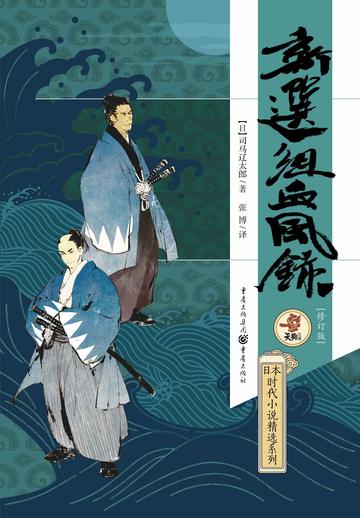
Record of the Shinsengumi's Blood-Stained Winds
新选组血风录
- Status
- Completed
- Length
- 239k Words
- Genre
- Historical
- Updated
- 4y ago
- Source
- Fanqie
Synopsis
17Chapters
19Reads
9.2Score
4.7kReads · all time
In booklists 2


Looking for Demon Slayer Fanfiction. I Can't Find Anything Good 😭😭😭
I’m looking for books similar to "Demon Slayer Fanfic: Cursed Words Slay Demons".
496Books498.6kViews3dUpdated

Any Books About Japanese Swords and Their History?!! #JapaneseSwords #History
Whenever I search for Japanese swords, all I get is Touken Ranbu. I do want to find books about the history of Japanese swords, but part of the reason is that I like Touken Ranbu. I like some of the swords and want to learn about their stories.
92Books337.9kViews1moUpdated
Reader comments 10
Translated by Google Translate
I've watched the TV series before, and now I'm reading the novel again, and I still think it's good. The end of the Tokugawa period in Kyoto was a legendary era when heroes and heroes emerged in large numbers, such as Yoshida Shoin, Sakamoto Ryoma, Katsura Kogoro, Takasugi Shinsuke, Komatsu Taito, etc. Each character has a complete story. Atsuhime and Wagongiya are also frequent guests in novels and movies. When it comes to the end of the shogunate, what cannot be avoided is the Shinsengumi, a murderous group composed of country samurai who made their own reputation and world on the stage of Kyoto. Looking at those familiar characters makes my heart surge. I can't get enough of them. I want to watch the love between Hijikata and Saito Kazuki 🤭
The army headed by Aburokoji was the strongest swordsman group at the end of the shogunate, and they were called the "Wolves of Mibu" by the people: the rules of this army were particularly strict, and if violated by others, they would be punished with hara-kiri; each of them adhered to their duties, but in the end they became a conservative force that maintained the shogunate and suffered disaster. However, their last remaining samurai hearts as warriors have always persisted in the changes of time. The times are full of conflicts and conflicts, but the unyielding faith under the banner of "sincerity" has not fallen!
I first watched the movie "Burn the Sword" and then read the book. I felt that the characters in the book were darker, more animalistic, and more emotional. The author does not deify or beautify the members of the Shinsengumi, but actually writes about the characters and behaviors of these ronin. Some are stubborn and rigid, some are ruthless and vicious, some are arrogant, and some are rash and cowardly... At first, I didn't feel like there was a character I liked. Later, I really liked Nagasaka Kojuro who left the team to study medicine, but it is undeniable that the Shinsengumi members all have their own charms. It's a bit like drinking tea. It's a little bitter in the mouth, but you can endure it and savor it slowly. I just watched the TV series of the same name after watching it. I haven't finished the first episode yet. I saw the plot of the Hijikata hero saving the beauty and washing his hands in shock after the first murder. I thought it was so ridiculous that I couldn't watch it anymore. Then I clicked on the Hakuouki Musical and watched a little bit of the idol group Shinsengumi, but I couldn't finish watching it... Fortunately, although Touken Ranbu's musical and stage play were all beautified in various ways, I can still accept it.
This is a historical novel set in Japan's Shinsengumi during the Bakumatsu period. The story focuses on Okada Izo, one of the Shinsengumi members, and depicts his life, struggles and loyalty during the turbulent Bakumatsu era. The novel incorporates historical events, character relationships, and battle scenes to demonstrate the bravery and belief of the Shinsengumi members. For readers interested in the Bakumatsu period and the history of the Shinsengumi, this book provides a gripping historical adventure.
In the era of change at the end of the Bakumatsu, there was a group of men who went against the tide of the times and had a unique passion for being "samurai". The men who have become outstanding samurai with only their swordsmanship join the Shinsengumi at the forefront of the brutal battle that will shape the future of Japan. Ryotaro Shiba's original work "The Blood Wind Record of the Shinsengumi" tells the intense and painful lives of the Shinsengumi soldiers who struggled to survive in the chaotic era. It is the author's reflections on Japan's stupid "Showa Era" and Japan's increasing corruption and decline.
"Let's put it this way. It's like when you catch a butterfly, put your hands together and carefully clasp the butterfly in your palm, and you will feel its wings flickering and struggling like itching. Souji's cough is like this." This metaphor really impressed me. The characterization is particularly good, three-dimensional and multi-faceted, and the writing is very vivid. . [Full]😳[full]😳[full]😳
These few short articles established the image of the Shinsengumi very well. They showed both their ease in getting along and their cruelty in performing official duties (?). Everyone was very three-dimensional, and it allowed me to get to know the Shinsengumi in the Bakumatsu period very well.
The Shinsengumi is the strongest swordsman group at the end of the Bakumatsu period and has strict team rules, and any violation will result in seppuku. A very good book, worth reading
The author's writing style is concise and clear, and the characters have distinct personalities, such as Hijikata Tozo's boldness and Okita Souji's coldness, which impressed me deeply. And the storyline is very compact and very enjoyable to read! I think this book is suitable for people who like history and martial arts.
I like Saitoichi 🥰