Rejection causes sharp pain; loneliness causes devastating pain; loss leaves our lives shattered; inescapable guilt poisons our peace and relationships; a tendency to ruminate on pain quickly develops into anxiety and depression; failure leads to crushing disappointment; and low self-esteem causes us to reject those who help us.
We suffer emotional trauma as regularly as we suffer physical trauma.
Failure, guilt, rejection, and loss are as much a part of our lives as the occasional scraped arm or pulled muscle.
But while we naturally bandage a cut or ice a sprained ankle, for most of us, the emotional injury first aid kit is empty—it doesn't exist!
The result is that as long as the emotional damage isn't severe enough to require professional help, we let it go, causing us to feel bad for much longer than we should.
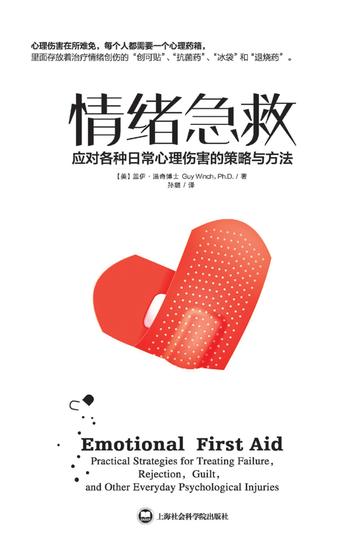
Fortunately, we have found ways to deal with hurt emotions that work like mental first aid.
In this friendly, step-by-step book, practicing psychologist Dr. Guy Winch draws on scientific research to present a clear, step-by-step treatment plan.
These solutions are quick, easy, and effective for dealing with a variety of common troubles, from compulsive rumination of pain to destructive low self-esteem.
Through real-life examples, Dr. Winch shows how just a few simple actions can help us soothe emotional pain, bounce back from trouble, and overcome setbacks with courage and confidence.
Reader comments
Emotional first aid
The whole book focuses on some negative emotions, such as bad feelings after rejection, loneliness, loss of positive emotions, guilt, rumination, failure, low self-esteem, etc., And provides various targeted methods published and studied by psychologists. These methods are divided into four treatment methods ABCD. I personally experience these four methods. First, discover the reason for your bad mood. For example: when we are rejected, our method of self-treatment is to first write down the details of what happened at that time (from the first perspective) and how you felt; second, look at the matter from the other person's perspective; third, look at the problem from the third perspective; and finally, think about what happened from the first perspective, and you will not be sad. When we have low self-esteem, we can write down the bad points that we think are bad, and then refute them one by one. Finally, choose a few character traits that you think are important and write a paragraph about why you think this trait is important and what benefits it will bring to your social life, so as to improve your recognition of yourself. Regarding failure, we must know that this is actually a test and experience for us. When we fail, we do not have to be afraid or escape. Instead, what we must do is learn from experience and have the courage to start over. The most important thing about guilt is not to avoid the problem, suppress your bad emotions, or escape from reality. What you need to do is to first recognize what makes you feel guilty, then admit the reality, communicate well with the other party, and express your apology well when you need to apologize, as well as future improvement methods and practical actions.
This book offers ways to cope with emotional injury that are as practical as mental first aid. The author uses real-life examples to explain the theory, making the content easier to understand. We can learn how to deal with common emotional problems and help ourselves and others recover from setbacks. However, everyone's situation is different, and you may need to choose a suitable method based on your actual situation.
Very good books
After reading it, I benefited a lot. Thanks for encountering this book. ❤️❤️❤️





Emotional first aid The whole book focuses on some negative emotions, such as bad feelings after rejection, loneliness, loss of positive emotions, guilt, rumination, failure, low self-esteem, etc., And provides various targeted methods published and studied by psychologists. These methods are divided into four treatment methods ABCD. I personally experience these four methods. First, discover the reason for your bad mood. For example: when we are rejected, our method of self-treatment is to first write down the details of what happened at that time (from the first perspective) and how you felt; second, look at the matter from the other person's perspective; third, look at the problem from the third perspective; and finally, think about what happened from the first perspective, and you will not be sad. When we have low self-esteem, we can write down the bad points that we think are bad, and then refute them one by one. Finally, choose a few character traits that you think are important and write a paragraph about why you think this trait is important and what benefits it will bring to your social life, so as to improve your recognition of yourself. Regarding failure, we must know that this is actually a test and experience for us. When we fail, we do not have to be afraid or escape. Instead, what we must do is learn from experience and have the courage to start over. The most important thing about guilt is not to avoid the problem, suppress your bad emotions, or escape from reality. What you need to do is to first recognize what makes you feel guilty, then admit the reality, communicate well with the other party, and express your apology well when you need to apologize, as well as future improvement methods and practical actions.
This book offers ways to cope with emotional injury that are as practical as mental first aid. The author uses real-life examples to explain the theory, making the content easier to understand. We can learn how to deal with common emotional problems and help ourselves and others recover from setbacks. However, everyone's situation is different, and you may need to choose a suitable method based on your actual situation.
Very good books
After reading it, I benefited a lot. Thanks for encountering this book. ❤️❤️❤️