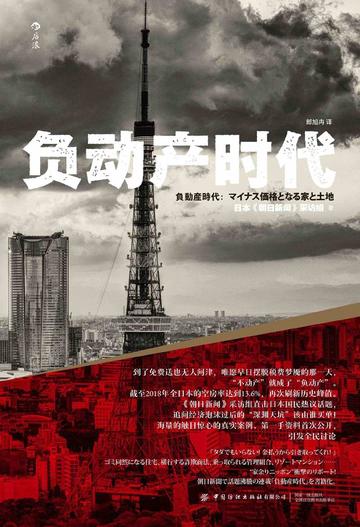
When I was young, I worked hard to buy expensive real estate, thinking that I could live a long life with my family after retirement; I ran multiple properties, hoping that my children would be able to earn more income and security from long-term rental apartments in the future; I inherited the inheritance of my deceased without thinking about it, thinking that it would not hurt to have one or two more properties. But the former "land myth" has evaporated. As of 2018, the vacancy rate across Japan reached 13.6%, Once again setting a new historical peak.
How did the people who took over the job in high positions fare later? Why do properties and land that everyone is eager to turn into hot potatoes that they avoid? The drastic population decline has become a certainty, but real estate booms are still happening in many places in Japan. What are the unknown undercurrents of interests intertwined behind it?
"Asahi Shimbun"'s large-scale serial "The Era of Negative Chattels" has caused huge repercussions across Japan. Based on this, this book has made large-scale additions and adjustments. Through massive first-hand materials and real cases, it provides an in-depth analysis of the causes, current situation and possible solutions to Japan's "negative movables". Should people get on board in the era of universal home ownership? This book may have the answer.
Reader comments
This book truly reflects the current social reality. Many people buy houses blindly, without considering the subsequent costs, and end up in the predicament of negative real estate. I had a similar experience. When I bought a house, I didn't expect the maintenance cost to be so high. I regret it now. This book made me realize that I need to be cautious when making any decision, and not just look at the present.
I am glad that I have sold my home in my hometown, although I should have sold it two years earlier.
In addition, I originally wanted to change to an elevator building, but now that I think about it, I'd rather live in the multi-story building I have now. In the future, even if I get older and climb slowly, I can still climb. If I really can't climb, I'll rent the first or second floor.
Very good very good
It has refreshed a lot of understanding of houses, and I can use this as a lesson.


This book truly reflects the current social reality. Many people buy houses blindly, without considering the subsequent costs, and end up in the predicament of negative real estate. I had a similar experience. When I bought a house, I didn't expect the maintenance cost to be so high. I regret it now. This book made me realize that I need to be cautious when making any decision, and not just look at the present.
I am glad that I have sold my home in my hometown, although I should have sold it two years earlier. In addition, I originally wanted to change to an elevator building, but now that I think about it, I'd rather live in the multi-story building I have now. In the future, even if I get older and climb slowly, I can still climb. If I really can't climb, I'll rent the first or second floor.
Very good very good
It has refreshed a lot of understanding of houses, and I can use this as a lesson.
It is a good reference for China!